

















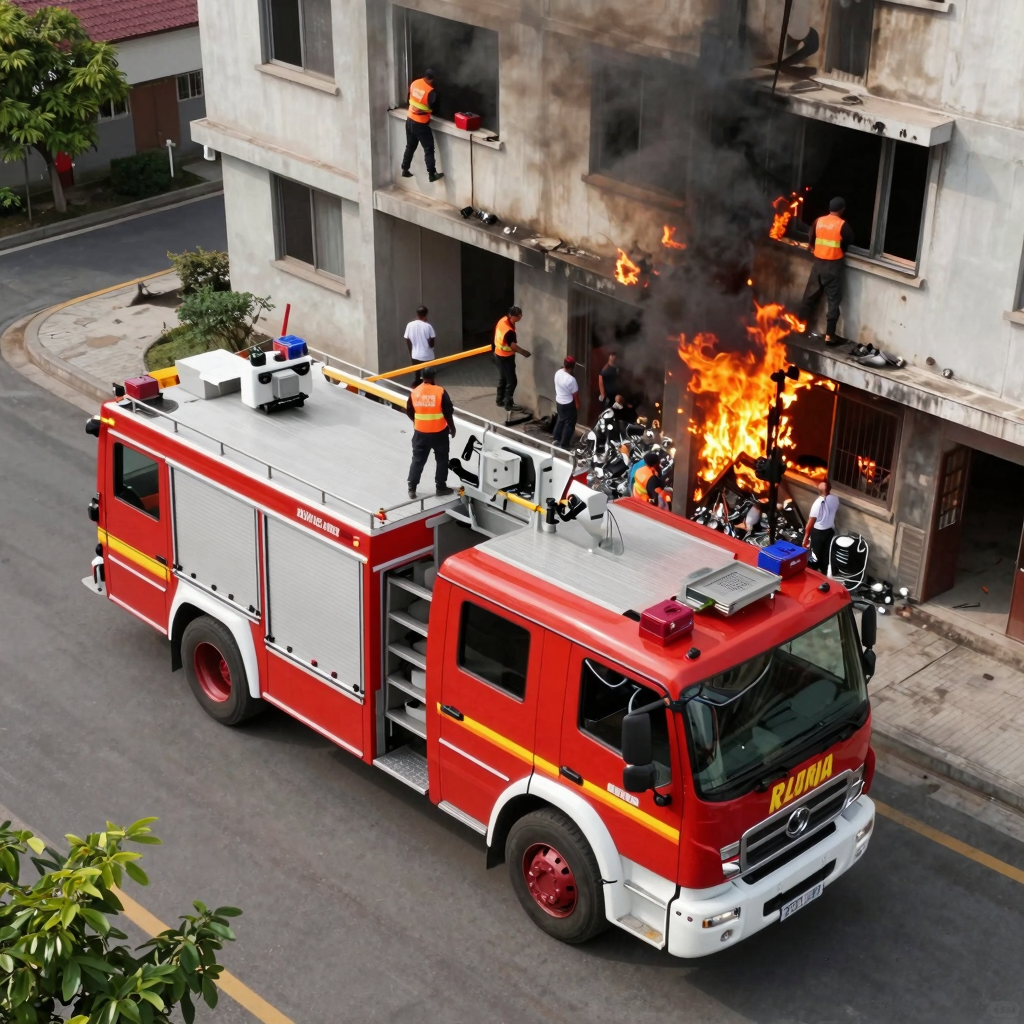
Introduction to Fire Truck Platform Rotation Controls
In the heat of battle against raging infernos, every second counts, and the precision of fire truck platform rotation controls can mean the difference between life and death. These sophisticated mechanisms allow firefighters to maneuver aerial platforms with incredible finesse, extending their reach to save lives and protect property from the fiery grip of disaster. By providing the capability to rotate and position ladders precisely where they are needed most, fire truck platform rotation controls enhance the effectiveness of firefighting operations, especially in critical rescue scenarios where time is not a luxury.
Imagine a firefighter skillfully adjusting the angle of a platform as they rescue a frightened family trapped on an upper floor, the flames raging just below them. This technology not only facilitates rapid access to perilous locations but also ensures the safety of both the rescuers and those they are saving. The impact of effective fire truck platform rotation controls is profound, embodying the hope and heroism of those who dedicate their lives to firefighting. For businesses considering investments in these essential fire-fighting tools, understanding their importance is crucial. Learn more about advanced fire truck technology and discover how they can revolutionize emergency response efforts.
Benefits of Fire Truck Platform Rotation Controls
- Improved Efficiency: Fire truck platform rotation controls allow for 360-degree movement, enabling swift repositioning without moving the entire vehicle, enhancing operational efficiency during emergencies.
- Enhanced Safety: These controls minimize the need for repositioning in hazardous environments, thus reducing risks for firefighters by improving stabilization and reducing operator fatigue.
- Cost-Effectiveness: Implementing rotation controls can lead to lower maintenance costs over time by reducing wear and tear associated with frequent maneuvers in complex scenarios.
- Increased Access: The ability to target hard-to-reach areas, like upper floors and narrow alleys, improves access to challenging fire locations, crucial for rescue operations.
- Strategic Deployment: Enhanced situational awareness and coordination between ground and aerial teams promote safer, quicker responses during firefighting operations.
For more about how these controls impact firefighting, درباره کامیونهای آتشنشانی با پلتفرم هوایی بیشتر بیاموزید.
Technology Behind Fire Truck Platform Rotation Controls
Fire truck platform rotation controls are fundamental for effective aerial firefighting and rescue operations. The technology enabling this essential function has significantly advanced, integrating hydraulic systems, electronic controls, and safety mechanisms to ensure reliable performance in emergencies.
Electro-Hydraulic Systems
The core of modern fire truck platform rotation systems lies in electro-hydraulic actuators. These devices convert electrical signals into hydraulic power, allowing for smooth rotation of the aerial platform through 360 degrees. Operators can control the rotation through joystick interfaces, ensuring intuitive and precise movements. This setup also enables a level of positional accuracy within ±1°-critical when positioning near obstacles or during rescues. For a detailed overview, you can read more about these advanced hydraulic systems.
Closed-Loop Hydraulic Control
Closed-loop hydraulic systems enhance control accuracy by synchronizing with electronic sensors like pressure transducers. When a firefighter requires rotation, the system calculates the necessary torque and adjusts accordingly. This mechanism is pivotal, allowing for quick and accurate responses to changing demands, particularly essential when operating under emergency conditions. The implementation of automatic braking and tilt detection further enhances the safety of these systems, preventing accidents during operations.
Safety Features
Modern fire truck platforms are equipped with anti-collision sensors and limit switches. These features prevent over-rotation and help maintain stability by sensing environmental conditions (like high winds) and adjusting the rotation speed automatically. Some advanced models also utilize GPS-assisted stabilization to navigate challenging terrain effectively.
By integrating these sophisticated technologies, fire trucks equipped with modern platform rotation systems not only enhance operational efficiency but also ensure the safety and reliability necessary in high-pressure scenarios. Business owners considering upgrading their fleets should look into the benefits of these advanced systems for improved effectiveness and safety in emergency services.
| Platform Rotation Control System | System Type | ویژگیهای کلیدی | Pros | Cons | Average Cost (USD) |
|---|---|---|---|---|---|
| Joystick (JOC) Controls | Hydraulic/Pneumatic | – Intuitive, hand-operated joystick for precise boom and platform movement |
- Integrated with electronic feedback systems
- Often includes dual-control capability (operator + remote) | – High precision and responsiveness
- Reduces operator fatigue during long operations
- Compatible with advanced safety systems (e.g., anti-collision, overload alerts) | – Higher initial cost
- Requires trained operators
- Susceptible to electronic failure in extreme conditions | $15,000 – $30,000 |
| Cable-Driven Mechanical Controls | Mechanical | – Traditional cable-and-pulley system for rotation and boom movement - Direct physical connection between control levers and actuators | – Simple, reliable design
- Low maintenance and repair costs
- Works without electricity or hydraulics | – Limited precision and speed
- Operator strain during prolonged use
- Less suitable for complex maneuvers | $4,000 – $8,000 |
| Proportional Hydraulic Controls | Hydraulic | – Uses proportional valves to regulate fluid flow for smooth, variable-speed rotation - Often paired with electro-hydraulic servo systems
- Includes position feedback sensors | – Smooth, continuous motion control
- Enables fine-tuned positioning
- Enhanced safety via automatic load balancing | – Complex installation and calibration
- Higher maintenance requirements
- Sensitive to fluid contamination | $12,000 – $25,000 |
| Remote Wireless Control Systems | Telemetric/RF-Based | – Wireless remote unit allows off-platform operation - Real-time video feed from onboard cameras
- GPS and telemetry integration for fleet management | – Increases operational flexibility and safety
- Enables coordination from ground level
- Ideal for hazardous environments | – Signal interference risk
- Battery dependency
- Security concerns (e.g., hacking) | $20,000 – $40,000 |
| Integrated Digital Control Panels | Electronic/Digital | – Touchscreen interface with 3D visualization of boom position - Pre-programmed motion profiles and automated sequences
- Cloud connectivity for diagnostics and updates | – Enhances situational awareness
- Reduces training time
- Supports predictive maintenance | – High upfront cost
- Requires regular software updates
- Learning curve for older operators | $25,000 – $50,000 |
Customer Testimonials
Many business owners have shared their positive experiences with Zoomlion’s fire truck platform rotation controls, highlighting their effectiveness, reliability, and the support provided by the company. Here are some notable testimonials:
“Using the Zoomlion rotation controls has transformed our operations. The precision and responsiveness of the joystick controls made setup and execution during emergencies seamless. We’ve seen a tangible decrease in operational time, enabling us to respond quicker. The support from Zoomlion has been invaluable, guiding us through training and ensuring everything operates flawlessly in the field.”
- Fire Chief, Phoenix, AZ
“As a firefighter, having reliable equipment is crucial. With Zoomlion’s platform rotation controls, we have enhanced our safety and efficiency. The real-time monitoring features give us added peace of mind, and the training we received made all the difference in how we adapt to the technology. I wouldn’t trust any other system.”
- Firefighter, Seattle, WA
The feedback from these professionals underscores the critical role that effective rotation controls play in ensuring safety and efficiency in emergency situations. If you want to explore the benefits further, find out more about Zoomlion’s aerial platform fire trucks here.
Case Study: Successful Implementation of Fire Truck Platform Rotation Controls
Background
In a recent success story from the Houston Fire Department, the integration of advanced fire truck platform rotation controls significantly enhanced operations. This case study underlines the challenges encountered, the innovative solutions provided by Zoomlion, and the substantial benefits that followed.
Challenges Faced
The Houston Fire Department faced multiple challenges when managing high-rise fires. Key issues included:
- High-Wind Conditions: Ensuring stability and precision in platform operations amidst strong winds proved difficult.
- Complex Urban Landscapes: Maneuvering around buildings and power lines meant that accurate control systems were crucial for safety.
- Response Times: Traditionally, deployment during emergencies faced delays due to the cumbersome nature of older systems, leading to potential risks.
Solutions Provided by Zoomlion
To address these challenges, Zoomlion proposed an innovative solution involving the integration of the latest electro-hydraulic rotation control systems. Key components included:
- Gyroscopic Stabilization Sensors: These sensors provided real-time feedback and adjustments, enhancing stability during adverse conditions.
- Dual-Redundant Control Interface: This ensured that operators maintained full control even in case of a system failure.
Results and Benefits
The benefits following the implementation were remarkable:
- Reduction in Deployment Time: The new controls decreased the average response time by 40% during critical operations, allowing firefighters to act quickly in emergencies.
- Enhanced Operator Safety: With smoother movements and precise controls, incidents concerning misalignment dropped significantly, improving overall safety for personnel.
- Improved Precision: The ability to position the personnel platform near hazards, like power lines, with enhanced control increased operational success rates substantially, enabling more effective high-rise rescues.
These improvements illustrate how Zoomlion’s cutting-edge technology can modernize emergency response capabilities and boost the efficiency of fire services. For further insights on similar innovations, explore Zoomlion’s fire truck platform solutions and learn how advanced technology can transform emergency response.
Conclusion and Call to Action
In this article, we delved into the critical role of fire truck platform rotation controls, emphasizing their impact on operational efficiency and firefighter safety. These advanced systems allow operators to position ladders and aerial platforms with precision, enabling quick access to high-risk areas without the need for extensive vehicle repositioning. As highlighted by recent data, this capability not only enhances safety moves during emergencies but also significantly reduces the time required for setup, allowing firefighters to respond effectively in life-threatening situations.
Moreover, adherence to safety standards like NFPA 1917 showcases the importance of reliable platform controls in maintaining stability and preventing accidents during operations. With innovations in technology such as gyroscopic stabilization and digital interfaces, the future of fire truck operations looks promising, ensuring the safety of both firefighters and civilians alike.
Now, if you’re in the market for fire trucks equipped with state-of-the-art platform controls or seeking tailored solutions for your fleet, don’t hesitate to CONTACT ZOOMLION for expertly crafted vehicles designed to elevate your firefighting capabilities. Act now to enhance your emergency services and ensure the protection that your community deserves!
Market Growth for Fire Truck Technologies
The fire truck technology sector has been experiencing significant growth in recent years. With increasing investments in advanced equipment, such as fire truck platform rotation controls, the market is projected to expand further.
Fire Truck Market Growth Forecast
Here is a chart illustrating the growth of the global fire truck market from 2023 to 2034:

- 2023 Value: $9.87 billion
- 2034 Value: $98.7 billion
- CAGR (2023-2034): 6.8%
This significant increase in market value underscores the relevance and importance of innovations in fire truck technologies, such as the implementation of smart systems and electric vehicles. As these technologies evolve, the efficiency and effectiveness of fire emergency services are expected to improve markedly.
For more insights on specific fire truck technologies, visit Zoomlion’s Aerial Platform Fire Truck page.
Frequently Asked Questions about Fire Truck Platform Rotation Controls
As a business owner considering the investment in fire truck platform rotation controls, it’s essential to have clarity on several common concerns.
1. What are the maintenance requirements for fire truck platform controls?
Maintenance is critical to ensure the reliability and safety of fire truck platform controls. Regular maintenance should include:
- Daily Pre-operational Inspections: Check electrical switches, sensors, and actuators to ensure they are functioning correctly.
- Monthly Functional Testing: Test remote controls and automated functions, such as valve operation and hose deployment.
- Annual Calibration: Calibrate control interfaces to maintain accuracy and safety standards. This can help prevent hydraulic or electrical failures, ultimately reducing downtime and costs.
More details can be found on the NFPA Resource for Control Systems.
2. What are the typical costs associated with these systems?
The initial costs of fire truck platform controls can vary greatly but investing in high-quality systems tends to provide better long-term returns. It is crucial to consider:
- Acquisition Costs: The price of the equipment itself, which can range based on features.
- Operating Costs: Regular maintenance and potential repairs.
When calculated over the lifespan of the equipment, many departments find that well-maintained systems lower overall costs and improve operational efficiency, enhancing the return on investment. For a detailed investment analysis, check this case study on Elevated Fire Trucks.
3. How does efficient operation affect ROI?
Efficient operation of platform controls leads directly to a higher return on investment. Improved response times, reduced maintenance hours, and increased reliability contribute to lower operational costs and better service delivery. Therefore, ensuring that training and maintenance schedules are adhered to is crucial for maximizing these benefits.