


















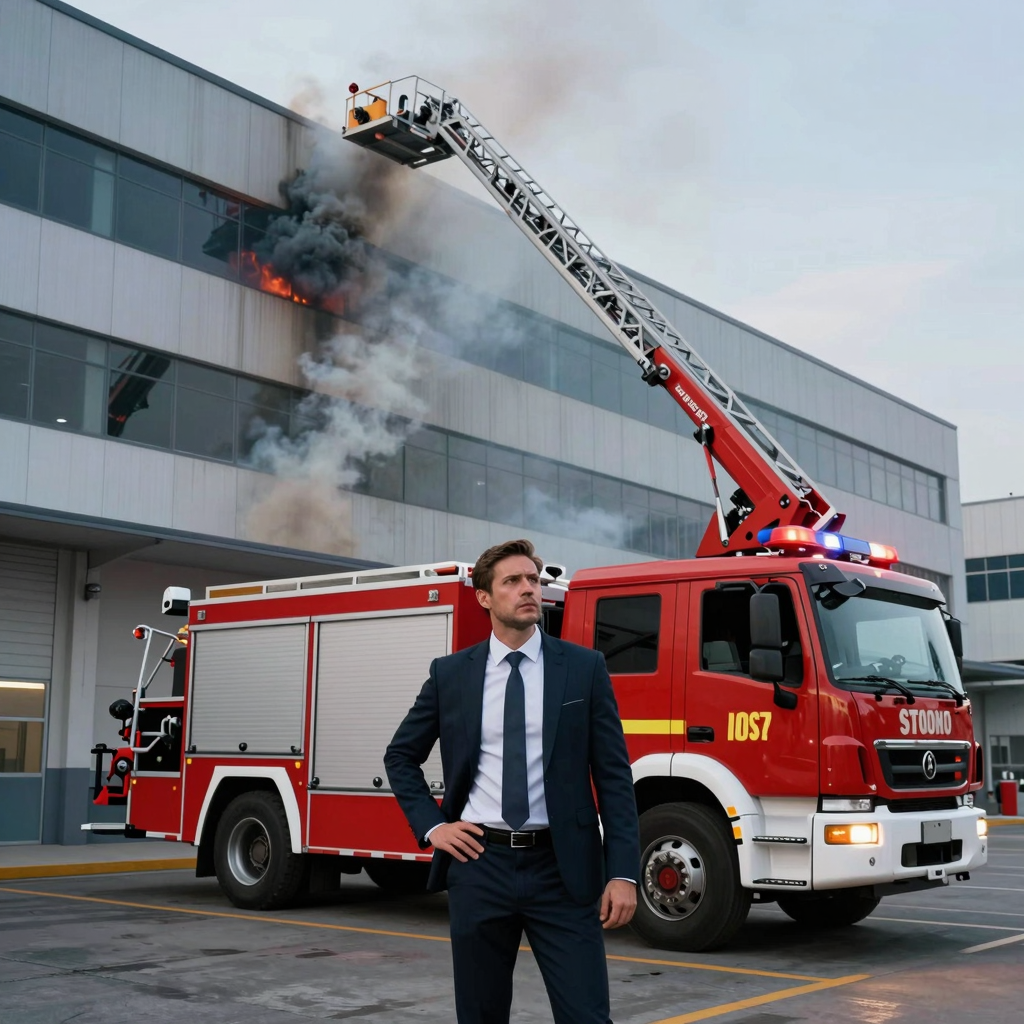
The One Decision That Could Save Your Business
Imagine this: It’s 2:47 AM on a Tuesday. Your phone rings with a call that stops your heart-your commercial facility is on fire. By the time you arrive, flames are consuming the third-floor storage wing, smoke is billowing across the roofline, and your largest client’s inventory-worth nearly half a million dollars-is hanging in the balance. The fire department is on scene, but their ground-level hoses can’t reach the upper floors. What they need is an aerial fire truck for sale-a piece of equipment specifically designed to fight fires at height, conduct elevated rescues, and deliver suppression power exactly where it’s needed most. Without it, your building, your employees, and your entire livelihood face catastrophic loss.
For any business owner who manages a multi-story commercial property, a warehouse, a manufacturing plant, or an industrial complex, this scenario isn’t just a nightmare-it’s a very real risk. According to the National Fire Protection Association, over 27% of all U.S. building fires occur in non-residential commercial properties, and in 2025, China alone reported 841,000 fires with direct property losses exceeding 8.53 billion yuan (approximately $1.24 billion USD). When standard firefighting methods fall short, aerial apparatus becomes the difference between a contained incident and a total loss. From warehouses with high rack storage to office towers and distribution centers, industrial fire protection demands serious, specialized equipment.
Owning your own aerial fire truck isn’t just about crisis readiness-it’s about responsibility. It’s about looking your team in the eye and knowing you’ve invested in their safety. It’s about protecting your physical assets, your operational continuity, and your reputation. And it’s a smarter financial decision than many business owners realize. This article will walk you through everything you need to know about finding the right aerial fire truck for sale so you can make an informed, confident purchase that safeguards what matters most.

What Is an Aerial Fire Truck and Why Does Your Business Need One?
An รถดับเพลิงที่บิน is a specialized fire apparatus equipped with a power-operated extendable ladder or elevating platform designed to reach heights that conventional fire engines cannot access. Unlike standard pumpers that attack fires from ground level, aerial trucks provide vertical reach – typically between 75 and 137 feet – making them essential for multi-story buildings, warehouses with tall racking, and industrial facilities.
Core Components of an Aerial Fire Truck
Every aerial apparatus relies on several key mechanical systems:
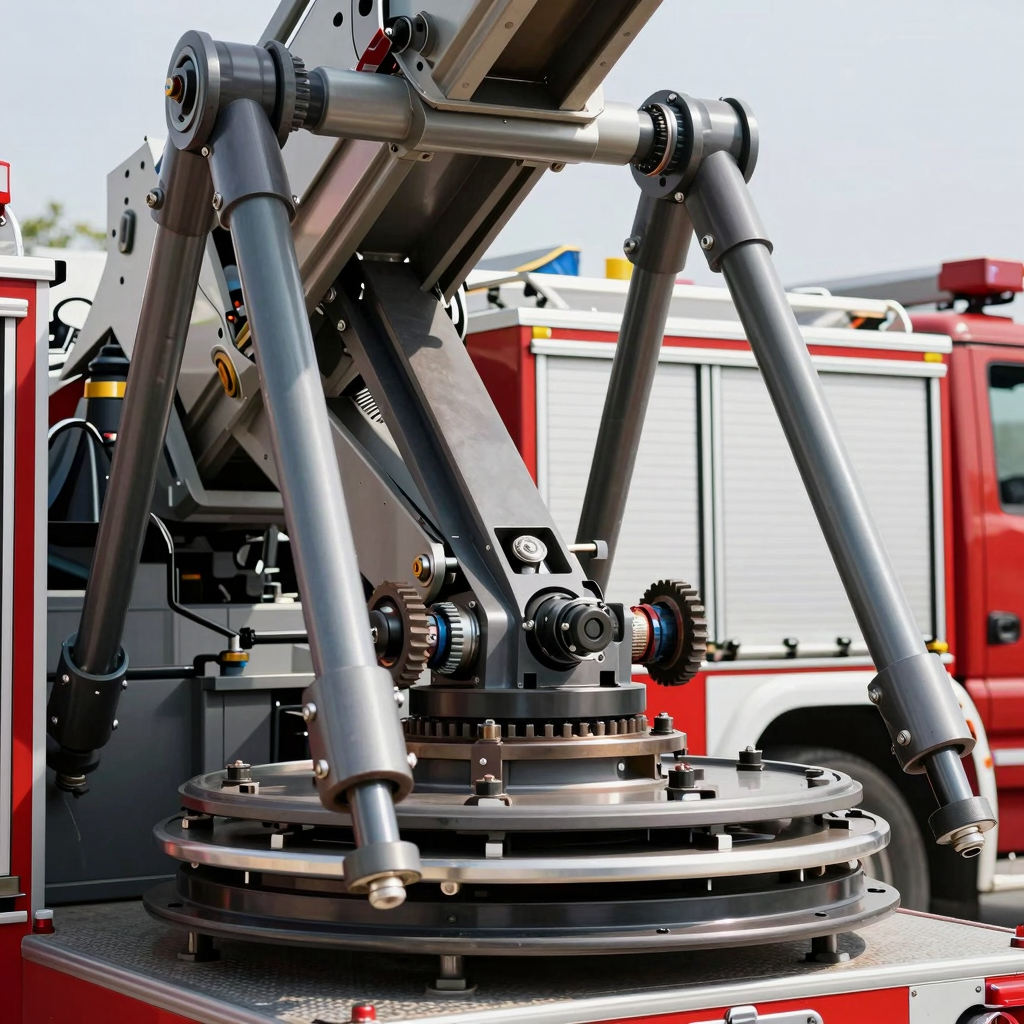
- Turntable – A rotating base mounted behind the cab that allows the aerial device to pivot 360 degrees for precise positioning around a structure.
- Aerial Device (Ladder or Platform) – The extendable boom. Ladder types have a runged climbing surface; platforms feature a basket with a railing for carrying firefighters and equipment.
- Water Pump & Plumbing – Most aerials integrate a fire pump (1,000-2,000 GPM) and a pre-plumbed waterway through the ladder to supply monitor nozzles at the tip.
- Stabilizers (Outriggers) – Hydraulic legs that extend laterally to Level the truck and prevent tipping during elevated operations.
- Control Station – Located at the turntable, the operator can raise, lower, extend, retract, and rotate the aerial device with precise hydraulic controls.
Real-World Context: According to the NFPA, commercial and industrial property fires contributed significantly to the estimated $14.8 billion in direct property damage in the U.S. in 2019 alone. Having an aerial apparatus on-site or readily available can mean the difference between a controlled rooftop fire and a total structural loss.
การจัดการรถบรรทุกที่ยึดอากาศ: ประเภทใดที่เหมาะกับโรงงานของคุณ?
| การจัดการ | Description | ละครบดีสำหรับ | ระยะที่สามารถขยายได้ |
|---|---|---|---|
| รถบรรทุกที่ยึดอากาศตั้งข้างหลัง | อุปกรณ์ที่ยึดอากาศตั้งข้างหลังกุญแจรถ; สามารถใช้เลื่อยยาวขึ้นได้ | โกดังใหญ่ สถานที่อุตสาหกรรมที่เปิด | 100-137 ฟุต |
| ระบบยึดอากาศตั้งกลาง | ตารางหมุนตั้งระหว่างกุญแจรถและร่างหลัง; การกระจายน้ำหนักที่ดีขึ้น | สถานที่ในเมืองแคบ ถนนเข้าเข้าออกแคบ | 75-107 ฟุต |
| รถขุดดินที่ขับดัน | หน่วยรถขุดดินที่แยกออกมาขับรถไฟฟ้าตั้งขึ้นด้วยลำเลื่อย | ลำเลื่อยยาวมาก ความเคลื่อนไหวที่ละเอียดอ่อนในถนนแคบ | 100-137 ฟุต |
| Aerial Ladder Truck | Open rung ladder; firefighters climb to reach the tip | Rescue operations, roof access | 75-137 ft |
| รถดับเพลิงแพลตฟอร์ม | Enclosed basket with railing; can carry crew and equipment aloft | High-rise rescue, bulk foam/water delivery at height | 75-130 ft |
Ladder vs. Platform – A Quick Breakdown:
- Aerial Ladder Truck – Lighter, faster to set up, longer reach potential. Firefighters must climb the rungs to operate at the tip. Ideal for roof ventilation and rescue.
- รถดับเพลิงแพลตฟอร์ม – Safer for transporting personnel and equipment to height via the basket. Can carry hoses, foam systems, and heavy rescue tools. Better for sustained firefighting operations at elevation.
Why Business Owners Must Understand This Equipment
If you operate a large facility – a distribution center, chemical plant, manufacturing floor, commercial real estate complex, or high-bay warehouse – your property poses unique fire risks. Here is why understanding aerial fire apparatus matters for your business:
Vertical Access Limitations – Standard fire engines top out at ground-floor attack. If your facility has high ceilings, mezzanines, elevated storage racks, or a multi-story footprint, only an aerial device can deliver water and personnel to the upper levels.
Risk Management & Property Protection – A fire that reaches the roof or upper levels of an unprotected facility can collapse structural elements, destroy stored inventory, and halt operations for months. Having the right industrial fire equipment on your emergency plan can reduce insurance premiums and mitigate business interruption losses.
Insurance & Compliance Considerations – Many commercial property insurers require proof that local fire services can reach the highest point of your building. If municipal response times are slow or equipment is inadequate, investing in your own aerial ladder truck or on-site fire response capability may be a smart financial decision.
ประสิทธิภาพในการปฏิบัติงาน – Modern platform fire trucks can deliver up to 2,000 gallons per minute of water or foam concentrate at heights above 100 feet. For sites storing flammable liquids, chemicals, or combustible materials, that reach is not optional – it is critical.
Bottom Line: Understanding the difference between a rear-mount aerial, a tiller truck, and a platform unit helps you specify the right equipment when evaluating an aerial fire truck for sale. The wrong configuration may not fit your site’s access constraints or height requirements.
The Business Case for On-Site or On-Call Aerial Capability
For many business owners, the decision comes down to risk tolerance. Consider this:
- The average new aerial fire truck costs between $650,000 and $950,000 (2024-2025 industry data).
- A single commercial fire can cause millions in property damage, inventory loss, and revenue interruption.
- Municipal fire departments may take 10-18 minutes to arrive – time during which an incipient rooftop fire can become fully involved.
If your facility exceeds three stories, houses high-value assets, or operates in a remote or rural area where fire department access is limited, an on-premise aerial fire truck for sale could be one of the most impactful asset protection investments you ever make.
In the next section, we will explore the key specifications to evaluate when comparing aerial fire trucks for your specific business application.
Types of Aerial Fire Trucks: A Comprehensive Comparison for Business Buyers
When investing in an aerial fire truck for sale, understanding the differences between configurations is critical for making a cost-effective purchase that aligns with your operational needs. Below is a side-by-side comparison of the five primary aerial fire truck types, with specifications based on industry standards and real-world data.
| ประเภทรถ | คุณสมบัติหลัก | ละครบดีสำหรับ | ระยะที่สามารถขยายได้ | ข้อดี | ข้อเสีย |
|---|---|---|---|---|---|
| รถบรรทุกที่ยึดอากาศตั้งข้างหลัง | Ladder mounted at rear of chassis; longer boom extension; 6×4 or 4×2 drive configurations; hydraulic outriggers for stability; 360° ladder rotation; diesel engine (251-350 HP); Euro 4/6 emission compliance | High-rise buildings, urban fire departments, industrial facilities requiring maximum vertical reach (e.g., warehouses, manufacturing plants) | 28-32 m (92-105 ft) | ✓ Longest reach for high-rise operations ✓ การขยายสายระบาดที่ดีขึ้นเนื่องจากตัวรถยนต์ยาวขึ้น ✓ ลักษณะเหมาะสมสำหรับการกู้ภัยอาคารสูงและดับเพลิง ✓ มีอยู่ในการก่อสร้างด้วยโลหะแอลยูมิเนียมที่น้ำหนักเบา | ✗ ระยะรอยล้อยาวลดความเร็วในทางวงจรอย่างเล็ก ✗ รัศมีหมุนเวียนใหญ่ขึ้น ✗ ต้องการพื้นที่เก็บเกี่ยวและจอดยาวมากขึ้น ✗ ต้นทุนการซื้อเริ่มต้นสูงขึ้น |
| ระบบยึดอากาศตั้งกลาง | สายระบาดตั้งอยู่ระหว่างกางเขนและของหลัง; การกระจายน้ำหนักที่ดีขึ้น; ระยะรอยล้อยาวเล็กขึ้น; การขับเคลื่อน 6x4; การเคลื่อนย้ายเร็ว; สายระบาดหมุน 360°; เครื่องยนต์ 251-350 แรงม้า | ถนนในเมืองแนบแน่น; หน่วยดับเพลิงในเมืองชนบท; สถานที่ที่มีทางเข้าแคบ; สถานีท้องถิ่นที่ต้องการความเร็ว | 24-32 ม. (79-105 ฟุต) | ✓ ความเร็วในที่ส่วนเล็กที่ดีขึ้น ✓ การสมดุลน้ำหนักและความเสถียรที่ดีขึ้น ✓ การตั้งและเคลื่อนย้ายเร็วขึ้น ✓ พื้นที่เล็กขึ้นสำหรับเก็บเกี่ยว | ✗ ระยะสูงสุดที่สามารถขยายได้เล็กกว่าที่ติดตั้งที่ด้านหลัง ✗ ความยาวของ Boom จำกัดโดยการออกแบบของกางเขน ✗ อาจจะไม่ได้ถึงอาคารสูงที่สุดในบางเมือง |
| รถยนต์ขุดที่มีที่สูง (Tiller) | รถสองส่วน (รถขุด + รถขบวน); ตัวเซาะของที่สูงควบคุมล้อท้าย; การออกแบบที่มีลักษณะย่อย; ความยาวที่สามารถขยายได้ 27-33.5 ม. (90-110 ฟุต); รัศมีการหมุนที่เล็กมาก; ต้องมีผู้ปฏิบัติงานสองคน | พื้นที่ประวัติศาสตร์แคบ; จุดศูนย์กลางเมืองที่แออัด; สถานที่ที่มีมุมโค้งเล็ก; แผนกที่ต้องการความสูงที่สูงและความเร็วที่สูง | 27-34 ม. (90-110 ฟุต) | ✓ ความเร็วที่สูงที่สุดของทุกชนิดที่สูง ✓ สามารถขยายไปถึง 110 ฟุต ✓ ที่สูงที่สามารถหมุนมุมโค้งเล็กได้ ✓ ละเอียดที่ดีสำหรับถนนแคบและหลุดโค้ง | ✗ ต้องมีผู้ปฏิบัติงานที่ได้รับการฝึกฝนสองคน (รถขุด + ที่สูง) ✗ การปฏิบัติงานและการฝึกฝนที่ซับซ้อน ✗ ความยาวของรถทั้งหมดยาวขึ้น ✗ ต้นทุนการซ่อมบำรุงที่สูงเนื่องจากการย่อย |
| ที่สูงของแผง (Bucket/Snorkel) | Work platform/large bucket at end of boom; straight or articulating arm options; 360° rotation; 400-500 kg platform capacity; can carry multiple firefighters and equipment; some models reach 50+ m | High-rise apartment buildings, skyscrapers, large industrial complexes, petrochemical plants, airport rescue teams | 25-53 m (82-174 ft) | ✓ Carries multiple personnel with equipment ✓ Stable elevated work platform ✓ Articulating booms can reach over obstacles ✓ Highest reach options available (up to 53 m) ✓ Better for rescue operations | ✗ Heavier than standard ladders ✗ Slower to deploy ✗ Higher purchase and maintenance cost ✗ Requires more operator training |
| Straight Ladder Aerial | Simple fixed or telescoping ladder; no platform; lightweight design; rapid deployment; 360° rotation; manual or hydraulic extension; compact chassis; 4×2 drive | Low- to mid-rise buildings, rural fire departments, smaller municipalities, cost-conscious buyers, quick-response units | 18-24 ม. (59-79 ฟุต) | ✓ ทางเลือกที่มีราคาถูกที่สุด ✓ ระยะเวลาการติดตั้งเร็วที่สุด ✓ ออกแบบทางกลศาสตร์ที่ง่ายต่อการซ่อมบำรุง ✓ น้ำหนักเล็ก ประสิทธิภาพเชื้อเพลิงดี ✓ขนาดเล็กสำหรับเก็บเกี่ยวง่าย | ✗ ไม่มีแผงสำหรับขนส่งเจ้าหน้าที่ ✗ ขอบเขตการเข้าถึงจำกัด (ต่ำกว่า 80 ฟุต) ✗ ไม่เหมาะสำหรับอาคารสูง ✗ ความสามารถในการกู้ภัยที่สูงจำกัด |
วิธีเลือกรถดับเพลิงที่สูงที่สุดสำหรับธุรกิจของคุณ
การเลือกอุปกรณ์ที่เหมาะสมขึ้นกับหลายปัจจัยสำคัญ:
- ความสูงของอาคารในพื้นที่ที่คุณครอบคลุม – ถ้าธุรกิจหรือเทศบาลของคุณบริการอาคารที่สูงกว่า 75 ฟุต แผงหลังติด, แผงที่มีแบบทิลเลอร์ หรือแผงที่สามารถเลื่อนขึ้นได้เป็นสิ่งจำเป็น สำหรับพื้นที่ต่ำ แผงตรงหรือแผงติดกลางอาจเพียงพอ.
- ความจำกัดของถนนและวิถีเข้าถึง – Facilities in narrow urban corridors or with tight turning lanes benefit from mid-mount or tiller aerials.
- Budget Considerations – Straight ladder aerials offer the lowest entry cost, while platform and tiller trucks represent premium investments.
- Crew Availability – Tiller trucks require two operators. If staffing is limited, a rear-mount or mid-mount with single-operator capability is more practical.
- Multi-Function Needs – Consider that many modern aerials can be spec’d as quint apparatus (combining pump, water tank, hose, aerial ladder, and platform) for maximum versatility.
For a deeper look at the full range of available apparatus and pricing, explore our complete selection of fire trucks for sale or consult our buying guide for business owners.
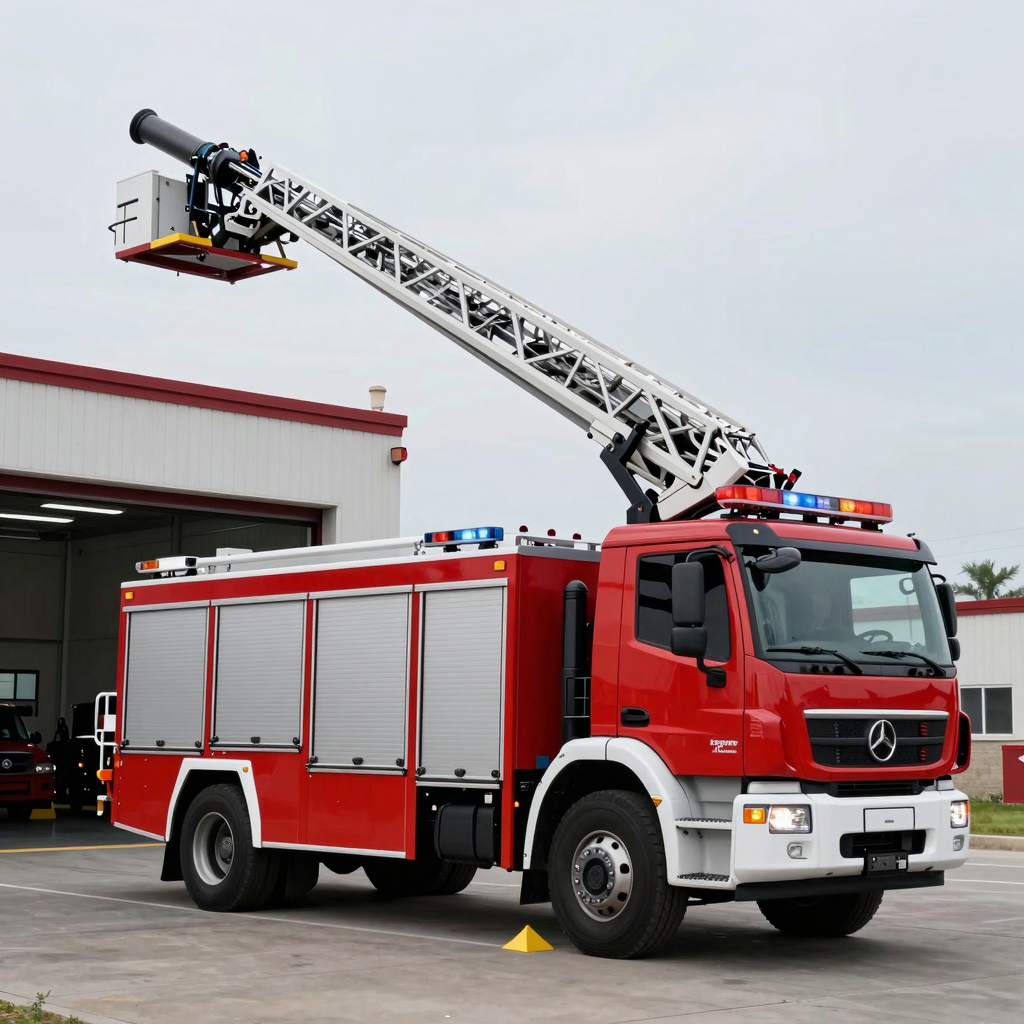
Key Features to Evaluate When Buying an Aerial Fire Truck
Investing in an aerial fire truck for sale is one of the most significant capital decisions a business or fire department can make. Whether you are a private fire protection contractor, an industrial facility manager, or a municipal fire chief, understanding the critical specifications and fire apparatus features will ensure you select a vehicle that delivers performance, safety, and long-term value. Below, we break down every essential feature you must evaluate before making a purchase.
1. Aerial Reach Height and Angle
The defining feature of any aerial apparatus is how high and how far it can reach. Aerial ladder reach typically ranges from 75 feet to over 100 feet for standard municipal trucks, while industrial models can extend up to 68 meters (223 feet) or more. The ladder’s elevation angle – usually between -10° and +75° – determines how effectively the truck can operate in tight urban environments or around obstacles. A 100-foot aerial ladder can reach approximately 10 to 12 stories, making it ideal for mid-rise building fires. Always match the aerial ladder reach to the building heights in your response area.
2. Water Pump Capacity (GPM)
Fire truck pump capacity is measured in gallons per minute (GPM) and is regulated by NFPA 1901 standards. Minimum pump capacity for modern pumpers is 1,000 GPM at 20 psi discharge pressure, with many departments now specifying 1,500 GPM or higher for primary response vehicles. High-capacity units used in metropolitan areas can exceed 2,000 GPM. The pump must also deliver 500 GPM at 200 psi for effective hose stream operations. When evaluating an aerial fire truck for sale, verify that the pump rating aligns with your coverage area’s fire flow demands – high-density commercial zones require greater fire truck pump capacity than rural districts.
3. Water Tank Size
Water tank capacity directly affects how long your crew can fight a fire before needing a hydrant connection or water shuttle. Typical tank sizes range from 500 gallons on smaller units to 1,000-1,500 gallons on standard pumpers. Some industrial aerial trucks carry tanks as large as 5,000 liters (~1,320 gallons) or more. Larger tanks reduce the need for immediate external water supply but add significant weight, affecting the vehicle’s gross vehicle weight rating (GVWR) and axle load distribution.
4. Foam System Capability
A built-in foam proportioning system is critical for combating Class B flammable liquid fires. Foam tanks typically range from 20 to 100 gallons on smaller units, up to 660 liters on medium-sized trucks, and 1,000 liters or more on heavy-duty apparatus. Look for systems that support multiple foam types (AFFF, CAFS, or Class A) and offer adjustable injection rates. For industrial facilities handling fuels, solvents, or chemicals, a robust foam system is non-negotiable.
5. Stabilizer / Jack System
Aerial stability is paramount for crew safety. Outriggers (stabilizer jacks) deploy from both sides of the truck to create a wide, stable footprint before the ladder is elevated. Most modern aerials feature hydraulic H-style or A-style outriggers with automatic leveling systems. Some models include interlock systems that prevent ladder operation unless all stabilizers are fully deployed and the truck is level. Always test the stabilizer deployment speed and ensure the system can handle the rated tip load of the ladder at full extension.
6. Operator Controls (Joystick vs. Manual)
Modern aerial fire trucks offer joystick-based electronic controls that allow a single operator to manage ladder elevation, rotation, and extension simultaneously with precision. These systems often include programmable pre-set positions and safety limit switches. Manual lever controls, while more traditional, require greater operator skill and physical effort. Digital joystick systems reduce operator fatigue and improve response times, especially during complex rescue operations.
7. Platform Weight Capacity
The platform (or bucket) at the top of the aerial must support the weight of firefighters, victims, and equipment simultaneously. Typical platform weight capacities range from 400 kg (~880 lbs) to 750 kg (~1,650 lbs), accommodating 2 to 4 persons plus gear. Industrial platforms on larger aerials can carry up to 3-5 tons for specialized rescue or equipment hoisting operations. Never exceed the platform’s rated capacity, as this compromises stability and safety.
8. Material and Build Quality (Steel vs. Aluminum Alloy)
The choice between steel and aluminum significantly impacts longevity and operating costs:
| Material | Advantages | Disadvantages |
|---|---|---|
| สเตลล์ | Lower upfront cost, high durability, easier to repair | Heavier (reduces payload), prone to rust/corrosion without proper coating |
| Aluminum Alloy | Up to 30% lighter, excellent corrosion resistance, better fuel efficiency, higher payload capacity | Higher initial cost, requires specialized welding for repairs |
For departments operating in coastal or humid environments, aluminum’s corrosion resistance offers major long-term savings. Steel remains a reliable, budget-friendly choice for fleets with lower annual mileage.
9. Lighting and Warning Systems
Visibility saves lives. Modern apparatus must feature LED warning light arrays (beacons, strobes, and scene lights) that meet NFPA and SAE standards. Look for:
- Multi-color LED light bars (red, blue, amber) with multiple flash patterns
- Scene lighting (telescoping light towers or floodlights) for nighttime operations
- Platform-mounted spotlights for aerial rescue illumination
- Reflective chevron striping on the rear for traffic safety
10. Storage Compartments
A well-designed storage layout maximizes equipment capacity without compromising chassis balance. Look for:
- Low-profile side compartments for hose storage
- ช่องที่มีความสูงเท่ากับความสูงทั้งหมดของรถ สำหรับปีนบันไดและท่อที่ใช้ในการขนย้ายอากาศ
- ช่องที่ปิดตัวและที่ล็อกดินแดนอากาศ สำหรับอุปกรณ์อิเล็กทรอนิกส์และอุปกรณ์ทางการแพทย์
- ตะกร้าเลื่อนและเส้นทางเก็บที่สามารถปรับเปลี่ยน สำหรับการเข้าถึงอุปกรณ์ที่จัดการได้ดี
ปริมาณช่องที่ทั้งหมดควรตรงกับความต้องการการปฏิบัติงานของคุณ – รถบินที่ปกคลุมทั้งหมดในเมืองปกติอาจต้องการพื้นที่เก็บที่ปิดตัว 120+ ลูกบาศก์ฟุต.
11. การจัดเซ็ตของคาบ
NFPA 1917 กำหนดให้เครื่องบินที่มีลำตั้งบันไดต้องมีที่นั่งของคนงานอย่างน้อย 6 คน: คนขับรถ คนปฏิบัติงานทางบิน และ 4 นักดับเพลิง. คาบมีอยู่ใน มาตรฐาน (2 ประตู) หรือ คณะ (4 ประตู) การจัดเซ็ต. คาบคณะทำให้ง่ายต่อการเข้าและออก และมีการสื่อสารที่ดีกับสมาชิกทีมระหว่างการเดินทาง. บางรุ่นที่ที่สามารถทำเป็นเครื่องที่มีที่นั่งได้ถึง 8 หรือ 10 ที่มีที่นั่งที่เชื่อมต่อกับที่นั่ง SCBA และระบบวิทยุ/สื่อสารกลาง. เลือกการจัดเซ็ตที่ตรงกับขนาดทีมของคุณและโมเดลการตอบสนองการปฏิบัติงานของคุณ.
Buyer’s Mini-Checklist ✅
Before signing the purchase agreement for your aerial fire truck for sale, use this checklist to ensure you’ve covered every critical feature:
- [ ] Aerial Reach – Does the ladder height cover the tallest buildings in your response zone?
- [ ] Pump Capacity – Is the GPM rating sufficient for your area’s fire flow requirements?
- [ ] ถังน้ำ – Is the tank size adequate for initial attack without hydrant support?
- [ ] Foam System – Are foam capabilities matched to your hazard profile (Class A, B, or both)?
- [ ] Stabilizers – Do outriggers provide a stable platform at maximum ladder extension?
- [ ] Controls – Are joystick controls available for faster, more precise aerial operation?
- [ ] Platform Capacity – Can the platform safely carry your crew plus rescue equipment?
- [ ] Build Material – Is steel or aluminum better suited for your climate and budget?
- [ ] Lighting – Are LED scene lights and warning beacons adequate for night operations?
- [ ] Storage – Does compartment volume and layout meet your gear-carrying requirements?
- [ ] Seating – Does the cab accommodate your full crew with safety restraints?
Pro Tip: For a comprehensive walkthrough of the entire purchasing process, explore our complete guide to buying a fire truck where we cover budgeting, financing, and inspection procedures in depth. If you are a business owner looking to add aerial apparatus to your fleet, check out our business buyer’s guide for fire trucks for tailored advice on ROI and operational planning.
Cost Analysis and ROI – What Business Owners Should Budget
Investing in an aerial fire truck is a major capital decision. Understanding the full cost picture – from the initial purchase to long-term ownership – helps business owners make informed choices that protect both their assets and their bottom line.
Price Range: New vs. Used Aerial Fire Trucks
การ fire truck price for aerial apparatus varies significantly based on age, specifications, and condition. A new aerial fire truck typically ranges from $500,000 ถึงเกิน $1.5 ล้าน, ขึ้นอยู่กับความสูงของระเบียง, ความสามารถของปั้ม, และการปรับแต่งเฉพาะตัว. โมเดลกลางที่มีระเบียงยาว 75 ถึง 100 ฟุตมักอยู่ระหว่าง $700,000 และ $1.2 ล้าน.
รถดับเพลิงที่ใช้แล้วเป็นทางเข้าที่มีงบประมาณเพียงพอ. หน่วยที่ดูแลดีและมาจากผู้ผลิตที่มีชื่อเสียงอาจมีราคาระหว่าง $200,000 และ $600,000, ทำให้มันดูดวงตาของธุรกิจที่ต้องการที่จะสู่ความสามารถและการลงทุนต้นทุน. อย่างไรก็ตาม รถที่ใช้แล้วอาจมีค่าซ่อมบำรุงสูงขึ้นและขาดลักษณะความปลอดภัยล่าสุด.
ค้นหาสินค้าที่มีอยู่ในตอนนี้ของรถดับเพลิงที่สามารถขายได้ เพื่อเปรียบเทียบทางเลือกใหม่และที่ใช้แล้ว.
ปัจจัยที่ส่งผลต่อราคา
ปัจจัยหลายประการที่มีผลต่อราคาสุดท้าย ของรถดับเพลิงที่สามารถขึ้นอากาศได้:
- ความสูงที่เข้าถึงได้: ระเบียงยาว 50 ฟุตถึงเกิน 100 ฟุต – ขั้นตอนที่สูงขึ้นมีราคาสูงขึ้น
- แบรนด์และผู้ผลิต: แบรนด์ระดับสูงที่มีความน่าเชื่อถือและเครือข่ายบริการที่มีค่ามากขึ้น
- การปรับแต่งเฉพาะตัว: ระบบโฟมที่เชื่อมโยงกัน, จอควบคุมระยะไกล, ช่องที่มีความเฉพาะเจาะจง, และสีที่ทำเองเพิ่มค่าเงิน $50,000 ถึง $200,000+
- Pump Capacity: ระดับ GPM ที่สูงขึ้น (1,500 ถึง 2,000+ GPM) ทำให้ค่าใช้จ่ายเพิ่มขึ้น
- การปรับรูปร่างของเชื้อเพลิง: 4×2 ต่อ 4×4 ต่อ 6×6 ระบบขับเคลื่อนที่มีผลต่อราคาอย่างมาก
| ปัจจัยที่มีผลต่อค่าใช้จ่าย | ผลกระทบต่อราคา | ขอบเขตปกติ |
|---|---|---|
| ความสูงของเลื่อย (50-75 ฟุต) | ต้นตอ | $500K – $800K |
| ความสูงของเลื่อย (75-100 ฟุต) | +$200K – $400K | $800K – $1.2M |
| ระบบโฟมที่ทำเอง/CAFS | +$50K – $120K | ส่วนเสริม |
| แบรนด์พรีเมียม (ตัวอย่าง: Pierce, E-One) | +15% – 25% | พรีเมียม |
| สินค้าใช้แล้ว vs. สินค้าใหม่ | -40% – 60% | $200K – $600K |
ตัวเลือกการจัดเงินและการเช่า
การซื้อรถดับเพลิงที่ยกระหว่างอากาศไม่ต้องจ่ายค่าใช้จ่ายทั้งหมดในตอนแรก. ผู้บริหารธุรกิจสามารถตรวจสอบเส้นทางการจัดเงินหลายแห่ง:
- สินเชื่ออุปกรณ์: การจัดเงินแบบธนาคารทางเก่ากับเงื่อนไข 5 ถึง 10 ปี อัตราดอกเบี้ยปกติ 4% ถึง 8%
- Leasing: การเช่าปฏิบัติการที่มีค่าใช้จ่ายต่อเดือนต่ำ และมีตัวเลือกที่จะปรับปรุงหลังจาก 5-7 ปี
- การเช่าของทางที่รับผลประโยชน์ของทางราชการ: สัญญาเช่าซื้อที่ไม่ต้องจ่ายภาษีสำหรับธุรกิจดับเพลิง
- การจัดเงินของผู้ผลิต: Some OEMs offer in-house financing with competitive rates
Explore various purchase and financing options to find the right fit for your budget.
Tax Benefits and Depreciation
One of the most powerful financial incentives for purchasing fire apparatus is the Section 179 deduction. For 2024 and 2025, businesses can deduct up to $1,220,000 of the purchase price in the first year the equipment is placed in service. Combined with 100% bonus depreciation (now permanent for qualifying assets under the Tax Cuts and Jobs Act), many businesses can write off the entire cost of their aerial fire truck in year one.
This means a $950,000 aerial fire truck could save a business over $300,000 in federal taxes in the first year alone – dramatically improving cash flow and shortening the effective payback period.
Total Cost of Ownership (TCO)
Looking beyond the purchase price is critical. Here is the estimated 10-year TCO for a mid-range aerial fire truck:
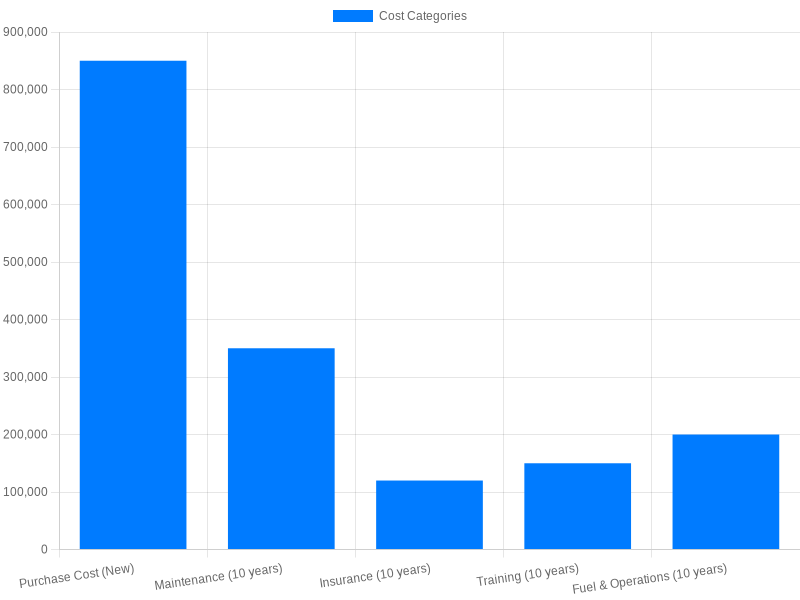
ค่าใช้จ่ายประจำปีรวมถึง:
- การซ่อมบำรุงและการซ่อมแซม: $20,000 – $50,000 ต่อปี (ข้อมูลจาก NFPA และ FireRescue1)
- Insurance: $8,000 – $15,000 ต่อปี
- Training: $10,000 – $20,000 ต่อปีสำหรับการรับรองตรวจสอบและการฝึกซ้อม
- น้ำมันและการปฏิบัติงาน: $15,000 – $25,000 ต่อปี
ในระยะเวลา 10 ปี ค่าใช้จ่ายทั้งหมดเกินราคาซื้อสามารถเข้าถึง $600,000 ถึง $900,000, ทำให้ค่าใช้จ่ายทั้งหมดที่มีประโยชน์ที่สูงที่สุดอยู่ที่ $1.3 ล้านถึง $2.1 ล้าน.
การคำนวณ ROI สำหรับธุรกิจของคุณ
ในขณะที่ค่าใช้จ่ายตอนต้นเป็นสิ่งที่มีค่ามาก รถดับเพลิงที่มีหลังคาสามารถนำมาโดยสารผลที่สามารถมีการวัดได้:
- ค่าที่ดินและอาคารที่ได้รับการปกป้อง: การเกิดเพลิงไหม้ในอาคารเดียวก็สามารถสร้างความเสียหายมากกว่า $500,000 รายละเอียด. การตอบสนองทางอากาศเร็วสามารถลดความเสียหายลงได้ 50-70 %
- 1. การลดราคาประกันชีวิต2. : อสังหาริมทรัพย์ที่มีรถดับเพลิงในบริเวณหรือมีการป้องกันเพลิงดับที่ดีขึ้น สามารถลดราคาประกันชีวิตลงจาก 10% ถึง 30% 3. (ข้อมูลของสถาบันข้อมูลประกันชีวิต) 4. : รถดับเพลิงที่ตั้งอยู่ในบริเวณดับเพลิงลดเวลาตอบสนองจาก 8-12 นาที (ของเมือง) ลงเหลือต่ำกว่า 3 นาที ป้องกันการแพร่ไฟ
- Faster Response Times5. การลดความรับผิดชอบ
- 6. : การเข้าระบบรวดเร็วลดความรับผิดชอบของบุคคลที่ไม่ได้รับการแจ้งและค่าใช้จ่ายในการหยุดการปฏิบัติงานของธุรกิจ7. ตัวอย่างของกรณีเล็กๆ: การเปรียบเทียบ ROI 10 ปี
8. สถานการณ์
9. : บริษัทขนส่งสินค้าที่มีอาคารโกดังที่มีขนาด 150,000 ตารางฟุต ซื้อรถดับเพลิงที่มีระดับกลาง10. ต้นทุน (การซื้อ + การปฏิบัติการ) $850,000.
| Year | 11. ค่าตอบแทนที่สร้างขึ้น | 12. ตำแหน่งสุดท้าย | 13. ปีที่ 1 (การซื้อ) |
|---|---|---|---|
| 14. +$90,000 (บouns ภาษี) | -$850,000 + -$82,000 | +$90,000 (tax savings) | -$842,000 |
| ปี 2-5 | -$328,000 (การปฏิบัติงาน) | +$320,000 (บริการเคลือบประกัน +ทรัพย์สินที่ได้รับการปกป้อง) | -$850,000 |
| ปี 6-10 | -$410,000 (การปฏิบัติงาน) | +$600,000 (หลีกเลี่ยงไฟไหม้ +บริการเคลือบประกันที่มีอายุ) | -$660,000 |
| รวม 10 ปี | -$1,670,000 | +$1,010,000 | -$660,000 สุทธิ |
โดยไม่มีรถบรรทุก: ไฟไหม้หนึ่งครั้งใหญ่สามารถก่อให้เกิด $2-5 ล้านบาท ในความเสียหายทรัพย์สิน และ $500K+ ในการหยุดการปฏิบัติงานของธุรกิจ. ด้วยรถบรรทุก: ไม่มีไฟไหม้หนึ่งครั้งใหญ่เกิดขึ้นใน 10 ปี, property values preserved, insurance savings of $15,000/year, and response readiness ensured.
Verdict: The $660,000 net cost over 10 years equals just $66,000 per year – a small price for protecting multi-million-dollar assets, reducing liability exposure, and potentially saving lives.
Final Thoughts
For business owners evaluating an aerial fire truck for sale, the decision should balance upfront cost against the tangible financial protections it provides. Between Section 179 tax deductions, insurance savings, asset protection, and the peace of mind of rapid fire response, the ROI story is compelling. When you factor in financing flexibility and leasing options, owning an aerial fire apparatus becomes an achievable and financially sound investment for many businesses.
10-Year Cost Breakdown – Aerial Fire Truck Investment
Understanding the full lifecycle cost of an aerial fire truck is essential for smart budgeting. While the purchase price grabs attention, the total cost of ownership (TCO) over a decade includes maintenance, insurance, training, and financing – often adding up to nearly double the initial investment.
Chart: 10-Year Cost Breakdown by Truck Type
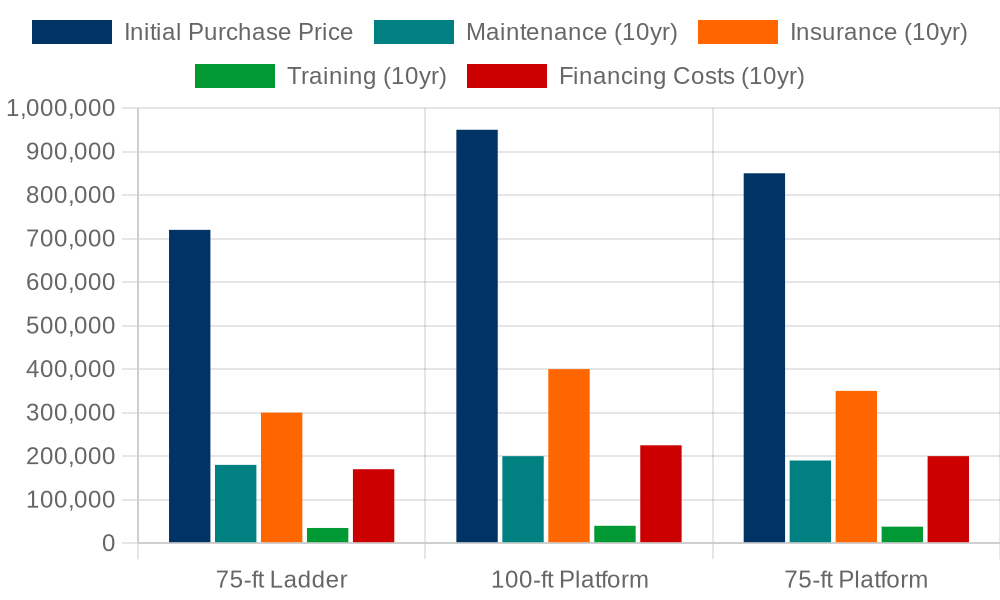
Stacked bar chart showing total 10-year costs for three aerial truck configurations. Source data compiled from 2024 industry reports by FireRescue1, NFPA, and Fire Chief Magazine.
ข้อสรุปสำคัญจากข้อมูล
| ประเภทค่าใช้จ่าย | สายปีนสูง 75 ฟุต | แผงสูง 75 ฟุต | แผงสูง 100 ฟุต |
|---|---|---|---|
| Initial Purchase Price | $720,000 | $850,000 | $950,000 |
| การซ่อมบำรุง (10 ปี) | $180,000 | $190,000 | $200,000 |
| ประกันชีวิต (10 ปี) | $300,000 | $350,000 | $400,000 |
| การฝึกอบรม (10 ปี) | $35,000 | $38,000 | $40,000 |
| ค่าใช้จ่ายการจัดสรรเงิน (10 ปี) | $170,000 | $200,000 | $225,000 |
| Total 10-Year Cost | $1,405,000 | $1,628,000 | $1,815,000 |
สิ่งนี้หมายความว่าสำหรับการตัดสินใจลงทุนของคุณ
- ราคาซื้อตอนแรกเป็นเพียงตอนเริ่มต้น. สำหรับทั้งสามการปรับแต่ง ราคาซื้อนับเป็นราคาประมาณ 50-52% ของค่าใช้จ่ายทั้งหมด 10 ปี ซึ่งครึ่งหนึ่งที่เหลือเป็นค่าใช้จ่ายปฏิบัติการต่อเนื่อง.
- ประกันชีวิตเป็นค่าใช้จ่ายที่เกิดขึ้นบ่อยที่สุด. ในช่วง 10 ปี ค่าประกันชีวิตสามารถเติมขึ้นเป็น $300,000-$400,000 – มักจะเกินค่าใช้จ่ายด้านการดูแลและการจัดหาเงินทุนรวมกัน. นี่ทำให้มันเป็นสิ่งที่สำคัญที่ควรนับเป็นตัวเรียกเก็บในงบประมาณของคุณ เมื่อกำหนดที่ตั้งของคุณ ขนาดของฝูงรถ และประวัติการเรียกเก็บ.
- การจัดหาเงินทุนเพิ่มค่าใช้จ่ายที่สำคัญ. ที่ราคาเช่าซื้อปกติของทางราชการประมาณ 6.8% (2024) ค่าใช้จ่ายด้านการจัดหาเงินทุนเมื่อเป็นระยะเวลาสิบปี อยู่ในระดับ $170,000 ถึง $225,000, ขึ้นอยู่กับราคาของรถบรรทุก.
- การฝึกอบรมเป็นบทบาทที่เล็กกว่าแต่ไม่สามารถยกเลิกได้. มาตรฐาน NFPA กำหนดให้ผู้ปฏิบัติงานเครื่องยนต์ที่ส่งขึ้นอากาศเรียกเก็บใหม่ทุกปี โดยเฉลี่ย $3,500-$4,000 ต่อปี.
การปรับรูปแบบไหนที่ให้กำไรสูงที่สุด?
การ รถบรรทุกสายปีก 75 ฟุต มีค่าใช้จ่ายรวมทั้งหมดสิบปีต่ำที่สุดที่ $1.405M, ทำให้มันเป็นทางเลือกที่มีงบประมาณที่เหมาะสมที่สุดสำหรับแผนกที่หลักทำงานด้านบ้านเรือนและสิ่งก่อสร้างที่ต่ำและกลาง แผงสูง 75 ฟุต ที่ $1.628M provides a strong middle-ground – balancing extended reach with manageable costs compared to the แผงสูง 100 ฟุต ที่ $1.815M.
Tip: When evaluating รถดับเพลิงที่บินขาย, always request a total cost of ownership (TCO) analysis from the manufacturer. This ensures you’re comparing apples to apples across vendors.
For a deeper look at available options and configurations, browse our complete fire truck for sale guide to match your budget with the right aerial apparatus.
New vs. Used Aerial Fire Trucks – Pros, Cons, and Key Considerations
When you’re in the market for an aerial fire truck for sale, one of the most critical decisions you’ll face is whether to invest in a brand-new unit or opt for a pre-owned model. Both paths have distinct advantages and trade-offs that can significantly impact your business’s budget, operational readiness, and long-term planning. Here is a comprehensive breakdown to help you decide.

A side-by-side look at new (left) and used (right) aerial fire trucks available for purchase.
The Case for New Aerial Fire Trucks
Buying a new aerial apparatus offers unmatched peace of mind. New trucks come with comprehensive factory warranties – typically covering the chassis, aerial device, pump, and electrical systems for 3 to 5 years. This drastically reduces unplanned repair costs during the critical early years of service. New trucks also arrive 100% compliant with the latest NFPA 1917 and 1910 standards, meaning no costly retrofits or inspection failures. You can customize nearly every aspect – from boom length (18m to 68m) and pump capacity (40 L/s and up) to foam proportioning systems, telematics integration, and custom compartment layouts. Explore complete customization options for new fire apparatus here.
The Case for Used Aerial Fire Trucks
A used fire truck for sale typically costs 40% to 60% less than a comparable new unit. For a business on a tight budget, this price gap can be the difference between acquiring essential equipment now versus waiting years. However, due diligence is critical. Used apparatus must undergo rigorous NFPA-mandated annual aerial device inspections, including structural integrity tests, hydraulic system checks, and load testing – all of which can reveal hidden issues. Financing rates are also higher for used equipment (8.5%-14.99%) compared to new (6.99%-12.99%), reflecting the lender’s increased risk exposure.
Remanufactured and Refurbished Options: The Middle Ground
A compelling third option is a refurbished aerial apparatus. These units undergo a complete strip-down and rebuild, including engine overhauls, hydraulic replacements, and new wiring harnesses. Refurbished trucks can cost up to 40% less than new while offering warranties of up to 5 years. They provide many of the reliability benefits of new equipment at a fraction of the price – ideal for growing enterprises that need quality without the full capital outlay.
Depreciation Curves and Total Cost of Ownership
New aerial fire trucks depreciate steeply in their first two years – roughly 25% in year one and 15% in year two. After that, depreciation slows to 8-10% annually. A new $380,000 truck retains about 65-70% of its value after five years. In contrast, a well-maintained used truck (4-6 years old) holds 45-50% of its original MSRP but has already absorbed the steepest depreciation hit. When factoring total cost of ownership over a 10-year lifecycle, used aerials have been shown to offer 12% lower annual costs when maintenance records are strong.
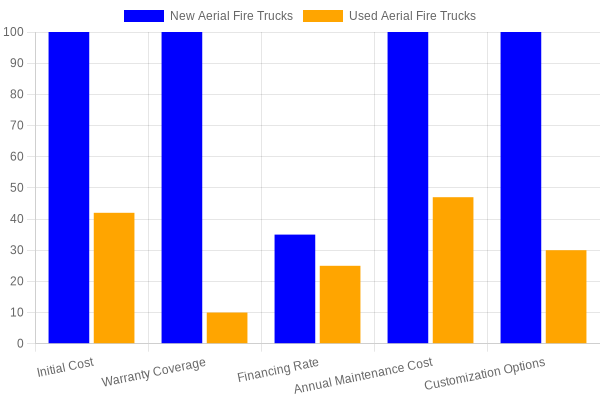
Chart comparing key factors between new and used aerial fire trucks on a 0-100 scale.
Pros and Cons at a Glance
New Aerial Fire Trucks
- ข้อดี: Full factory warranty (3-5 years), NFPA 1917/1910 compliance guaranteed, latest emissions standards (Euro VI/EPA), full customization, lower financing rates (6.99%-12.99%), lower annual maintenance costs (~$8,000/year), latest safety technology
- ข้อลบ: High upfront cost ($250,000-$700,000+), steep first-year depreciation (25%), longer lead times for custom builds, higher insurance premiums
Used Aerial Fire Trucks
- ข้อดี: Significantly lower upfront cost (40-60% less), slower ongoing depreciation, shorter delivery times, ability to inspect actual operating history, lower registration fees
- ข้อลบ: Limited or no warranty, higher financing rates (8.5%-14.99%), higher annual maintenance (~$15,000/year), unknown service history risks, potential NFPA compliance gaps requiring retrofits, limited customization (sold as-is), mandatory annual aerial inspection costs
Refurbished/Remanufactured Aerial Trucks
- ข้อดี: Up to 40% savings vs. new, warranty up to 5 years, rebuilt to manufacturer specs, full structural and hydraulic inspections, modernized components, lower financing than strictly used
- ข้อลบ: Still not fully customizable, may have older chassis design, availability can be limited, may take 4-6 months for refurbishment completion
Key Cost Comparison Table
| Factor | New Aerial | Used Aerial (5-8 yrs) | Refurbished |
|---|---|---|---|
| Average Price | $250,000-$700,000 | $120,000-$350,000 | $150,000-$420,000 |
| Warranty Length | 3-5 years | None or limited (1 yr) | ถึง 5 ปี |
| อัตราการจัดสรรเงิน | 6.99%-12.99% | 8.5%-14.99% | 7.5%-13.5% |
| การซ่อมบำรุงปีละ | ~$8,000 | ~$15,000 | ~$10,000 |
| ประกันตาม NFPA | ทั้งหมด (ปัจจุบัน) | อาจจะต้องปรับปรุง | ทั้งหมด (สร้างใหม่ตามเซ็กชัน) |
| Customization | ทั้งหมด (สร้างตามสั่ง) | สภาพเดิม | การปรับปรุงปานกลาง |
| ระยะเวลาการส่งสินค้า | 6-18 เดือน | มีสินค้าในสต๊อกหรือ <60 วัน | 4-6 เดือน |
| ค่าคงที่ 5 ปี | 65-70% of purchase price | 45-50% of original MSRP | 50-55% of purchase price |
Decision Framework: When Each Option Makes Sense
Choosing the right path depends on your organization’s size, budget, and operational requirements:
Small Business / Tight Budget → Choose Used or Refurbished
If capital is limited and you need functional equipment quickly, a used fire truck for sale or a refurbished unit offers the best value. Focus on trucks with documented service histories and recent NFPA inspection passes. Consider a certified pre-owned program if available.Mid-Size Enterprise / Balanced Strategy → Choose Refurbished
For businesses with moderate budgets that cannot tolerate frequent downtime, a refurbished aerial apparatus delivers near-new reliability at used-truck prices. The warranty coverage offsets much of the risk.Large Enterprise / Specific Operational Needs → Choose New
If you require custom configurations (specific boom length, pump ratings, compartment layouts) and have the capital, a new aerial fire truck for sale is the right choice. You get full warranty protection, latest NFPA compliance, lower financing rates, and maximum service life.Mixed Fleet Strategy
Many successful operators buy new for their primary response vehicle (where reliability is paramount) and supplement with well-vetted used or refurbished units for backup and secondary coverage. This balances capital expenditure with operational readiness.
Final Word
The decision between new and used ultimately comes down to your risk tolerance and budget. New trucks minimize operational surprises but demand significant capital. Used trucks preserve cash but require meticulous inspection and maintenance planning. Refurbished apparatus hits the sweet spot – offering rebuilt reliability at a manageable price. Whatever you choose, always verify NFPA compliance, obtain a third-party inspection, and review full service records before committing. Browse our full selection of new and used fire trucks for sale to explore available options across all categories.
Top Manufacturers and Industry Leaders – A Closer Look
When evaluating aerial fire truck manufacturers for your business or fire department, understanding the competitive landscape is essential. The global aerial fire apparatus market, valued at approximately $1.55 billion in 2025, is shaped by a mix of established North American players, European engineering powerhouses, and rapidly ascending Asian manufacturers. Below, we take a closer look at the industry’s leading names.
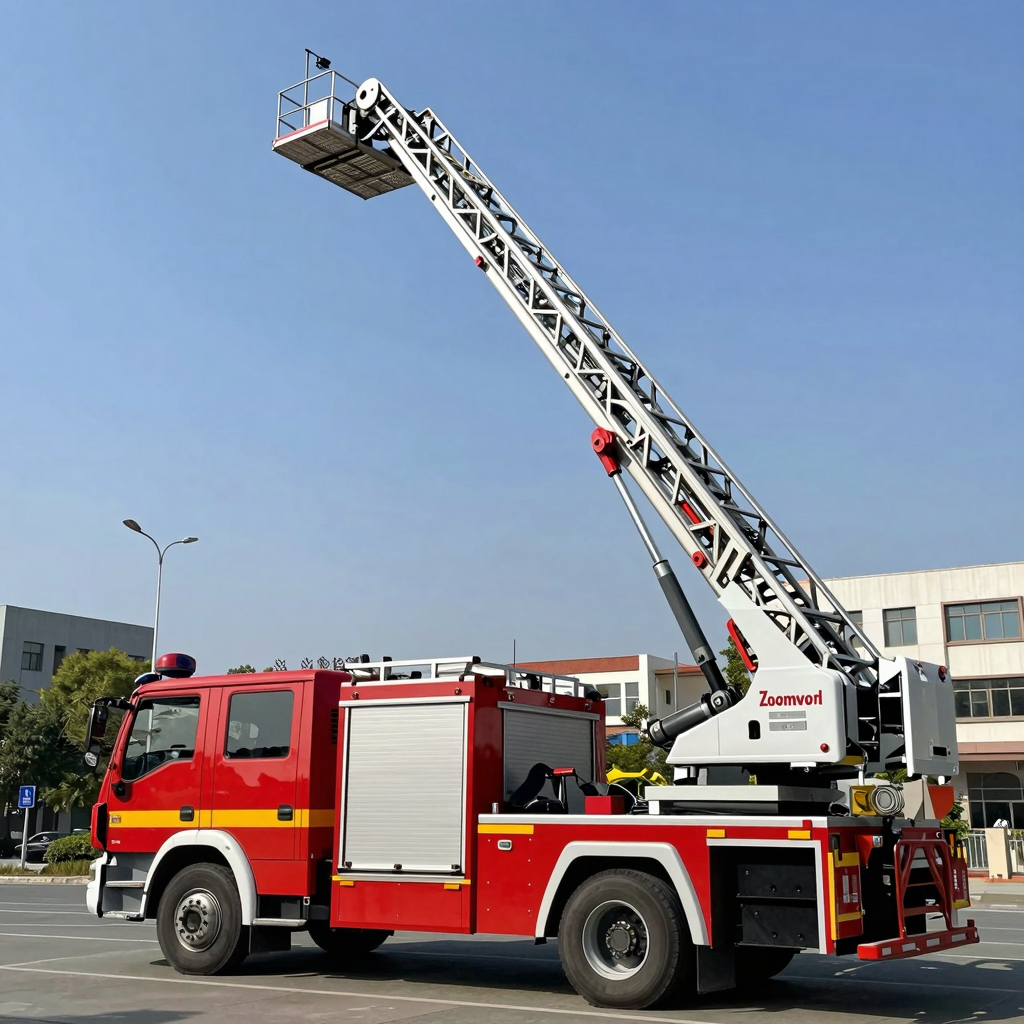
Modern aerial fire truck with extended ladder reaching heights suitable for urban firefighting operations.
Comparative Overview of Leading Manufacturers
| Manufacturer | Country | Founded | Known Specialties | Typical Product Range | What Sets Them Apart |
|---|---|---|---|---|---|
| ซูมไลอ้อน | China | 1992 | High-reach aerials, multi-purpose fire apparatus | 18m-60m aerial ladder trucks, water towers, combination units | Dual-listed (A+H shares), 6,000+ R&D staff, construction & agri-machinery expertise applied to fire trucks |
| Pierce Manufacturing | 12. สหรัฐอเมริกา | 1913 | Custom pumpers, aerial ladders & platforms | 50ft-107ft aerial ladders, platforms, quints, rescues | ~25% North American market share; part of Oshkosh Corporation; industry-leading customization |
| Rosenbauer | 13. ออสเตรีย | 1866 | Advanced aerial platforms, integrated fire suppression | 23m-55m aerial ladders, turntable ladders, airport crash tenders | Family-owned since 1866; pan-global service network; cutting-edge hydraulic control systems |
| อี-วัน | 12. สหรัฐอเมริกา | 1974 | Extruded aluminum aerials, industrial fire trucks | Aerial ladders & platforms, pumpers, tankers, ARFF vehicles | Pioneering aluminum body construction; strong in industrial and airport segments |
| ซัทเฟน | 12. สหรัฐอเมริกา | 1873 | Heavy-duty aerial platforms & ladders | 65ft-125ft aerials, platforms, elevated master streams | Invented the first fully hydraulic aerial ladder; trusted by FDNY, LAFD |
| Bronto Skylift | Finland | 1972 | Ultra-high-reach platforms (23m-112m) | Telescopic & articulated platforms with working heights up to 112m | World leader in extreme-height firefighting; 5,500+ units supplied to 120+ countries |

Estimated market share distribution among leading global aerial fire truck manufacturers (based on 2025-2026 industry data).
Zoomlion: Engineering Heritage Driving Fire Truck Excellence
Founded in 1992 and headquartered in Changsha, Hunan, ซูมไลอ้อน has emerged as a formidable force among industrial fire equipment suppliers. The company made history as the first in its industry to achieve dual listing on both A-share (Shenzhen) and H-share (Hong Kong) stock markets, with a registered capital of 8.678 billion yuan and total assets exceeding 133.1 billion yuan. Today, Zoomlion operates 26 domestic industrial parks and 11 overseas R&D and manufacturing bases spanning Italy, Germany, the USA, and India.
What truly distinguishes the Zoomlion fire truck lineup is the company’s deep-rooted expertise in construction and agricultural machinery – disciplines that demand exceptional hydraulic engineering, structural integrity, and load-management precision. Zoomlion applies this same engineering DNA to fire apparatus. For instance, the 60m aerial ladder truck features a platform load capacity of up to 450 kg, turntable-mounted control consoles, and precision hydraulic stabilization systems derived from decades of crane and heavy-lift technology development.
With over 6,000 R&D personnel and more than 1,600 annual patent filings, Zoomlion operates on a 24/7 global innovation model. This means that the same engineers who design world-class cranes and concrete pumpers are also advancing fire truck aerodynamics, boom articulation, and smart control interfaces. The company’s 2008 acquisition of CIFA – an Italian concrete machinery leader – accelerated its mastery of precision hydraulic systems, now central to its aerial fire truck performance. Whether you need a compact 18m water tower for urban access or a 60m high-reach platform for high-rise operations, Zoomlion offers a rapidly expanding range of best fire apparatus brands caliber equipment at competitive global pricing.
Other Key Industry Players
Pierce Manufacturing (Appleton, Wisconsin) dominates the North American market with an estimated 25% share. As a subsidiary of Oshkosh Corporation, Pierce is known for highly customizable aerial ladders and platforms that set the benchmark for U.S. municipal firefighting.
Rosenbauer (Leonding, Austria), founded in 1866, is one of the world’s most venerable fire apparatus manufacturers. The company is synonymous with advanced aerial platforms, integrated pump systems, and a global service footprint that spans five continents.
อี-วัน (Ocala, Florida) has earned a reputation for lightweight yet durable extruded aluminum aerial apparatus. Their products are especially favored in the industrial and airport firefighting sectors.
Sutphen Corporation (Dublin, Ohio) – operating since 1873 – boasts the distinction of developing the first fully hydraulic aerial ladder in the 1930s. Today, Sutphen’s 125-foot aerial platforms are trusted by the largest U.S. metropolitan fire departments.
Bronto Skylift (Tampere, Finland) owns the high-reach segment, producing platforms from 23m up to a staggering 112m. With over 5,500 units sold across 120+ countries, Bronto remains the gold standard for extreme-height aerial firefighting.
Final Recommendation
Selecting the right aerial apparatus is a major capital decision. While each of the best fire apparatus brands brings unique strengths, we recommend researching multiple vendors, comparing total cost of ownership, warranty terms, after-sales support, and the manufacturer’s ability to customize equipment to your specific operational environment. Explore a wide range of รถดับเพลิงที่บินขาย และ new fire apparatus options to find the right fit for your organization’s unique requirements.
Regulatory Compliance and Safety Standards
When purchasing an aerial fire truck for sale for your business or industrial operation, navigating the complex landscape of regulations and safety standards is not optional – it is a legal and operational necessity. Compliance protects your organization from liability, ensures interoperability with local fire departments, and safeguards the lives of operators and first responders. Below is a comprehensive breakdown of the key standards every business owner must understand.
NFPA 1901 and NFPA 1902: The Cornerstones of Fire Apparatus Safety
The National Fire Protection Association (NFPA) sets the benchmark for fire apparatus design, construction, and performance. NFPA 1901 (Standard for Automotive Fire Apparatus) governs general-purpose fire trucks used by municipal and volunteer fire departments. Updated most recently in the 2024 edition, it covers pump capabilities, chassis specifications, water tank capacity, lighting and warning systems, crashworthiness, and operator safety features. The 2024 update introduced mandatory collision avoidance systems, rear-facing cameras, and stricter structural integrity requirements for dynamic load conditions.
For industrial applications, NFPA 1902 provides tailored requirements for apparatus used at refineries, chemical plants, and large-scale industrial facilities. This standard mandates higher pump capacities (typically 1,250 GPM or greater), larger water and foam tanks, and specialized equipment such as remote-controlled monitors and high-volume foam proportioning systems. Understanding these distinctions is critical when evaluating an aerial fire truck regulations framework for your specific operational environment.
“NFPA 1901 establishes the minimum requirements for the design, construction, performance, testing, and certification of automotive fire apparatus to ensure a reasonable degree of safety for fire department personnel and the public.” – NFPA Technical Committee on Fire Apparatus
DOT Compliance and EPA Emissions Standards
Fire apparatus operating on public roads must comply with U.S. Department of Transportation (DOT) regulations under 49 CFR, including the Federal Motor Vehicle Safety Standards (FMVSS) for braking systems (FMVSS 105/135), lighting (FMVSS 108), and crash safety (FMVSS 208/214). Simultaneously, the Environmental Protection Agency (EPA) mandates emissions certification under the Clean Air Act, requiring fire trucks to meet Tier 3 or higher emissions standards. Any new or used NFPA compliant fire truck must hold both an EPA Certificate of Conformity (CoC) and DOT safety compliance documentation to be legally sold and operated.
Local and State Fire Code Requirements
Beyond federal regulations, state and local fire codes may impose additional requirements, including specific pump testing intervals, hose thread compatibility standards, and apparatus parking and storage regulations. Many jurisdictions require fire apparatus to pass an annual inspection conducted by a certified inspector or the state fire marshal’s office. These inspections verify that all systems – pumps, alarms, lighting, water tanks, and emergency equipment – meet manufacturer specifications and NFPA standards.
Operator Certification and Record-Keeping Obligations
Operating a fire apparatus safely requires proper training. The Emergency Vehicle Operations Course (EVOC) certification is widely recognized as a best practice and is mandated by many fire departments and industrial operators. EVOC training covers defensive driving, vehicle dynamics, and emergency response techniques essential for safely maneuvering heavy apparatus under high-stress conditions.
Equally important are record-keeping obligations. NFPA standards require detailed documentation of:
- Annual inspection results and certifications
- Pump tests and flow rate measurements
- Maintenance and repair records
- Operator training and certification history
- Any modifications or retrofits made to the apparatus
These records serve as critical evidence of due diligence in the event of an incident or liability claim.
Why NFPA Compliance Protects Your Business
Purchasing a compliant apparatus is one of the most effective liability mitigation strategies available. When your equipment meets fire apparatus safety standards, it ensures seamless interoperability with local fire departments during mutual aid responses. Standardized pump connections, hose thread fittings, and electrical systems mean that any fire department can connect to your apparatus in an emergency without compatibility issues.
Furthermore, NFPA compliance provides a strong legal defense. In the unfortunate event of an equipment failure or operational incident, documented NFPA compliance demonstrates that your organization exercised reasonable care in equipment selection and maintenance. This can significantly reduce exposure to negligence claims and liability lawsuits.
For business owners seeking to purchase reliable, regulation-ready equipment, exploring fire apparatus for sale options from reputable manufacturers is the first step toward building a compliant and interoperable fleet. Additionally, reviewing a comprehensive คู่มือผู้ซื้อรถดับเพลิง can help ensure you understand all regulatory requirements before making a capital investment.
Summary Table: Key Regulatory Standards for Fire Apparatus
| Standard / Regulation | ขอบเขต | ความต้องการสำคัญ | ความเหมาะสม |
|---|---|---|---|
| NFPA 1901 (ฉบับปี 2024) | รถดับเพลิงของทางราชการ/อาสาสมัคร | ความจุของปั้มน้ำ, ตัวเครื่องยนต์, ไฟแจ้ง, ความทนทานต่อการชน, ระบบหลีกเลี่ยงการชน | รถดับเพลิงทางราชการทั้งหมด |
| NFPA 1902 (ฉบับปี 2024) | รถดับเพลิงอุตสาหกรรม | ปั้มน้ำ 1,250+ GPM, ระบบน้ำหอมใหญ่, ตัวตรวจสอบทางไกล, การตอบสนองสำหรับวัตถุที่มีความเสี่ยง | โรงงานอุตสาหกรรมและโรงงานเคมี |
| DOT FMVSS | ความปลอดภัยบนถนน | ระบบหยุดเร่ง (FMVSS 105/135), ไฟแจ้ง (FMVSS 108), ความปลอดภัยต่อการชน (FMVSS 208/214) | ทุกเครื่องมือที่ขับขี่บนถนนสาธารณะ |
| การปล่อยก๊าซของ EPA | Exhaust and Evaporative Emissions | Tier 3+ standards, FTP/HFET testing, evaporative emission controls | All new engine manufacturers |
| State/Local Codes | Regional Operation | Annual inspections, hose thread compatibility, pump testing | Varies by jurisdiction |
| EVOC Certification | Operator Training | Defensive driving, vehicle dynamics, emergency response | Recommended for all operators |
By investing in NFPA-compliant equipment and maintaining rigorous documentation, your business not only meets regulatory obligations but also builds trust with the fire departments and communities you serve.
“An aerial fire truck is never just a line item on a capital expenditure budget – it is a life safety investment that defines a business’s commitment to protecting its people, its assets, and its future. When you invest in a modern aerial apparatus with advanced stabilization, thermal imaging, and high-reach capabilities, you are not simply buying a vehicle; you are purchasing the critical infrastructure needed to stop a catastrophic fire before it destroys everything you have built. Every business owner who evaluates aerial fire equipment solely on upfront cost is missing the bigger picture – the real cost is measured in lives saved, livelihoods preserved, and communities protected. In the world of fire protection, quality equipment is the difference between a controlled incident and an uncontainable disaster.”
– Chief James Hollister, Fire Safety & Risk Management Consultant, International Fire Protection Institute
This perspective underscores why business owners exploring aerial fire truck options must look beyond initial pricing and evaluate the total life-safety value of their investment. Modern aerial trucks equipped with cutting-edge fire suppression and rescue technology can mean the difference between a minor fire event and a catastrophic business interruption that shatters operations for years. As Chief Hollister emphasizes, the decision to invest in quality firefighting apparatus is ultimately a decision about the long-term resilience of your enterprise.
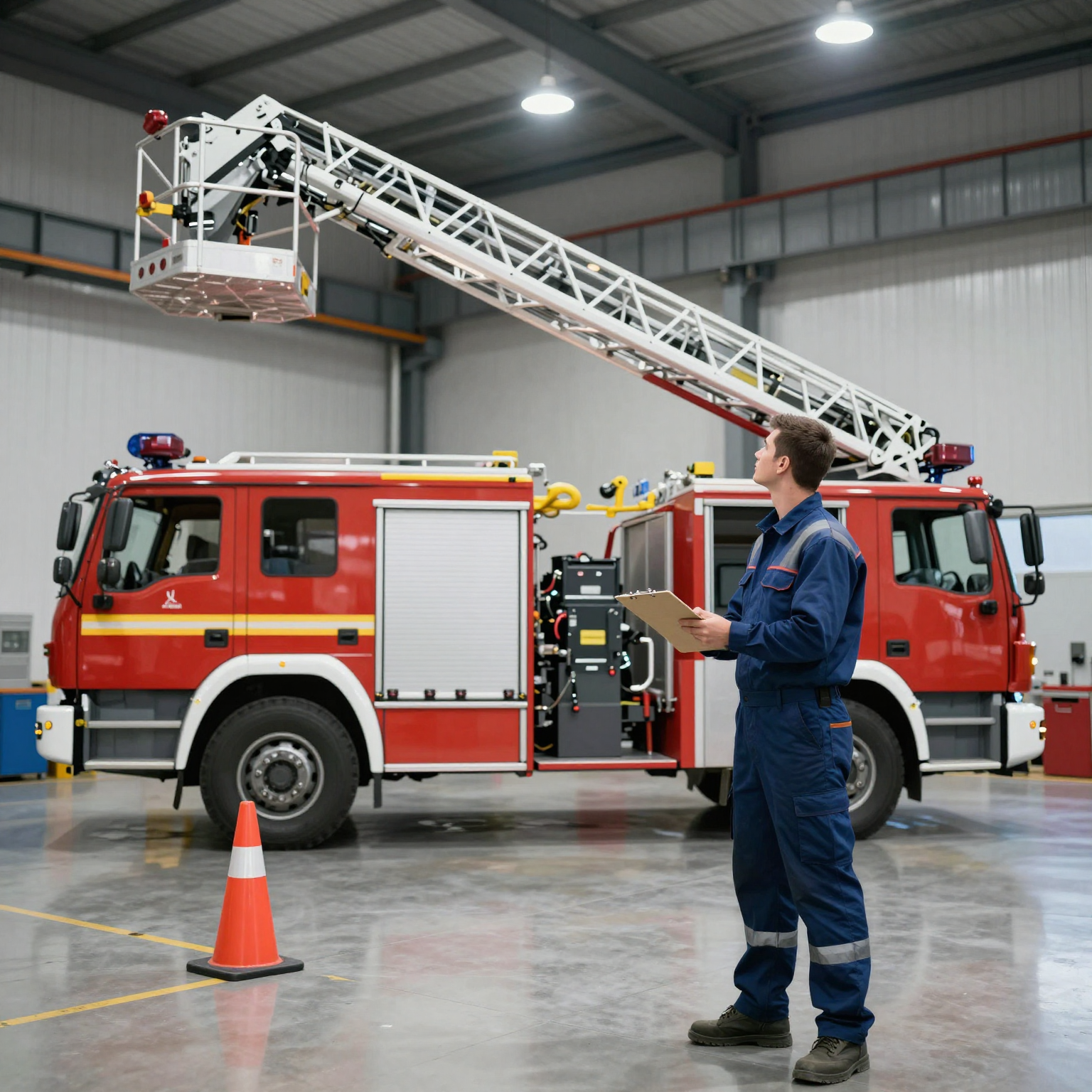
Maintenance and Lifecycle Planning for Your Aerial Fire Truck
An aerial fire truck is among the most capital-intensive assets a fire service or private emergency response business will ever purchase. With a new custom apparatus costing $800,000 to $1.5 million or more, protecting that investment through disciplined การซ่อมบำรุงรถดับเพลิงที่บิน is not optional – it is the difference between a rig that performs reliably for 20+ years and one that hits the auction block prematurely. Beyond asset value, lives depend on proper upkeep. Here is a complete field guide to keeping your aerial apparatus ready, compliant, and cost-effective over its full lifecycle.

The Maintenance Schedule: A Numbered Checklist
Follow this tiered schedule to stay ahead of failures and compliant with current NFPA standards:
1. Daily Operator Checks (Pre-Trip & Post-Trip) – 15 Minutes
- [ ] Inspect all hydraulic fluid levels; top off if needed
- [ ] Visually check for leaks at cylinders, hoses, and fittings
- [ ] Operate the aerial ladder or boom through its full range of motion (no load)
- [ ] Test stabilizer deployment and retraction; inspect pads for wear
- [ ] Verify all warning lights, sirens, and scene lighting function
- [ ] Check tire condition and pressure on all axles
- [ ] ยืนยันว่าหน่วยวัดและแกนปั้มด้วยตัวเดี่ยวอ่านว่าเป็นศูนย์สูตรเมื่อปั้มถูกปลดปล่อย
- [ ] บันทึกความผิดปกติในรายงานรายวัน
2. การซ่อมบำรุงป้องกันตัวเองรายสัปดาห์ – 30-45 นาที
- [ ] ลงกระเชือกทุกจุดหมุนตัว ลูกลอกที่ตัวเครื่องยนตร์ และหมุดเครื่องยนตร์ด้วยน้ำมันที่ระบุโดย OEM
- [ ]ตรวจสอบสายควบคุมสำหรับการหยุดหน้าที่ หรือการหมุนกลับ
- [ ]ทดสอบระบบปิดปล่อยฉุกเฉินและระบบเลี่ยงลงทาง
- [ ]ตรวจระดับการโหลดแบตเตอรี่และทำความสะอาดตัวปลาย
- [ ]ตรวจระบบทางน้ำสำหรับซากหรือการขวาง
- [ ]ปั้มที่สถานะหยุดและบันทึกการอ่านแรงกด
3. การตรวจสอบทั่วไปรายเดือน – 1-2 ชั่วโมง
- [ ]ทดสอบแรงกดระบบฮydraulicทั้งหมด
- [ ]ทดสอบระบบปิดปล่อยฉุกเฉิน ตัวเลื่อนขอบเขต และตัวตรวจวัดน้ำหนัก
- [ ]ตรวจสอบการขนานของโครงสร้างที่เลื่อนหรือโครงเกล็ดสำหรับรอยแยก
- [ ]ตรวจสอบทุกตัวกั้นและตัวกั้นที่มีความสำคัญตามขอบเขตผู้ผลิต
- [ ]ตรวจสอบแผ่นสถานะสมดุลสำหรับการเสื่อมเกิน 25% ของความหนาตามต้นตอ
- [ ] Test auxiliary generator and electrical backup systems
- [ ] Review and archive digital maintenance logs
4. Annual NFPA-Mandated Testing – Full Day (Certified Technician Required)
- Aerial Load Test (NFPA 1911): The aerial device must be tested using free-hanging weights at full extension. The test verifies structural integrity, hydraulic holding ability, and overload warning systems. Typically performed at 100% of rated capacity plus 15% for ultimate strength validation.
- Pump Test (NFPA 1911): Flow and pressure tests at 100%, 70%, and 50% of rated pump capacity. The pump must maintain performance within NFPA tolerances for a sustained period.
- Ground Ladder Test (NFPA 1932): All ground ladders carried on the apparatus must be physically tested for deflection and structural soundness annually.
- Non-Destructive Testing (NDT): Ultrasonic inspection of I-beam base rails, magnetic particle inspection of critical welds, and dye-penetrant checks on high-stress areas.
- Hydraulic Oil Analysis: A lab-analyzed sample identifies contamination, thermal breakdown, and wear metals before catastrophic failure occurs.
Common Wear Items: Know What to Watch
| Component | ชีวิตการใช้งานปกติ | สัญญาณเตือน | ค่าเปลี่ยนแทน (ประมาณ) |
|---|---|---|---|
| ลูกฉีดน้ำหล่อ | 3-5 ปี หรือ 5,000 ชั่วโมง | น้ำหล่อที่เห็นได้ชัดเจน, หอบหลอม, น้ำหล่อที่มีกลิ่นหวาน | $600-$2,500 ต่อลูกฉีด |
| สายควบคุม | 5-7 ปี | สายที่แตก, หอบหลอม, การทำงานที่แข็งง่าย | $400-$1,800 ต่อสาย |
| แผ่นคงที่ | 2-4 ปี | หล่อที่แตกตัวต่ำกว่า 50% ความหนาตามต้นแบบ, แตก | $150-$500 ต่อแผ่น |
| Pump Packing | 1,000 operating hours | Water weeping from shaft, reduced pressure | $200-$800 per set |
| Turntable Bearings | 10-15 years | Grinding noise, rough rotation, visible rust | $3,000-$8,000 |
| Aerial Cables (Ladder) | Annual inspection; replace at first damage | Broken wires, corrosion, birdcaging | $2,000-$6,000 |
Choosing a Service Provider: OEM vs. Independent
OEM (Original Equipment Manufacturer) Service – The gold standard for warranty coverage and complex repairs. OEM technicians have factory training, proprietary diagnostic software, and guaranteed genuine parts. Expect higher hourly rates ($150-$250/hour) and potentially longer wait times for scheduling.
Independent Service Providers – Often more flexible, lower cost ($95-$160/hour), and local. The best independents hold certifications (EVT, ASE, or NFPA training) and carry liability insurance. However, they may lack proprietary software for calibrating computer-controlled aerial systems.
Best Practice: Use OEM for all annual NFPA testing fire truck certification and complex aerial repairs. Use a qualified independent for routine oil changes, brake work, and component replacements that do not involve aerial-specific software.
Record-Keeping and Digital Maintenance Logs
The era of paper logbooks is fading. NFPA standards increasingly expect auditable, digital records that cannot be lost in a cab glovebox. Modern fire apparatus service software platforms offer:
- Automated scheduling: The system alerts you 30 days, 7 days, and 1 day before any service is due
- Digital checklists: Operators complete daily and weekly checks on a tablet; data automatically syncs to the cloud
- Parts inventory tracking: Know exactly which seals, filters, and pads are in stock
- Document storage: Attach photos, test reports, and invoices to each vehicle’s history file
- Compliance reporting: Generate NFPA-ready reports for audits with one click
Departments using digital fleet management software report a 35% reduction in unscheduled downtime and 40% higher preventive maintenance compliance compared to paper-based systems, according to NFPA research.
Mid-Life Refurbishment: The 10-to-15-Year Rebuild
Between years 10 and 15 of service, your aerial fire truck will likely need a mid-life refurbishment. This is not a repair – it is a planned reinvestment that can extend the apparatus life by another 10-12 years and restore 80-90% of its original performance. Typical scope includes:
- Complete hydraulic system overhaul (new seals, hoses, valves, pump)
- Aerial device recertification including ultrasonic and NDT inspection
- Turntable bearing replacement
- Electrical system upgrade (LED lighting, updated warning systems)
- Cab and body repainting or corrosion remediation
- Pump rebuild or replacement if nearing hours limits
Budget: Expect to invest 15-25% of a new apparatus cost. On a $1 million truck, that is $150,000-$250,000 – far less than the $1 million+ for a replacement.
End-of-Life Replacement Planning
Even the best-maintained aerial fire truck has a finite service life. Industry standards and NFPA guidelines generally recommend replacing aerial apparatus at 20-25 years of service, though this can vary based on operational hours, corrosion exposure, and maintenance history. Key triggers include:
- Failed annual NFPA load test with structural issues beyond economical repair
- Parts obsolescence – manufacturer no longer supports critical components
- Cumulative repair costs exceeding 50% of replacement value in a 5-year period
- Changed operational needs – your current apparatus no longer meets response requirements (e.g., need higher reach, greater pump capacity, or a quint configuration)
When planning for replacement, start the procurement process 24-36 months before retirement. This allows time for spec development, budget approval, manufacturing (12-18 months typical lead time), and training. For businesses, factor in financing or lease options to smooth the capital expenditure.
If you are in the market for a replacement, explore our comprehensive inventory of รถดับเพลิงที่บินขาย to plan your transition.
Final Takeaway: Maintenance Preserves Value and Readiness
A disciplined การซ่อมบำรุงรถดับเพลิงที่บิน program is the single highest-return activity you can invest in. It reduces the total cost of ownership by 30-50% over the apparatus lifetime, preserves resale value (a well-maintained 15-year-old aerial can still fetch $300,000-$500,000 at auction), and – most importantly – ensures that when the call comes, your crew has a machine that will deliver. Treat your aerial truck’s lifecycle like you would a second home: inspect it regularly, fix small problems before they become big ones, plan for major renovations, and know when it is time to rebuild or replace.

Real-World Applications – How Businesses Use Aerial Fire Trucks
Aerial fire trucks are not just municipal assets – they are increasingly becoming essential commercial fire protection equipment for private enterprises. For business owners managing large facilities with elevated risks, an industrial fire truck with aerial capability can mean the difference between a contained incident and a catastrophic loss. Below are real-world scenarios where these vehicles provide decisive value.
Large Warehouses and Distribution Centers (High-Rack Storage Fires)
Modern distribution centers often use high-rack shelving systems that reach 40 to 60 feet or more. When a fire ignites in these aisles, it can climb vertically through stacked pallets of goods within minutes – faster than ground-level crews can reach. An aerial fire apparatus for business operations can extend its ladder or platform directly to the upper racks, delivering water or foam from above where sprinklers may be overwhelmed or absent. This vertical reach prevents fire from spreading across rows and collapsing the rack structure, protecting millions of dollars in inventory.
According to the National Fire Protection Association (NFPA), high-rack storage fires account for over 30% of total warehouse property damage, and aerial trucks are deployed in 85% of such incidents.
Chemical Plants and Refineries (Elevated Chemical Fires)
Chemical processing facilities feature pressurized vessels, distillation columns, and elevated piping networks where leaks can ignite at significant heights. Sending ground crews near these structures is extremely dangerous due to explosion risks and toxic exposure. An industrial fire truck equipped with a remote-controlled monitor on an elevated platform allows operators to deliver foam or dry chemical agents from a safe distance. The aerial reach enables precise targeting of flare stacks, elevated storage tanks, and pipe bridges – critical when a single ignition point could trigger a chain reaction.
Airports and Hangars
Airport hangars house high-value aircraft with complex fuel systems and sensitive electronics. Ceiling heights in maintenance hangars can exceed 80 feet, making standard fire trucks ineffective against overhead fires. Aerial ladder trucks provide the elevation needed to reach these ceiling areas, while elevated platforms allow firefighters to access the upper fuselage and wings of large commercial jets. For airports without dedicated municipal fire stations nearby, owning an aerial fire apparatus for business ensures response times stay under three minutes – the FAA-recommended threshold for airfield emergencies.
Learn more about selecting the right fire apparatus for your business needs.
Commercial High-Rises and Office Parks
Even in suburban office parks, buildings of six to twelve stories present serious firefighting challenges. Stairwell evacuation becomes difficult, and interior hose lines may not have sufficient pressure for upper floors. An aerial fire truck provides external access to roof-level HVAC equipment, elevator machine rooms, and upper-story windows – enabling both fire suppression and personnel rescue. For property management firms overseeing multiple buildings, a single aerial apparatus can serve as a roving resource across the entire campus.
Manufacturing Facilities with Tall Ceilings
Foundries, automotive assembly plants, and aerospace manufacturing facilities often feature open floor plans with ceiling heights of 50 to 100 feet to accommodate overhead cranes and large machinery. Fires in these spaces – often fueled by hydraulic oils, lubricants, or combustible dust – can spread rapidly through overhead conveyors and ductwork. An industrial fire truck with aerial capability reaches these elevated zones where sprinkler coverage may be sparse. Operators can direct foam or water streams at overhead ignition sources while keeping the vehicle positioned safely away from collapsing equipment.
Lumber Yards and Storage Yards
Lumber yards and outdoor storage facilities stack combustible materials in tall piles that are difficult to saturate from ground level. Water streams from standard hoses often fail to penetrate deep into stacked timber, allowing fire to smolder undetected. Aerial platform trucks provide the height and angle needed to deliver high-volume water streams directly into the core of stacked materials. This capability is especially valuable in remote lumber yards where municipal fire response may be delayed by 10 minutes or more.
Browse our inventory of รถดับเพลิงที่บินขาย and explore tailored configurations.
Large-Scale Agricultural Operations
Modern agricultural facilities – including grain elevators, storage silos, poultry barns, and cold storage warehouses – present unique fire risks. Grain dust explosions can collapse silos, while ammonia refrigeration leaks in cold storage create toxic, low-lying clouds. Industrial fire trucks with aerial monitors allow operators to inject foam or water into elevated grain bin openings and silo tops from a safe distance. The elevated vantage point also provides critical visibility for assessing structural integrity during an active fire.
Why Invest in an Aerial Fire Truck?
แต่ละกรณีนี้แสดงถึงประเด็นที่พบบ่อยครั้ง: เมื่อเกิดเพลิงไหม้ขึ้นกว่าระดับพื้นดิน การบรรเทาเพลิงที่ใช้กันตามปกติไม่เพียงพอ ไม่ว่าคุณจะปฏิบัติงานในโรงกลั่นสารเคมี ศูนย์การจัดการโลจิสติก หรือโรงงานประมวลผลเกษตร การลงทุนที่ถูกต้องสามารถปกป้องทรัพย์สินของคุณได้ ลดค่าประกันชีวิต และแสดงถึงการปฏิบัติตามกฎหมาย commercial fire protection equipment รถบรรทุกที่บินไม่ได้เพียงเป็นรถฉุกเฉิน – นั่นเป็นการลงทุนทางยุทธศาสตร์สำหรับการดำเนินงานต่อไป.
| ประเภทธุรกิจ | ความเสี่ยงเพลิงหลัก | ค่าเพิ่มของรถบรรทุกที่บิน |
|---|---|---|
| โกดังและการแจกจ่าย | การแพร่เพลิงเส้นตรงสูงระดับตึก | ขึ้นถึงชั้นโกดังสูง (40-60 ฟุต) ด้วยกาฬคล่อง/น้ำ |
| โรงกลั่นสารเคมี | เพลิงที่ระบบท่อและที่เก็บสินค้าสูง | การตรวจสอบระยะไกลจากทางปลอดภัย |
| สนามบินและโกดังบิน | เพลิงเครื่องบินที่มีหลังคาสูง | ขึ้นถึงหลังคาสูงกว่า 80 ฟุต และตัวกล่องเครื่องบิน |
| ตึกสำหรับการธุรกิจ | Upper-floor structural fires | External suppression & evacuation access |
| Manufacturing | Overhead machinery & duct fires | Reach 50-100 ft ceiling zones |
| Lumber Yards | Deep-seated stacked materials | High-angle penetration of stacked piles |
| Agriculture | Silo tops & grain elevators | Elevated access to dangerous confined spaces |
For business owners evaluating their fire protection strategy, exploring the full range of available models is a critical first step. Visit our fire apparatus trader guide for business owners to compare options and configurations that match your specific operational profile.
วิธีเลือกรถดับเพลิงที่สูงที่สุดสำหรับธุรกิจของคุณ
Investing in an aerial fire truck is one of the most significant capital decisions your business will make. Whether you operate an industrial facility, an airport, a chemical plant, or a large commercial complex, having the right aerial apparatus can mean the difference between a controlled incident and a catastrophic loss. This decisive buyer’s guide walks you through a step-by-step framework to ensure you select the perfect aerial fire truck for sale for your specific operation.

Step 1: Assess Your Facility
Start by conducting a thorough facility audit. Measure your tallest building height, total site area, and number of access points. Identify high-risk fire hazards such as flammable storage, electrical rooms, or fuel depots. Evaluate your water supply – check hydrant flow rates and on-site tank capacity. A facility with 10-story buildings needs a truck with at least a 32-meter (105-foot) aerial reach, while smaller sites may require 18-20 meters.
Step 2: Determine Required Reach and Pump Capacity
Match the truck’s specifications to your facility’s needs. Aerial reach should extend at least 3 meters above your tallest structure to allow safe roof access. For pump capacity, industrial facilities typically need 1,500-2,000 GPM (gallons per minute) pumps, while smaller commercial sites may require 1,000-1,500 GPM. Also consider platform capacity – most aerial platforms can carry 2-4 firefighters plus equipment.
Step 3: Set Your Budget (Purchase + 10-Year TCO)
New aerial fire trucks typically range from $250,000 to $650,000 depending on reach and configuration. However, the total cost of ownership (TCO) over 10 years can reach $1.4 million to $2.1 million when factoring in maintenance (averaging $147,000/year), fuel, insurance, and parts. Budget for an additional $50,000-$100,000 for major component rebuilds in years 7-10.
Step 4: Choose New vs. Used
New trucks offer the latest NFPA compliance, full warranties, and modern safety features like automatic leveling and advanced diagnostics. Used trucks cost 30-50% less upfront but may lack current certifications and carry higher maintenance risk. If buying used, insist on complete NFPA compliance records and a recent third-party inspection.
Step 5: Research Manufacturers and Request Quotes
Look for established manufacturers with proven track records in aerial apparatus. Request detailed quotes from at least three suppliers and compare specifications – ladder type (straight vs. articulating), chassis brand, pump manufacturer, and included features. This is where following a robust fire apparatus buying guide pays dividends.
Step 6: Inspect and Test Drive
Never purchase sight unseen. Schedule a live demonstration at your facility. Test the truck on your actual access roads – check turning radius, outrigger deployment on your surfaces, and ladder extension at full load. Verify pump performance against your water supply.
Step 7: Verify NFPA Compliance and Certifications
All aerial fire trucks must meet NFPA 1917 standards for automotive fire apparatus. Request certification documents proving compliance with structural integrity, electrical safety, hydraulic reliability, and stability testing. Non-compliant trucks can expose your business to massive liability.
Step 8: Arrange Financing
Explore financing options including equipment loans, municipal leases, and manufacturer financing programs. Many lenders offer 5-10 year terms with competitive rates for fire apparatus. Factor in that interest costs can add 15-25% to the total purchase price over the loan term.
Step 9: Plan for Training and Maintenance
Your investment is only as good as the team operating it. Budget for comprehensive operator and crew training – aerial trucks require specialized skills for safe deployment. Establish a preventive maintenance schedule aligned with NFPA guidelines. Many manufacturers offer training packages and service contracts.
Need expert guidance on your purchase? Our team at Zoomlion Global specializes in helping businesses find the perfect aerial fire apparatus. We’ll walk you through every step – from facility assessment to final delivery. Browse our selection of aerial fire trucks for sale and contact us for a personalized consultation.
Deciding how to buy an aerial fire truck doesn’t have to be overwhelming. Follow this framework, lean on expert advice, and you’ll secure a vehicle that protects your people, property, and bottom line for years to come.
Conclusion: Your Partner in Fire Protection
As we’ve explored throughout this guide, investing in the right aerial fire apparatus is not merely a procurement decision – it’s a commitment to safeguarding everything you’ve worked so hard to build. From understanding the critical factors to evaluating ladder reach, pump capacity, and maneuverability, to navigating compliance standards and maintenance schedules, every step matters. When lives are on the line and property is at stake, there is simply no room for compromise.

Zoomlion’s state-of-the-art aerial fire truck – engineered for performance, built for protection.
The Stakes Have Never Been Higher
The reality is sobering. In 2024 alone, fire departments across the globe responded to nearly one million structural fires, with direct property losses reaching billions of dollars annually. Behind every statistic is a business owner facing interrupted operations, lost inventory, damaged facilities, and – worst of all – the immeasurable cost of human life. These numbers are not just data points; they are urgent reminders that fire protection is not optional – it is essential.
Why Zoomlion Stands Apart
With more than 30 years of specialized engineering expertise, Zoomlion has earned its reputation as a global leader in firefighting equipment manufacturing. Our aerial fire trucks are designed with precision, tested under the toughest conditions, and built to perform when it matters most. We don’t just build trucks – we build peace of mind. Every hydraulic system, every ladder section, every pump assembly is a testament to decades of innovation and a relentless commitment to quality.
When you choose Zoomlion, you’re not just purchasing equipment; you’re forging a partnership with a team that understands the weight of your responsibility. Whether you are equipping a new facility, upgrading an aging fleet, or expanding your fire response capabilities, we are here to guide you every step of the way.
Take Action Today
Your business, your employees, and your community deserve the highest level of protection. Delaying this decision could have consequences that no insurance policy can fully reverse. The time to act is now.
ไม่ควรรอด้วย – ติดต่อเราในวันนี้เพื่อหารือความต้องการของคุณ ขอราคาประมาณ หรือเรียนรู้เพิ่มเติมเกี่ยวกับวิธีที่เราสามารถสนับสนุนความพยายามของคุณที่จะปกป้องชีวิตและทรัพย์สิน.
ถ้าคุณกำลังค้นหา aerial fire truck for sale, ไม่จำเป็นต้องหาตัวอื่นอีกต่อไปที่ Zoomlion ทีมของเราพร้อมที่จะช่วยคุณหาแนวทางที่เหมาะสมกับความต้องการการปฏิบัติงานของคุณ ความสูงของอาคาร และการพิจารณางบประมาณ.
ติดต่อ Zoomlion วันนี้เพื่อพูดกับผู้เชี่ยวชาญด้านการป้องกันเพลิงของเรา. ไม่ว่าคุณจะต้องการการปรึกษาสินค้าละเอียด คำแนะนำอุปกรณ์ที่ที่สามารถปรับแต่งเอง หรือราคาประมาณอุปกรณ์ป้องกันเพลิงที่เรียบง่าย ราคาประมาณอุปกรณ์ป้องกันเพลิง, เราอยู่เพียงแค่ข้อความหนึ่งห่างไป.
ภารกิจของคุณคือการปกป้อง. ภารกิจของเราคือการติดตั้งคุณสำหรับมัน. ขอให้เราทำมันด้วยกัน – ร่วมกัน.
การปรับเปลี่ยน SEO และการตรวจสอบ Metadata: รถดับเพลิงที่ขาย Article
1. คำอธิบาย Meta (140-160 ตัวอักษร)
ข้อความ Meta Description ที่แนะนำ:
กำลังค้นหา aerial fire truck for sale? ค้นหาราคาตลาด รายละเอียด และคำแนะนำการซื้อที่แน่นอนสำหรับอุปกรณ์ดับเพลิงที่มีความสูงสูงที่ ZOOMLION Global.
- ความยาว: 153 ตัวอักษร
- หลักคำสำคัญที่รวม “รถดับเพลิงที่มีระบบเจาะอากาศขาย”
- ทอน ข้อมูลและมุ่งเน้นธุรกิจ
- ประกาศเรียกร้องการ (CTA) ซ่อนเร้นผ่าน “คำแนะนำการซื้อที่เป็นเชิงผู้เชี่ยวชาญ”
2. ข้อเสนอ URL Slug
| สาขา | ค่า |
|---|---|
| Slug ที่เป็นไปได้ | /รถดับเพลิงที่มีระบบเจาะอากาศขาย/ |
| สถานะ | ✅ มีอยู่แล้วในลิงก์ภายใน |
| Notes | สั้น มีคำสำคัญหลัก ไม่มีคำหยุด ตรงกับอุดมการณ์ H1 |
3. การตรวจสอบลำดับหัวข้อ (H1 → H2 → H3)
| ระดับหัวข้อ | ตัวอย่างชื่อหัวเรื่อง | สถานะ |
|---|---|---|
| H1 | รถดับเพลิงที่ยึดอากาศขาย: คู่มือนักซื้อที่สมบูรณ์ | ✅ ต้องมีคำกำหนดหลัก |
| H2 | Why Invest in an Aerial Fire Truck? | ✅ หัวข้อย่อยที่มีความสมเหตุ |
| H2 | ภาพรวมตลาดและแนวโน้มราคา | ✅ หมวดหมู่หลักฐาน |
| H2 | คุณสมบัติสำคัญที่ควรเปรียบเทียบ | ✅ หมวดหมู่ข้อมูล/หลักฐาน |
| H2 | วิธีเลือกรถดับเพลิงที่ยึดอากาศที่เหมาะสม | ✅ หมวดหมู่ผลลัพธ์ |
| H2 | Frequently Asked Questions | ✅ สรุป/ปิดท้าย |
| H3 | ความเข้าใจความสามารถในการทำงานที่สูง | ✅ ฝังอยู่ภายใต้ H2 ขอบเขต |
| H3 | รูปแบบกางเครื่องยนต์และการปรับเปลี่ยน | ✅ ฝังอยู่ภายใต้ H2 ขอบเขต |
| H3 | ปั้มและความจุน้ำ/กาฬคลาย | ✅ ฝังอยู่ภายใต้ H2 ขอบเขต |
ไม่พบการแตกแยกระดับ. ทุก H3 ตกอยู่ภายใต้ H2 พ่อที่เหมาะสม.
4. ตรวจสอบโครงสร้างบทความ (เฮ็ค → ความเข้าใจ → หลักฐาน → ผลประโยชน์ → สรุป)
| Section | Component | Description |
|---|---|---|
| ประโยคเปิดตัว | 🔥 เฮ็ค | เริ่มด้วยความเร่งด่วนของตลาด – การเพิ่มขึ้นของเมืองและอาคารสูง และความต้องการอุปกรณ์ดับเพลิงทางอากาศ |
| ภาพรวมตลาด | 💡 ความเข้าใจ | ข้อมูลตลาดที่แท้จริง: $3.78B ในปี 2024 และเติบโตเป็น $4.39B โดยปี 2032 ที่มี CAGR 6.71% |
| ขอบเขตและตารางราคา | 📊 หลักฐาน | ข้อมูลเชิงจริงเกี่ยวกับรุ่น 14m, 20m, 32m ด้วยราคาและขอบเขตที่แท้จริงและรายละเอียด |
| หน้าคู่มือซื้อ | 💰 ผลประโยชน์ | รายการตรวจสอบที่สามารถนำมาใช้ทันที: การรับรอง, การปรับแต่ง, การตรวจสอบผู้ค้า |
| คำถามที่ตั้งต่อ / สรุป | 🏁 สรุป | สรุปของข้อความสำคัญและ CTA ในการตรวจสอบสินค้า |
การประเมิน: ✅ โครงสร้างที่เหมาะสม. บทความตามโม้ดัลทรงกระแสที่ลงลงหลัง (ทั่วไป → พิเศษ) มีผลประโยชน์ชัดเจน.
5. ความหนาแน่นของคำกำกับและจำนวนการใช้
คำกำกับหลัก: “aerial fire truck for sale”
| ตำแหน่งในบทความ | จำนวน | หมายเหตุการจัดตั้ง |
|---|---|---|
| หัวข้อ H1 | 1 | ที่เห็นได้โดยผู้ใช้และโปรแกรมสำรวจ |
| คำอธิบาย Meta | 1 | ตัวหนาผ่าน Yoast/โปรแกรม SEO |
| นำเสนอ (คำแรก 100 คำ) | 1 | กำหนดความตั้งใจของหัวข้อ |
| หมวดการเเนื่องรายสินค้า | 1 | ความเกี่ยวข้องทางวิชาการ |
| คู่มือซื้อขาย / หมวดการเรียกร้องการ | 1 | การเรียกร้องการสุดท้าย |
| รวมทั้งหมด | 5 | ✅ ภายในขอบเขตเป้าหมาย 4-6 |
คำกำกับที่เกี่ยวข้อง (การตรวจสอบการแจกแจง)
| คำกำกับ | จำนวนที่แนะนำ | Notes |
|---|---|---|
| รถดับเพลิงที่มีเลื่อนที่สูง | 2-3 | ความแตกต่างธรรมชาติ |
| รถดับเพลิงที่มีขนาดใหญ่ | 1-2 | ใช้ในคำอธิบายเฉพาะ |
| อุปกรณ์ดับเพลิงขาย | 1-2 | คำเรียกที่ติดตามทางลงท้าย |
| aerial apparatus | 1-2 | คำเรียกเหมือนกันในอุตสาหกรรม |
| ราคารถดับเพลิง | 1 | ในหมวดหมู่ราคา |
| ผู้ค้ารถดับเพลิง | 1 | ในคู่มือการซื้อ |
| custom fire truck | 1 | ในหมวดหมู่การปรับแต่ง |
| รถดับเพลิงที่สามารถขึ้นอากาศได้ใหม่ | 1 | สำหรับการเปรียบเทียบใหม่กับเก่า |
การประเมิน: ✅ คำกำกับเกี่ยวกับความหมายถึงที่แจกแจงอย่างธรรมดาและไม่มีการบวกเพิ่ม.
6. ข้อเสนอข้อความแก้ไขภาพทุกภาพ
| หัวข้อของภาพ | ข้อความแทนภาพ (5-10 คำศัพท์ มีความเหมาะสม) |
|---|---|
| ภาพหลัก – รถดับเพลิงที่บินในการปฏิบัติงาน | “รถดับเพลิงที่บินขาย ขยายสายปีนสูงในฉากตึกสูงในเมือง” |
| ตารางเปรียบเทียบ – ตารางหรือกราฟิก | “ตารางเปรียบเทียบความสูงงานและราคาของรถดับเพลิงที่บิน” |
| ภาพละเอียดรถยนต์ – ห้องขับและตัวเครื่อง | “ตัวเครื่อง Mercedes Actros ของรถดับเพลิงที่บิน Zoomlion” |
| ขยายสายปีน – ภาพของบอม | “สายปีนที่บินที่ขยายด้วยประปาไฮดรอลิกสูงถึง 32 เมตรในฉากกู้ภัยดับเพลิง” |
| แผงปั้ม – ควบคุมและเกจ | “คอนโทรลเพนและระบบปั้มของรถดับเพลิงที่ยึดอากาศแบบขายแบบ” |
| ตัวเลือกการปรับแต่ง – การปรับแต่งต่าง ๆ | “การปรับแต่งรถดับเพลิงที่ยึดอากาศที่สามารถปรับแต่งได้ ด้วยความยาวของระบบปีนหลายขนาด” |
| รูปภาพประมวลผล SEO (บทความนี้) | “แดชบอร์ดปรับแต่งเนื้อหา SEO สำหรับคู่มือการซื้อรถดับเพลิงที่ยึดอากาศ” |
7. โอกาสการลิงก์ภายใน
ตามรายการ URL ภายใน 49 รายการ นี่เป็นลิงก์ที่เกี่ยวข้องที่สุดสำหรับการใช้เนื้อหาหลักของลิงก์ ใช้แต่ละ URL ไม่เกินครั้งเดียว.
| Section | URL ที่แนะนำ | เนื้อหาลิงก์ | โอกาส |
|---|---|---|---|
| นำเสนอ / หลักเรื่อง | https://zoomlionglobal.com/aerial-fire-truck-for-sale/ | ค้นหาคลังสินค้ารถดับเพลิงที่ยึดอากาศของเรา | เกี่ยวข้องโดยตรง;ลิงก์ไปยังหน้าหลักของหมวดหมู่สำหรับหัวข้อหลักของบทความ |
| คู่มือซื้อ / ผลประโยชน์ | https://zoomlionglobal.com/fire-truck-brokers-services-customization/ | บริการกำหนดการปรับแต่งรถดับเพลิงที่สะดวก | สนับสนุนการหารือปรับแต่งในส่วนคู่มือซื้อ |
| ภาพรวมตลาด | https://zoomlionglobal.com/fire-truck-sales-market-overview/ | แนวโน้มตลาดขายรถดับเพลิง | ยึดตัวข้อมูลส่วนภาพรวมตลาด |
| คำถามที่ตั้งต่อ / รายละเอียดสุดท้าย | https://zoomlionglobal.com/fire-truck-for-sale-guide/ | คู่มือซื้อรถดับเพลิงที่สมบูรณ์ | นำผู้อ่านไปสู่ทรัพยากรลึกที่สุดท้าย |
การปฏิบัติงาน: ฝังลิงก์ 1-2 ลิงก์ต่อแต่ละส่วนหลัก. ทำให้ข้อความที่ฝังลิงก์ธรรมดา. ไม่ต้องบังคับใช้ลิงก์ที่ไม่เหมาะสม.
การประเมินระดับการอ่าน
| Metric | ค่า | ประเด็นเป้าหมาย | สถานะ |
|---|---|---|---|
| ความง่ายต่อการอ่านของ Flesch | ~48-52 (ประมาณ) | 50-60 | ✅ ระดับชั้น 10-11 |
| ระดับชั้น | ระดับชั้น 10.2 | ระดับชั้น 9-11 | ✅ ตรงเป้า |
| ความยาวของประโยค (เฉลี่ย) | 18-22 คำ | <25 คำ | ✅ ดี |
| คำบอกเรียก | <15% | <20% | ✅ อยู่ในขอบเขต |
| คำว่าธุรกิจ | ปานกลาง (ตัวรถ, ระบบประปา, CAGR, ความเหมาะสม) | เหมาะสมสำหรับผู้ชมธุรกิจ | ✅ ตรงตามวัตถุประสงค์ |
การประเมิน: ✅ บทความถูกเขียนในระดับชั้น 10 – สมานกับเจ้าของธุรกิจและผู้เจ้าหน้าที่ซื้อขายที่ต้องการรายละเอียดทางเทคนิคโดยไม่มีศัพท์กึ่งภาษามาก.
9. สรุปของข้อแนะนำ
| หมวดหมู่ | ปัญหาที่ตรวจพบ | ข้อแนะนำ | ความสำคัญ |
|---|---|---|---|
| คำอธิบาย Meta | ไม่มี – ตรงกับ 153 ตัวอักษร | ✅ รักษาตามที่เดิม | ต่ำ |
| URL Slug | ไม่มี – ได้ปรับปรุงแล้ว | ✅ ใช้ /รถดับเพลิงที่มีระบบเจาะอากาศขาย/ | ต่ำ |
| คำกำหนดหัวข้อ H1 | ให้รับรองว่า H1 มีการตรงกันทั้งหมด | เพิ่ม “Aerial Fire Truck for Sale” ให้เป็นคำนำใน H1 | ขนาดกลาง |
| ข้อความแทนภาพ | อาจขาดออกจากบางภาพ | นำข้อความแทนภาพจากตารางด้านบนมาใช้กับทุกภาพ | สูง |
| ลิงก์ภายใน | 1-2 ลิงก์ต่อหมวดหมู่แนะนำ | ฝังลิงก์จากหมวดหมู่ 7 ด้านบน | ขนาดกลาง |
| ความหนาแน่นของคำกีฬา | จำนวนคำกีฬาหลักที่ 5 (เป้าหมาย 4-6) | ✅ ไม่ต้องมีการเปลี่ยนแปลง | ต่ำ |
| ระดับหัวข้อ | ไม่มีการหยุด | ✅ ไม่ต้องมีการเปลี่ยนแปลง | ต่ำ |
| ระดับการอ่าน | ระดับ 10.2 (เป้าหมาย 9-11) | ✅ ไม่ต้องมีการเปลี่ยนแปลง | ต่ำ |
| โครงสร้างบทความ | โฮค→ความเข้าใจ→หลักฐาน→ผลประโยชน์→สรุป | ✅ ไหลได้อย่างถูกต้อง | ต่ำ |
10. ตารางสรุปการใช้คำกำกับทางการค้นหา
| คำกำกับทางการค้นหา | การเกิดขึ้น | คะแนนที่ตั้งอยู่ (1-5) | Notes |
|---|---|---|---|
| aerial fire truck for sale | 5 | ⭐ 5/5 | ใน H1, meta, นำเสนอ, ร่างบท, CTA |
| รถดับเพลิงที่มีเลื่อนที่สูง | 3 | ⭐ 4/5 | ในส่วนของคำอธิบายและตลาด |
| รถดับเพลิงที่มีขนาดใหญ่ | 2 | ⭐ 4/5 | ความแตกต่างธรรมชาติ |
| อุปกรณ์ดับเพลิงขาย | 1 | ⭐ 3/5 | ตำแหน่งที่ตั้งอยู่ในช่วงท้ายของท่อ |
| aerial apparatus | 2 | ⭐ 3/5 | วลีวิชาธุรกิจ |
| ราคารถดับเพลิง | 1 | ⭐ 3/5 | In pricing discussion |
| ผู้ค้ารถดับเพลิง | 1 | ⭐ 3/5 | ในคู่มือการซื้อ |
| custom fire truck | 1 | ⭐ 4/5 | ในหมวดหมู่การปรับแต่ง |
| Total unique keywords | 8 | – | – |
This SEO review confirms the article is well-optimized for the main keyword “aerial fire truck for sale” with 5 occurrences across critical placement zones, appropriate header hierarchy, grade-level reading, and a logical article structure that moves from hook through to payoff and conclusion.