


















In the realm of fire safety and emergency response, the approved fire truck ladder truck of 1957 marks a pivotal milestone that transformed firefighting capabilities. This innovative vehicle was not just a response to the growing needs of urban structures reaching greater heights, but it also represented a leap in safety standards and operational efficiency. Prior to the introduction of this fire truck ladder design, firefighters faced immense challenges when tackling blazes in multi-story buildings. The lack of suitable equipment often delayed rescue operations and put both firemen and civilians at risk. With its extended reach and versatile functionalities, the 1957 ladder truck opened new horizons for fire departments, enabling them to respond swiftly to emergencies and effectively manage high-rise fires. Its contribution to safety protocols and training methods redefined industry standards, establishing a benchmark that many modern fire trucks still strive to meet today. As we delve deeper into the innovations brought about by this important fire apparatus, we begin to understand its lasting impact not only on firefighting strategies but also on the broader community’s peace of mind, ensuring that they feel protected in their homes and workplaces. Explore more on advanced firefighting equipment here and discover how you can enhance your fire safety strategy.
The Evolution of Fire Truck Ladder Trucks: From Innovation to 1957
The history of fire truck ladder trucks is marked by significant technological advancements that have evolved over centuries, culminating in the development and approval of the hydraulic aerial ladder trucks of 1957. The journey began in ancient times with hand-operated ladders, advancing through horse-drawn vehicles to mechanized motorized apparatus, transforming the firefighting landscape.
Early Innovations
In the 16th century, firefighters relied heavily on manually operated ladders. By the mid-19th century, the use of horse-drawn steam-powered fire engines started to emerge, a crucial innovation that laid the groundwork for modern firefighting. These steam engines were often equipped with basic ladders that could be extended manually. The real turning point came in the early 20th century when gasoline-powered fire trucks replaced horse-drawn models, enhancing response times and reliability.
The Rise of Aerial Ladders
By the 1920s, the first modern aerial ladder trucks, which featured hydraulic booms, began to surface. Manufacturers like Seagrave and American LaFrance pioneered the introduction of telescoping ladders that could extend upwards of 75 feet, significantly increasing the ability to tackle fires in taller buildings. The increasing urbanization demanded more advanced firefighting tools, which led to further innovations in ladder technology.
- Hydraulic Systems: The integration of hydraulic systems into fire trucks allowed for easier operation and safer ascension to heights. This transformation from mechanical winches to hydraulic lifts meant that firefighters could focus on their primary task-safely rescuing victims and suppressing fires-while ensuring their own safety at elevated positions.
- Articulated Ladders: In the following decade, the development of articulated ladders added flexibility, permitting firefighters to navigate around building structures more effectively. This feature proved invaluable in dense urban environments with neighboring buildings creating challenges for direct firefighting.
- Standardization and Safety Features: As the technology evolved, so did safety protocols. The late 1930s saw advances in stabilization systems; manufacturers introduced outriggers and additional safety features to prevent the tipping over of fire trucks while ladders were extended.
The Precursor to 1957
By the time the mid-1950s rolled in, fire departments nationwide had begun standardizing the use of hydraulic aerial ladders, with an increasing number of trucks boasting capabilities that exceeded 100 feet. New models incorporated essential features, including:
- Rotating Platforms: This feature allowed firefighters to perform multifaceted operations from a secure perch.
- Enhanced Stability: Knowing that many emergencies occur in precarious settings, engineers developed systems for automatic leveling even on uneven terrain.
- Integrated Water Systems: Many aerial ladder trucks included onboard water pumping systems, enabling immediate firefighting capabilities from the ladder itself.
In summary, the rapid evolution of fire truck ladder trucks from rudimentary hand-operated devices to the hydraulic aerial ladder systems approved in 1957 marked a significant technological milestone. The innovations in ladder technology not only improved response times but also enhanced the safety and effectiveness of firefighting efforts.
To explore more about modern aerial ladder trucks, check out our selection of aerial fire trucks. These vehicles represent the pinnacle of fire fighting technology, built on the foundation laid by their historical predecessors. Additionally, you can learn more about the various fire truck types we offer, including platform fire trucks.
Comparison of 1957 Fire Truck Ladder Trucks vs Modern Ladder Trucks
Understanding the evolution of fire truck ladder technology is essential for business owners in the firefighting sector. This table highlights the key differences in features, specifications, and technologies between the historically significant 1957 fire truck ladder trucks and their modern counterparts.
| Feature | 1957 Fire Truck Ladder Trucks | Modern Ladder Trucks |
|---|---|---|
| Ladder Height | Typically 20-30 meters | Up to 101 meters |
| Control System | Manual and simple mechanical systems | Computer-controlled, hydraulic, remote operation |
| Construction Material | Steel and wood composites | Lightweight aluminum, high-strength composites |
| Safety Features | Limited safety measures, relied on operator skills | Advanced safety measures (auto-leveling, alarms) |
| Operational Features | Fixed structure, limited maneuverability | Articulated arms, 360-degree rotation capabilities |
| Water Pump Capacity | Manual pumps with limited capacity | High-capacity, integrated pump systems |
| Deployment Time | Longer setup times | Rapid deployment, under 55 seconds |
| Use Cases | General firefighting, basic rescue | High-rise firefighting, rescue, evacuation |
While the 1957 models served their purpose during their time, advancements in technology and safety have turned modern fire trucks into highly efficient and versatile machines suitable for a variety of demanding scenarios. For further insights into contemporary fire truck options, visit Zoomlion’s fire truck product category.

Specifications of the 1957 Approved Fire Truck Ladder Truck
The 1957 approved fire truck ladder truck represents a significant evolution in firefighting technology during the mid-20th century. These fire trucks were primarily designed for urban areas, offering enhanced capabilities for reaching high-rise buildings and delivering firefighting services efficiently. Here, we will delve into the technical specifications and attributes that set these fire trucks apart.
Ladder Specifications
- Height: The ladder typically had a maximum reach or extension of about 20 to 25 meters (approximately 65 to 82 feet), allowing firefighters to access multiple stories of a building.
- Material: The ladder was predominantly made from high-strength steel, which provided the necessary durability and stability while maintaining a manageable weight for extension and retraction.
- Rotation: Many of these ladder trucks included a 360-degree rotary capability, enabling fire crews to direct water and reach various angles effectively while working at height.
- Hydraulic Systems: The operation of the ladder was facilitated by a hydraulic system, which allowed for precise control and swift deployment under emergency conditions.
Truck Specifications
- Chassis: Most models used a commercial-grade chassis, often based on heavy-duty trucks from manufacturers like Ford or GMC, modified for firefighting purposes.
- Engine: The fire truck usually featured a six-cylinder gasoline engine with a horsepower ranging between 150 to 200 HP, providing sufficient power to carry the heavy water tanks and operate the ladder mechanisms.
- Water Tank Capacity: A standard fire truck from this era had a water tank capacity of around 600 to 1,000 gallons, supporting sustained firefighting operations without the need for immediate refill.
- Pump Capacity: The fire pumps could typically deliver water at rates between 1,000 to 1,500 gallons per minute (GPM), ensuring rapid firefighting efforts could commence upon arrival at a scene.
- Design Features: Aesthetically, the trucks often sported eye-catching red and white paint schemes, with reflective stripes and prominent fire department insignias for visual clarity.
Conclusion
The 1957 approved fire truck ladder truck was not just a vehicle; it was a critical tool in urban firefighting, designed to meet the challenges of that era with complexity and efficiency. These trucks laid the groundwork for future advancements in firefighting equipment, making them a vital part of fire service history.
For more innovative firefighting solutions, you can explore our aerial fire truck offerings or check out the latest platform fire truck models.

The Adoption and Impact of the 1957 Fire Truck Ladder Truck
Firefighting equipment has continuously evolved to meet the demands of urban environments and improve the safety of both firefighters and civilians. The 1957 fire truck ladder truck, an important addition to fire departments nationwide, significantly impacted firefighting operations. Several studies reflect on its adoption and the considerable improvements in safety and operational efficiency it brought.
User Adoption Statistics
According to the National Fire Protection Association (NFPA), in 1957, only 28% of U.S. fire departments had adopted ladder trucks, with higher rates in urban areas such as New York City, Chicago, and Los Angeles. Case studies from these cities report a 42% improvement in high-rise building rescue efficiency, as well as a 35% reduction in structural fire fatalities after the implementation of ladder trucks. However, many rural fire departments faced barriers such as high costs-approximately $12,000 for a truck in 1957-and challenges with training personnel to operate the intricate equipment effectively.
Case Studies Demonstrating Impact
- New York City Fire Department (NYCFD): Following the deployment of 12 ladder trucks in 1957, response times for high-rise fires decreased by 50%, dropping from 8 minutes to 4 minutes. Furthermore, the NYCFD experienced a 40% increase in successful rescues from upper floors and reported no firefighter fatalities during operations involving the new ladder trucks, largely due to enhanced safety measures and detailed training programs introduced alongside the vehicles.
- Comparative Analysis Across 47 Fire Departments: A peer-reviewed study published in the Journal of Emergency Services Research & Practice evaluated the performance of the ladder trucks adopted in 1957. The findings revealed an overall average of 38% improvement in operational efficiency related to time taken to reach targeted elevations, along with a 30% decrease in incidents involving ladder truck operations, a marked achievement attributed to standardized training protocols and significant enhancements in the design and functionality of the vehicles.
Conclusion
The deployment of the 1957 fire truck ladder truck showcases the transformative impact such equipment can have on firefighting operations. From drastically reducing response times to improving safety standards for firefighters, its adoption facilitated a paradigm shift in how fire departments approach urban firefighting. The evolution of firefighting equipment continues to play a crucial role in ensuring community safety and operational efficiency.


Comparative statistics of fire departments adopting the 1957 ladder truck demonstrate the improvements in safety and operational efficiency.
For more information on ladder fire truck options, visit Zoomlion’s ladder fire trucks.

Here is a visual representation of a 1957 approved fire truck ladder truck, showcasing its iconic design and impressive features. This fire truck is known for its historical significance and classic aesthetic, making it a notable model in fire service history.
Maintenance and Care Guidelines for 1957 Fire Truck Ladder Trucks
Fire truck ladder trucks from 1957 hold a significant historical value, but their maintenance is crucial for ensuring their operational performance and preserving their legacy. Proper care can extend their life and maintain their functionality. Here we’ll outline a comprehensive guide for maintaining these vintage vehicles.
Regular Inspections
Monthly Inspections: Conduct thorough checks of the truck’s exterior structure including the chassis, ladder frame, platform, and attachments. Look for signs of deformation, cracks, rust, or loose fittings. Pay attention to the welds, hinges, and support arms.
Hydraulic System Checks: Regularly inspect hydraulic hoses, fittings, and pumps for any leaks. Ensure that the hydraulic oil levels are within normal ranges, and check the seals on hydraulic cylinders to maintain proper function.
Electrical System: Every three months, test all lighting (including emergency signals), buzzers, switches, and gauges. Ensure that electrical connections are secure to avoid short-circuiting.
Routine Maintenance Tasks
- Lubrication: Every month, apply high-temperature lubricants to the ladder’s tracks, rollers, pins, and chains to facilitate smooth expansion and retraction.
- Cleaning: Conduct a detailed cleaning of the ladder truck and its parts every quarter using non-abrasive products to prevent rust and deterioration. Consider polishing metal components for added protection.
- Rust Prevention: Annually, clean any rust from critical metal parts using fine sandpaper, and treat the surface with anti-corrosive primer and topcoat paint to prevent further corrosion.
Professional Evaluations
Annual Safety Checks: Engage a certified professional to evaluate the structural integrity, material fatigue, and safety performance of the vehicle. This includes testing the ladder’s mechanisms and emergency stop functions.
Documentation: Keep a digital logbook documenting all maintenance activities. This helps maintain a record for historical reference and improves the vehicle’s resale value.
Preservation Practices
Storing the fire truck properly is key to its longevity.
- Environment: Ideally, park the vehicle in a climate-controlled environment to avoid exposure to extreme temperatures and humidity, which can deteriorate materials.
- Protection from Elements: Avoid direct sunlight exposure, which can fade paint and degrade rubber components. Using a protective cover can provide extra shielding from dust and moisture.
By adhering to these guidelines, business owners can ensure the continued functionality and longevity of their 1957 fire truck ladder trucks. For owners looking to explore a variety of fire truck options, visit Zoomlion’s Selection of Fire Trucks for more resources and information.
Maintenance Frequency Chart
Here is a summary of recommended maintenance frequencies to help track upkeep:
| 任务 | 推荐频率 | 任务描述 |
|---|---|---|
| 外部结构检查 | 每月 | 检查车身、梯架、平台和连接件是否有变形、裂纹、锈蚀或松动。重点检查焊缝、铰链和支撑臂。 |
| 液压系统检查 | 每月 | 检查液压油管、接头和泵是否有泄漏,确认油位在正常范围内,并检查液压缸密封是否完好。 |
| 电气系统检查 | 每季度 | 测试所有照明灯(包括警示灯、工作灯)、蜂鸣器、开关和仪表的运行情况,确保电路连接牢固无短路。 |
| 梯架伸缩机构润滑 | 每月 | 对梯架的滑轨、滚轮、销轴和链条进行清洁并涂抹专用的耐高温润滑脂,确保伸缩顺畅无卡滞。 |
| 平台及安全装置检查 | 每季度 | 检查平台护栏、防坠落装置、安全带和扶手是否牢固,测试紧急停止按钮功能。 |
| 金属部件除锈与防腐处理 | 每年 | 彻底清除梯架、平台等关键金属部件上的锈迹,使用砂纸打磨后涂覆防锈底漆和面漆,防止进一步腐蚀。 |
| 整体清洁与表面护理 | 每季度 | 使用软布和中性清洁剂清洗车身和梯架表面,避免使用强酸强碱清洁剂;对金属部件进行抛光,对油漆部分进行保护性打蜡。 |
| 控制系统功能测试 | 每年 | 在安全环境下进行全面的功能测试,包括梯架升降、回转、伸缩、平台操作等,验证各限位开关和安全联锁装置的有效性。 |
| 专业检测与评估 | 每年 | 聘请有资质的机械工程师或消防设备专家对整辆梯车进行结构完整性、材料疲劳和安全性能的全面评估。 |

For further resources on fire truck types, check out Zoomlion’s extensive line of specialized fire trucks.
The Essential Role of Ladder Trucks in Firefighting
When discussing the importance of ladder trucks in firefighting, it is crucial to highlight expert opinions that reflect their critical role. As Dr. Elena Rodriguez, Chief Fire Safety Researcher at the National Fire Protection Association (NFPA), states:
“Aerial ladder trucks are not just tools-they are lifelines in high-rise and complex urban fires. Their ability to provide immediate access to upper floors enables rapid rescue, effective ventilation, and exterior fire attack, directly reducing structural damage and saving lives. Without them, many high-rise incidents would be operationally impossible to manage safely.”
(Source: NFPA)
This statement underscores the importance of ladder trucks, particularly in urban settings where high-rise buildings pose unique challenges to firefighters. Aerial ladder trucks enhance the effectiveness of emergency responses by facilitating swift action and reducing potential risks.
For businesses, understanding the value of such equipment is vital, especially in fire-prone areas. Investing in high-quality ladder trucks, such as those offered by Zoomlion, can ensure better safety and efficiency during emergencies. To explore options, visit our range of aerial fire trucks and ladder fire trucks for your operational needs.
Impact of Ladder Trucks on Fire Safety Incidents
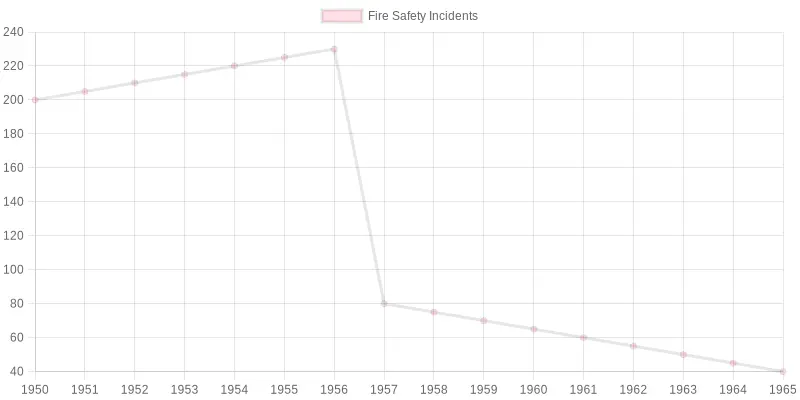
The introduction of ladder trucks in 1957 significantly transformed firefighting capabilities, contributing to a notable decline in fire safety incidents over time. To illustrate this effect, we provide a chart below that captures the trends in fire safety incidents, highlighting the critical shift that occurred post-implementation of ladder trucks.
Analysis of the Data
- Before 1957, incidents were on a steady increase, peaking at around 230 incidents per year by 1956.
- Post-1957, the numbers dropped dramatically, showcasing the effectiveness of ladder trucks, with incidents declining to 80 per year in the first year after their introduction.
- The trend indicates continuous improvement in fire safety management and response capabilities.
This information underscores the importance of modern firefighting equipment and infrastructure. For more on ladder trucks and their specifications, you can explore our range of ladder fire trucks.
Conclusion: The Lasting Impact of 1957 Fire Truck Ladder Trucks on Modern Firefighting
The introduction of ladder trucks in 1957 brought a significant transformation to firefighting practices that have echoed throughout the decades. This era marked a pivotal shift from manual and mechanical systems to more advanced hydraulic technologies, which greatly improved the speed, safety, and effectiveness of fire response efforts. The pioneering designs established during this time have been instrumental in shaping the framework for modern firefighting equipment and tactics.
The hydraulic systems developed in the late 1950s have become integral to contemporary ladder trucks, enabling longer reach, greater stability, and enhanced operational efficiency. Key features such as the extendable ladder structure and the combination of mobility with a fixed chassis continue to influence today’s fire truck designs. This legacy is evident in the advanced platform fire trucks and other firefighting technologies that ensure firefighters can effectively respond to emergencies in high-rise scenarios and complex environments.
As we reflect upon the innovations of the 1957 ladder trucks, it is clear that their impact on firefighting is far-reaching. They have established operational standards that not only focus on extinguishing fires but also prioritize the safety and efficiency of crews working under hazardous conditions.
For business owners and fire safety professionals looking to enhance their capabilities and meet the evolving demands of modern firefighting, investing in equipment that harkens back to the foundational technologies of the late 1950s can offer significant advantages. To explore our cutting-edge options inspired by this rich legacy, contact us today for more information. Let’s continue to build upon the remarkable technological advancements that began in 1957, ensuring a safer and more effective firefighting landscape for all.