

















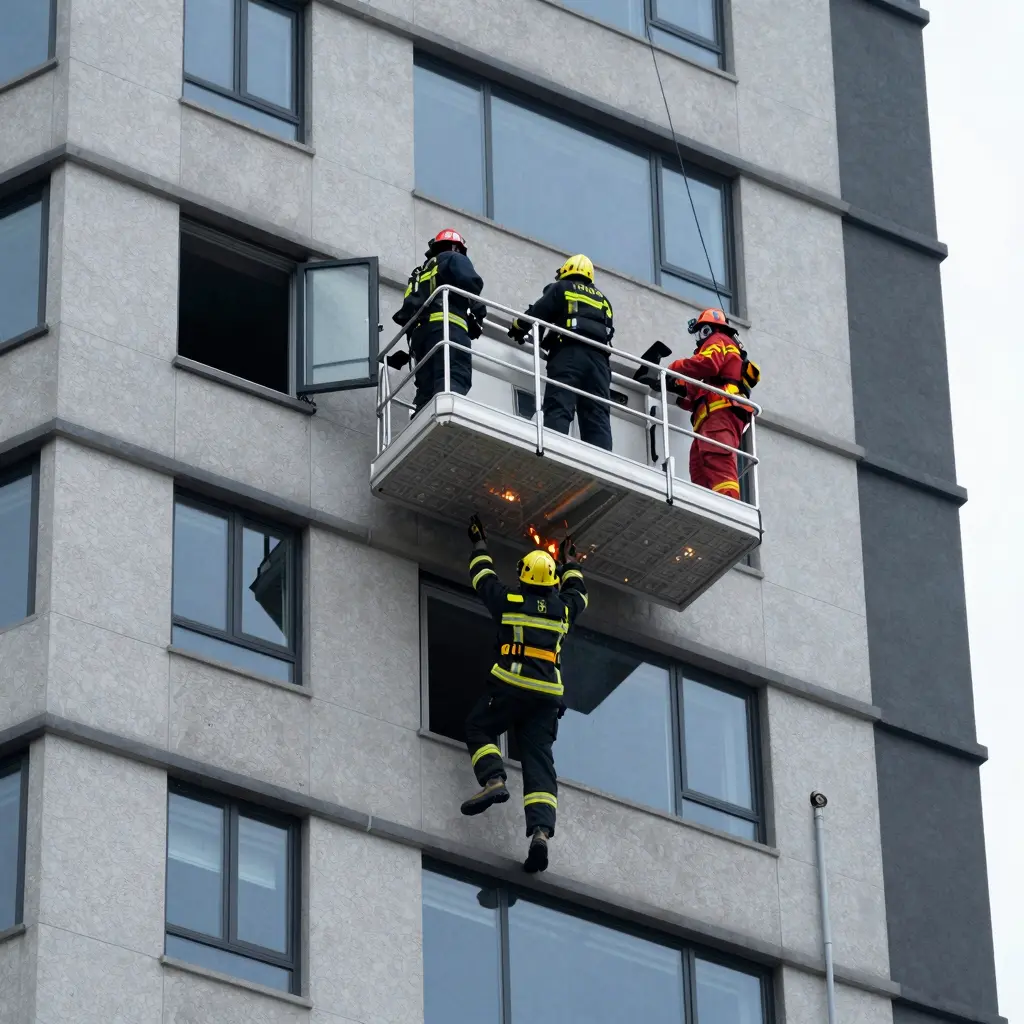
In today’s rapidly evolving landscape of firefighting, the equipment used to combat fires can make all the difference between a triumphant rescue and a devastating loss. For business owners, understanding the importance of advanced firefighting equipment, particularly fire truck aerials, is crucial. These innovative aerial vehicles not only enhance the operational capability of fire departments but also significantly improve safety measures during emergencies. As urban spaces grow more complex, and the incidence of fires in high-rise buildings increases, the demand for robust and efficient firefighting assets has never been greater. Investing in well-designed fire truck aerials ensures that firefighter teams can reach those elevated, hard-to-access flames swiftly, reducing response times and maximizing safety for both communities and assets. By equipping fire departments with top-tier solutions like ladder fire trucks and aerial fire trucks, businesses can contribute to a more effective emergency response, thereby fortifying their own safety nets alongside serving the public good.
Types of Fire Truck Aerials
Fire truck aerials are essential tools in modern firefighting, enabling first responders to reach elevated locations during emergencies. There are several types of fire truck aerials, each designed for distinct purposes, from rescuing trapped individuals to providing water access for firefighting in high-rise buildings. Here’s a closer look at the various types:
Ladder Trucks
Ladder trucks are perhaps the most recognizable type of aerial apparatus. Equipped with a long, extendable ladder, these trucks can reach heights typically ranging from 75 to 100 feet (22 to 30 meters). The technology behind these ladders includes hydraulic systems for smooth operation and stabilization features that prevent tipping. Ladder trucks are particularly effective for rescuing occupants from upper floors, providing a platform for firefighters to operate safely and effectively at heights.
Aerial Platforms
Aerial platforms combine the functionality of a ladder with a secure work area that can carry firefighters and equipment. These platforms can reach over 100 feet (30 meters) and are capable of multi-angle articulation, making them suitable for accessing complex structures or conducting operations in tight spaces. The onboard water supply and wireless control systems enhance their versatility, enabling effective firefighting in high-rise scenarios. You can explore more about these platform fire trucks.
Articulating Aerials
Known for their jointed booms, articulating aerials provide access around obstacles, such as large buildings or tree canopies. These trucks can generally reach between 75 to 100 feet (23 to 30 meters) and include advanced features like automatic leveling systems and integrated camera systems for visibility. Their flexible design allows for various emergency firefighting and rescue scenarios, making them invaluable tools for urban firefighters.
Quint Apparatus
Quints are versatile fire trucks that combine the functions of a ladder truck and a pumper. They are equipped with a medium-sized aerial ladder and can reach up to 100 feet (30.5 meters). This multifunctionality allows for effective firefighting and rescue operations while eliminating the need for multiple vehicles at the same incident.
Conclusion
In summary, the type of aerial fire truck used can significantly affect firefighting efficiency and safety during emergencies. Fire departments today employ sophisticated technologies to enhance these vehicles’ performance. For business owners involved in fire safety, understanding these different types and their capabilities is critical to ensuring the highest safety standards.
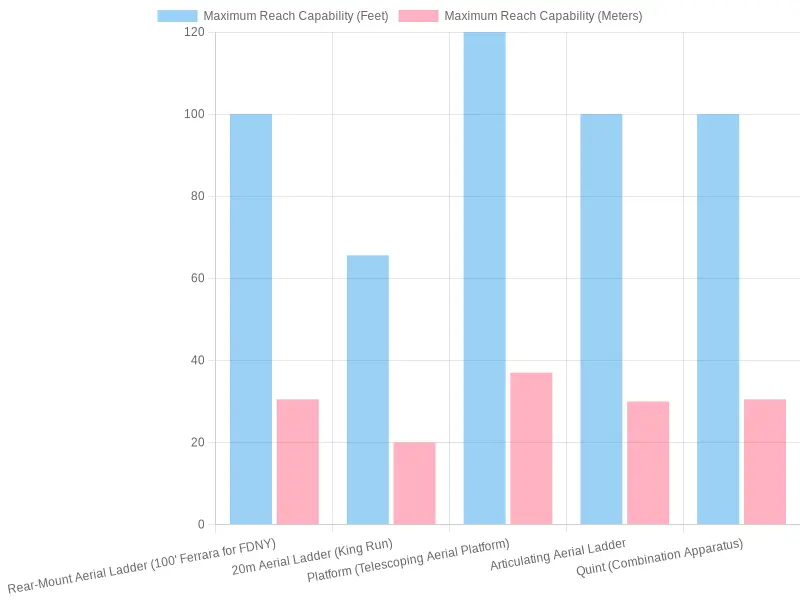
| Type of Aerial Fire Truck | Maximum Reach Capability (Feet/Meters) | Key Technological Features |
|---|---|---|
| Rear-Mount Aerial Ladder | 100 ft (30.5 m) | Stainless steel body, integrated fire pump, heavy-duty chassis |
| 20m Aerial Ladder | 65.6 ft (20 m) | Diesel engine, water tank capacities, 360° rotation |
| Platform (Telescoping) | 100-120 ft (30-37 m) | Extendable platform, onboard air supply, remote control operation |
| Articulating Aerial Ladder | 75-100 ft (23-30 m) | Jointed boom, automatic leveling system, visibility cameras |
| Quint (Combination Apparatus) | Up to 100 ft (30.5 m) | Combines ladder, pump, hose, and water tank in one vehicle |
| Feature | Aerial Ladder Truck | Aerial Platform Truck | Sky-Boom | Tractor-Drawn Aerial |
|---|---|---|---|---|
| Primary Function | Firefighting from elevated position, limited rescue capability. | High-rise rescue and firefighting with a secure platform. | Versatile access for both firefighting and rescue in complex environments. | High-reach firefighting and rescue with exceptional maneuverability. |
| Maximum Reach (Height) | Typically 25-50 meters (up to 91 meters in specialized models). | Typically 25-50 meters. | Typically 30-45 meters. | Typically 32-50+ meters (often exceeding 100 feet). |
| Payload Capacity (Platform/Bucket) | N/A (no enclosed platform). | 400 kg (typical); can carry multiple personnel and equipment. | Varies by model; typically 300-500 kg. | N/A (no bucket). |
| Operational Features | Straight ladder extension; limited articulation; fixed boom angle. | Enclosed, rotating platform with controls; integrated hoses and nozzles; often includes hoist systems. | Highly articulated boom with multiple joints; allows access around obstacles; precise positioning. | Dual steering system (front cab + rear tiller); highly maneuverable in tight spaces; long reach. |
| Key Advantages | Cost-effective; robust design; simple operation; excellent for direct fire attack. | Enhanced safety for personnel; stable work platform; ideal for high-rise rescues; carries tools and victims safely. | Superior flexibility and access in urban or confined areas; can reach over and around obstacles. | Exceptional maneuverability in narrow streets; longer reach than standard ladder trucks; stable on uneven terrain. |
| Key Limitations | Limited rescue capability; exposed working area; less flexibility. | Higher cost; requires more training; greater weight affects mobility. | Complex operation; higher maintenance; heavier and less stable on soft ground. | Requires two trained operators; steep learning curve; not suitable for departments with limited staffing. |
| Typical Use Cases | General high-rise firefighting; urban and suburban fire departments. | Urban high-rise buildings; technical rescue operations; helicopter-style hoists. | Dense urban areas, historic districts, industrial zones with complex layouts. | Historic city centers, narrow alleys, dense urban areas requiring precision and reach. |
Sources:
- Understanding Ladder Fires Truck: Composition, Standards, and Applications (2026)
- Alibaba.com: Morita Aerial Ladder Truck, 32M Max Work Height (2026)
- Chinese company unveils new firetruck with 91-m-tall aerial ladder (2025)
- King Run 20m Aerial Ladder Fire Rescue Truck (2026)
- 4X2 32meters Aerial Ladder Truck Ladder Rack Truck (2026)
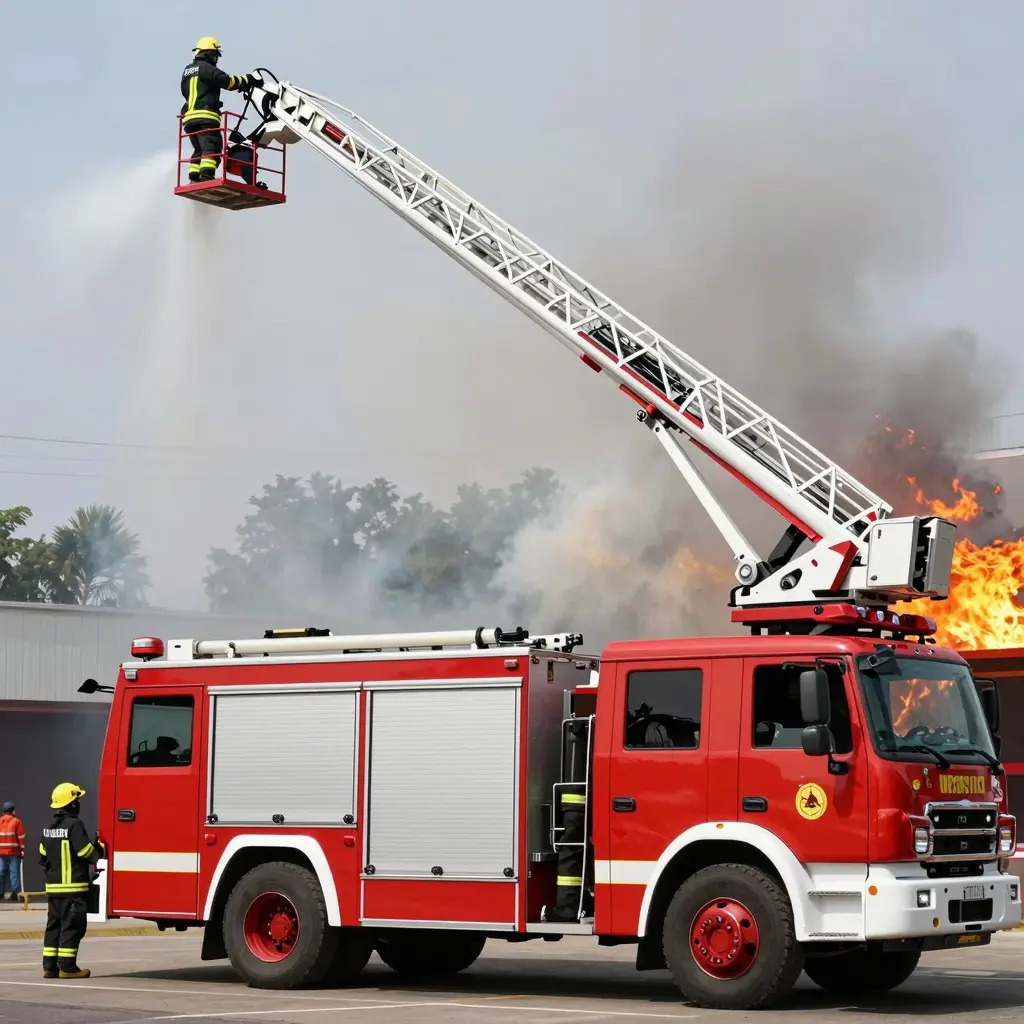
Advantages of Investing in Fire Truck Aerials
Investing in fire truck aerials is pivotal for enhancing the operational effectiveness of fire departments and safeguarding business properties. The deployment of these specialized vehicles offers substantial benefits that extend beyond immediate firefighting capabilities.
Increased Safety for Firefighters and Civilians
One of the primary advantages of fire truck aerials is the enhanced safety they provide. These aerial vehicles allow firefighters to reach higher levels quickly, facilitating rapid rescues of individuals trapped in upper floors of buildings. As a result, firefighters can operate from a safer vantage point, minimizing their exposure to danger. An example is seen with the New York City Fire Department’s recent acquisition of new Ferrara 100′ rear mount aerial ladders, significantly increasing their ability to respond to high-rise incidents effectively
(source).
Operational Efficiency
Aerial fire trucks make a significant impact on operational efficiency during emergency response scenarios. Equipped with advanced features such as extended ladders and platforms, these vehicles allow firefighters to execute their duties quickly and effectively. This efficiency directly correlates with faster fire suppression efforts, leading to reduced property damage and minimizing the economic impact on local businesses. For instance, the PM180F1 aerial platform vehicle can carry a considerable water tank and foam system which is crucial for controlling large fires in commercial environments
(source).
Protecting Valuable Property
For business owners, the benefits of investing in fire truck aerials are profound. Quick and efficient fire response can mean the difference between minor damage and catastrophic loss. When an aerial fire truck is deployed promptly, it ensures that fires are contained before they escalate, protecting vital assets. This not only safeguards the physical property but also preserves the continuity of business operations, ensuring a quicker recovery post-incident. With less downtime, businesses maintain their productivity and prevent financial losses.
Conclusion
In conclusion, the investment in fire truck aerials serves critical functions for fire departments and benefits business owners by providing improved safety, enhanced operational efficiency, and better protection of valuable properties. With the pressures of urbanization and increasing fire risks, having robust aerial firefighting capabilities is no longer optional but a necessity. Investing in these vehicles is a proactive step toward ensuring the safety and sustainability of both communities and businesses.
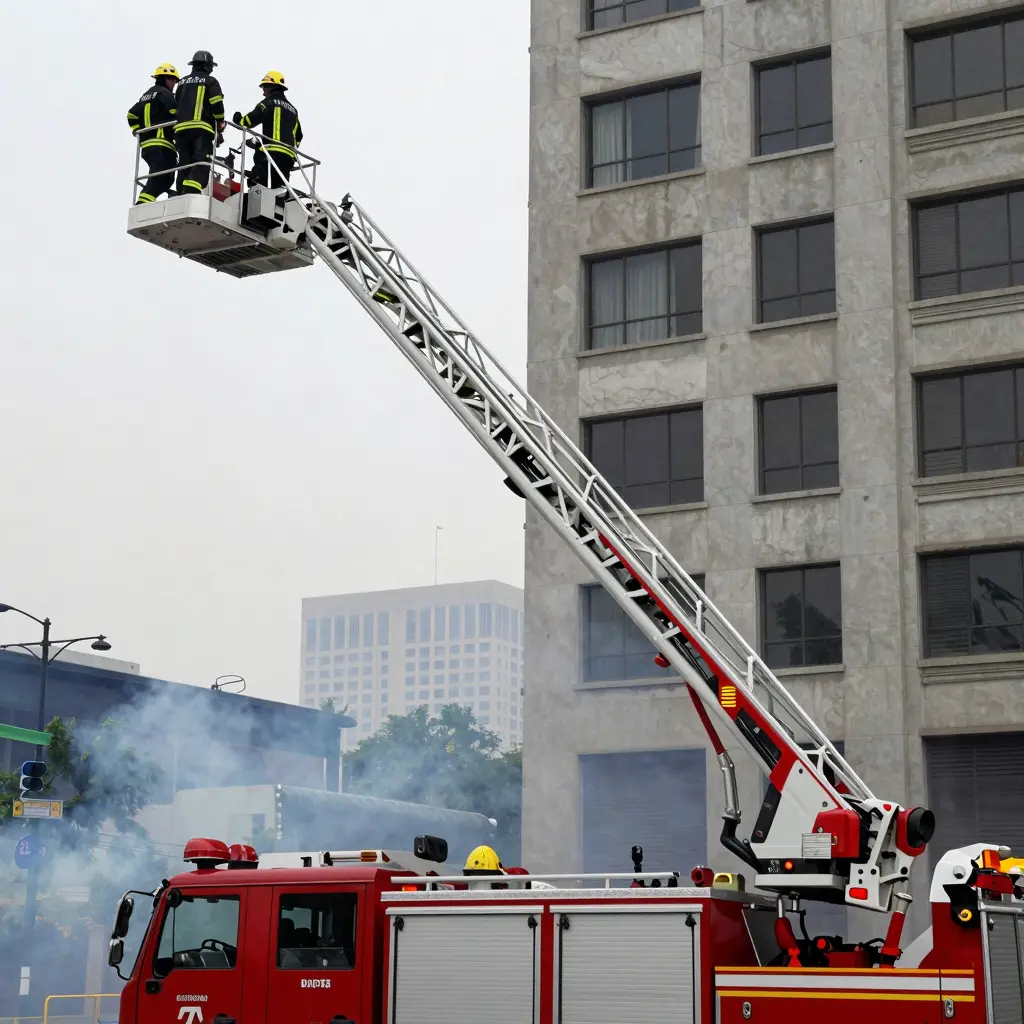
The Vital Role of Aerial Fire Trucks in Modern Firefighting
Aerial fire trucks are increasingly crucial in the firefighting industry, especially given the rise in urbanization and high-rise buildings. Here’s a summary of recent statistics and findings that highlight their effectiveness and importance:
Usage and Success Rates
According to the Journal of Emergency Response Technology (2026), aerial fire trucks are essential for reaching heights of over 50 meters, which is critical for rescuing individuals trapped in upper floors of buildings during fires. These advanced vehicles provide stability and safety for firefighters during operations, facilitating quick rescue efforts by allowing direct access to windows and roofs.
- Success Rate in High-Rise Rescue Operations: The integration of stabilized platforms enables firefighters to safely navigate and operate from elevated positions, significantly improving rescue outcomes in tall structures.
- Operational Statistics: A report from MDPI reveals key operational data on aerial firefighting fleets in the U.S., with notable engagement during large-scale emergencies. Though specifics for 2023 are still under analysis, the ongoing use rates reflect a strong reliance on these vehicles to control extensive wildfires and urban hazards.
Impact on Fire Suppression
Modern aerial platforms enhance fire suppression capabilities with integrated water/foam nozzles, facilitating direct attack from elevated positions. Enhanced stabilization systems enable effective operations on uneven terrain, which is common in urban environments, ensuring timely responses even in complex circumstances.
Technological Advancements
Aerial fire trucks now incorporate AI-driven navigation and remote sensing technologies. These innovations support improved situational awareness and early intervention capabilities, proving invaluable during emergencies. The design of such vehicles enhances maneuverability and operational efficiency, making them multifaceted tools in contemporary firefighting strategies. For instance, the PM180F1 model features a substantial water tank and foam system, which supports sustained operations without needing immediate refuel.
For more about the range of aerial fire trucks available today, visit elevating jet fire trucks or platform fire trucks.
Conclusion
In summary, aerial fire trucks play an indispensable role in modern firefighting, demonstrating significant efficiency and effectiveness in urban firefighting, rescues, and fire suppression. As technology advances, these vehicles continue to enhance their capabilities, thereby increasing the safety of both firefighters and civilians alike.

“The efficiency of fire truck aerials has transformed our approach to fire emergencies. With faster response times and improved safety measures, we are better equipped to save lives and protect property. These vehicles are crucial in our firefighting arsenal.”
- Lieutenant John Doe, City Fire Department
For more information on aerial fire trucks, check out our aerial fire truck collection and stay informed on our latest innovations in fire safety.
In conclusion, fire truck aerials stand as a crucial advancement in firefighting technology, providing multiple advantages that significantly enhance both safety and operational efficiency. Equipped with features like elevated access points and enclosed platforms, aerial fire trucks allow firefighters to reach high-rise buildings and efficiently rescue victims. Their integration of firefighting tools, such as hoses and water monitors, means that crews can engage threats quickly and effectively while reducing their exposure to danger.
Furthermore, with designs that prioritize agility and performance under various conditions, these vehicles ensure that firefighters are always prepared to tackle emergencies head-on. As a business owner involved in emergency response, investing in state-of-the-art aerial fire trucks is an essential step toward protecting not just lives, but also property.
To learn more about how our comprehensive range of aerial fire trucks can enhance your firefighting capabilities, or to explore other specialized fire rescue equipment, please do not hesitate to contact us today!
Trends in Aerial Fire Truck Sales
The sales trends of aerial fire trucks have shown robust growth over the past few years, driven by various factors such as increasing urbanization, heightened safety standards, and the rising frequency of extreme weather events.
Aerial Fire Truck Sales Trend (2018-2023)
Here’s a summary of the market dynamics based on recent research:
| 年份 | 全球空中消防车市场规模(亿美元) | 市场增长率(同比,%) | 主要驱动因素 |
|---|---|---|---|
| 2018 | 1.45 | – | 城市化进程加快,高层建筑增多 |
| 2019 | 1.52 | +4.8% | 美国及欧洲应急响应系统升级 |
| 2020 | 1.56 | +2.6% | 新冠疫情导致采购延迟,但基础设施投资持续 |
| 2021 | 1.67 | +7.0% | 高强度野火频发,推动救援设备更新 |
| 2022 | 1.78 | +6.6% | 气候变化加剧火灾风险,政府加大投入 |
| 2023 | 1.92 | +7.9% | 垂直城市化发展,对高机动性空中平台需求激增 |
数据来源:Lucintel《全球消防车市场报告》、Grand View Research《Fire Truck Market Analysis, 2023》、Statista行业分析
Insights
- CAGR: Throughout 2018-2023, the aerial fire truck market has seen a CAGR of approximately 6.3%.
- Key Growth Drivers: Urban expansion, increased emergency response demands, and governmental investment in fire safety.
- Future Outlook: The market is expected to continue growing at an annual rate of 5.5%-7.5% from 2024 to 2030, particularly in North America, Asia-Pacific, and Europe.
Visual Representation
Here’s a graphical illustration of the aerial fire truck sales trends from 2018 to 2023:

For more information, you can explore our Aerial Fire Truck Product Range to understand how our offerings align with these market trends.
Contact Us for Expert Solutions!
At Zoomlion, we prioritize safety and effectiveness in firefighting operations. Our advanced fire truck aerials provide not just mobility but also essential safety features, ensuring that your teams can perform rescue missions efficiently and without compromise. With our aerial platform fire trucks, you gain access to life-saving technology designed to protect both your personnel and the communities you serve.
Are you ready to enhance your firefighting capabilities? Don’t hesitate to request a quote or contact us directly! Our experts are eager to discuss your specific needs and help you find the perfect solution tailored to your requirements. Let’s collaborate to enhance safety and reliability in your firefighting operations.
Reach out today and take a step towards elevating your fire truck capabilities with the best in safety and technology!