


















In the world of firefighting, the terminology used to identify equipment plays a critical role in operational efficiency and safety. The fire truck ladder, commonly known as the aerial ladder, is not just a simple tool; it embodies advanced engineering designed to tackle the unique challenges presented by high-rise structures and emergency scenarios. This article delves deeply into the intricacies of the aerial ladder’s name, its functionalities, and how the terminology has evolved over the years. Through understanding the specific terminology, business owners invested in safety equipment can make informed decisions that directly impact their operations and preparedness. Each chapter will enhance the understanding of the fire truck ladder name, exploring its functionalities and historical evolution, ensuring that industry professionals remain informed on best practices and innovations.
The Reach in the Name: Unraveling the Fire Truck Ladder Language and Its Silent Logic
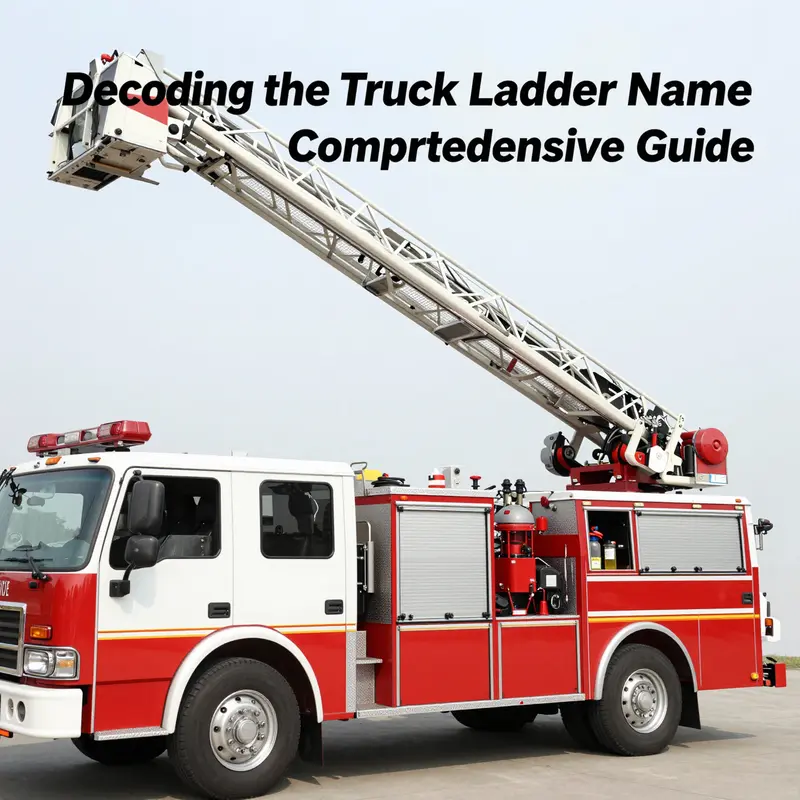
The city wakes with a siren and the blur of a street that seems ordinary until heat and danger press against its boundaries. In those moments, the devices that carry human effort into the sky become not only tools but also symbols. The term used to describe the long, extendable ladder mounted on a fire truck is more than a label; it is a map of capability, risk, and collaboration. Within firefighting circles the ladder is commonly called an aerial ladder, and in some contexts it earns the broader tag of aerial apparatus, a phrase that carries the weight of design, hydraulics, and the promise of reaching places crews cannot access by foot. Yet the language around this piece of equipment does not rest on a single name. It travels through boards of training manuals, through the chatter of dispatch channels, through the media, and into the everyday conversations of residents who want to understand what the truck is doing when the building towers above them. It is tempting to see the ladder as a mere tool and to forget that the names we assign to it carry history, technology, and a shared sense of purpose. The ladder is both object and metaphor: a reachable promise at the edge of possibility, a line drawn in the air where rescue meets risk.
The distinction between the words aerial ladder and ladder truck names a core reality of how these machines are imagined and used. In professional firefighting vocabulary the term aerial ladder signals two things at once. First it points to a long, extendable ladder that can be lifted and angled from a fixed chassis. Second it implies a system capable of deployment to elevated targets, enabling firefighters to work from heights above the ground with a measure of safety and efficiency that ground-level tactics cannot reproduce. When the same equipment is referred to as an aerial apparatus, the phrase broadens to include the surrounding mechanisms that make operation possible: the hydraulic systems that push and pull sections of the ladder, the stabilization legs that brace the vehicle against wind and gravity, the rotation platform that allows the ladder to sweep through a full circle, and the basket or platform at the ladder’s end that carries personnel and gear to the work zone with a steadiness essential for delicate rescues. In the wild variety of firefighting practice the ladder sometimes earns the label turntable ladder, a reminder of the dramatic 360-degree reach and the pivoting stage that permits precise positioning even in tight quarters. The language thus grows from a simple description into a compact display of capability, orientation, and the situational logic of a rescue operation.
Two broad families dominate the field: platform aerials and straight aerials. Platform aerials end in a basket or platform that can hold one or more firefighters along with their tools. This design is more than a tray; it creates a mobile worksite in the sky where crews can stabilize themselves, manage water or foam lines, conduct searches, and perform ventilation or rescue with a minimum of movement. The basket is not just a seat; it is a small, independent space with access to communication lines, lighting, and sometimes a monitor that delivers water from above. The platform thus becomes a focal point for complex operations and extended tasks. In contrast, straight aerials present the ladder with no platform at the end. They offer extended reach and greater versatility in tight spaces where the geometry of a rescue or fire attack demands precise placement of a slender ladder. The tradeoff is clear: platform aerials supply stability and workspace at height at the expense of a slightly heavier footprint and a more complex operating envelope, while straight aerials emphasize reach and maneuverability but require firefighters to ascend and work from the ladder with terrain and wind presenting higher levels of hazard.
These distinctions matter as much in planning and training as in the field. The ladder becomes a theatre where speed, precision, and safety must converge. Firefighters must decide not only where to place the vehicle but how to deploy the ladder in a way that maximizes visibility, minimizes risk to occupants, and preserves the ability to communicate across a noisy scene. The operational choreography hinges on a well-informed mindset about center of gravity, wind effects, and the physical limits of the system. The ladder is extended and retracted by sophisticated hydraulic assemblies that translate engine power into the smooth movement of steel and alloy. Operators orchestrate the sequence with a careful cadence: extend, pivot, stabilize, and finally test the positioning with a controlled move to ensure that the weight of the crew and the load does not exceed the machine’s safe operating envelope. The goal is not merely to reach but to reach safely, to maintain control in the face of gusts that can turn a climb into a dangerous event. The communication among crew members—between the person driving the truck, the operator at the base, the climbers on the ladder, and the officer directing the scene—becomes as important as the ladder itself. This is where the artistry of naming becomes practical design; a shared vocabulary underpins swift, coordinated action.
The equipment behind the name is a testament to how engineering translates into reliable service. Aerial ladders are typically diesel-powered, with horsepower scales that place many systems in the 400 to 600 range. The power enables vigorous hydraulic actuation, providing the thrust required to extend the ladder to its working position and to retract it after rescue or firefighting tasks have concluded. The same drive system also supports the vehicle’s other responsibilities, including the ability to pump water at significant rates. Aerial ladder trucks commonly feature a pump capacity capable of delivering thousands of gallons per minute when the situation demands direct attack from height. This dual capacity—reach and water delivery—frames the ladder as both a lifeline for abstraction and a tool for tangible action. It allows crews to place water or foam at elevated targets, to ventilate by controlled cutting or opening openings in smoke-laden environments, and to support a rescue where access from the ground would be slow, dangerous, or impossible. The synergy of reach, stability, and water delivery reflects a careful balance between mobility and potency, a balance that is embedded in every line of the vehicle’s technical specifications and in the protocols that govern its use.
Safety, of course, is the hinge on which the entire enterprise turns. The presence of a long ladder above a street or a building means that the operator and crew must manage a constellation of hazards. The stabilizing legs must reach the ground with proper contact, a task that becomes more challenging on uneven pavement or when the vehicle is perched on a slope. The 360-degree rotation capability is a remarkable feature, but it is undergirded by a principle of controlled movement and constant situational awareness. The operator must track the ladder’s path for overhead obstacles, power lines, or the presence of nearby structures that might reflect heat, create eddies of wind, or complicate the ladder’s arc. In practice this translates into a discipline: thorough pre-operation checks, verification of load limits, and the discipline of clear, unambiguous communication among crew members from the moment the call comes in until the ladder is stowed away after a scene has been cleared. The ladder becomes a focal point for safety culture, not merely a device for removing people from danger or dousing flames. It embodies the principle that high-risk tasks demand rigorous standard operating procedures, continuous training, and the humility to adapt to the unique geometry of every structure.
The broader use of aerial ladders extends beyond immediate emergency response. Firefighters also rely on these vehicles for building inspections, for public safety outreach, and even in scenarios that require aerial access for nonemergency purposes. The ladder’s ability to traverse to higher floors makes it a tool for routine checks of building exteriors, for outreach during community events, and for tasks that require elevated vantage and controlled access. This multiplicity of applications feeds back into the language surrounding the equipment. When a department speaks of the ladder as part of its urban safety ecosystem, the terminology evolves to capture not only the technical attributes but also the role such equipment plays in the city’s resilience. The language thus consolidates a practical, working knowledge that can be shared with citizens who may never see an aerial ladder in action but who should understand its importance. The narrative thus moves beyond a single technical descriptor to a living lexicon that ties engineering to public safety and urban stewardship.
In an era of strict standards, the naming of the ladder also hints at compliance and the way departments communicate with manufacturers and regulatory bodies. The composition, standards, and best practices that guide these vehicles are the invisible backbone of every operation. The ladders are designed to meet rigorous performance criteria while maintaining the flexibility to respond to a broad range of scenarios. The dialogue around naming—aerial ladder, turntable ladder, aerial apparatus, ladder truck—signals a shared recognition of the ladder’s core attributes: reach, stability, and the capacity to deliver rescue or water from above. It is not an exercise in pedantry but a practical shorthand for risk-managed capability. A firefighter who speaks the language of the ladder is a professional who can quickly translate a scene’s needs into a configuration that optimizes safety and effectiveness. The public, in turn, benefits from the clarity of this language when conversations about high-rise fires or rescue operations are translated into simple questions and confident answers about what the ladder can do and why its naming matters.
Consider how this language shapes training and education. Recruits learn early on that aerial ladders are not ordinary ladders that have found a home on a truck. They learn about the distinct controls, the sequence of operations, and the safety checks that must accompany every movement. They also learn to read the ladder through a geometry of force and balance, to respect the dynamic forces that occur when the ladder is extended into the air, and to appreciate the way wind interacts with height. The two primary categories—platform aerials and straight aerials—offer different paths in this learning process. Platform aerials, with their live-working basket, demand a particular attention to crew coordination in a confined aerial work zone, where the firefighters on the platform must manage lines, tools, and communication while maintaining a stable position in the air. Straight aerials emphasize the discipline of ascent and precise positioning, a skill that tests a team’s ability to adapt to the environment and the constraints of the building and surroundings. The naming becomes a mental map for training objectives: platform work trains teamwork and platform confidence; straight work builds precision and manual climbing discipline. In both cases the ladder becomes a teacher, shaping how a firefighter thinks about height, safety margins, and the relationship between vehicle, operator, and scene.
The public-facing side of the ladder’s naming has value as well. A clear label helps residents understand what responders are doing when a tall building is involved. It informs the media’s coverage, guiding reporters to convey the scale and seriousness of an operation without resorting to misnomers or sensational simplifications. It helps school children, curious neighbors, and business owners grasp the concept that a truck is not merely a bulldozer-on-wheels but a mobile platform for elevated activity that blends engineering, human skill, and urgent judgment. When the language around the ladder is precise and consistent, it becomes a bridge between specialists and the wider community, a shared vocabulary that supports trust and cooperation during moments of crisis. In this sense, naming is part of the city’s social infrastructure, a small but meaningful piece of the safety net that allows citizens and responders to coordinate under pressure.
As the myriad images of firefighting fill the news and the imagination, the ladder’s name travels through the same channels that carry story and memory. The term aerial ladder evokes a lineage of design and practice—an arc of innovation that stretches from simple rope ladders to hydraulic telescoping systems engineered to extend a firefighter’s reach to the upper floors of modern towers. The term turntable ladder conjures a picture of rotation, a visual cue that signals control and spatial awareness. These names become mnemonic devices that help responders quickly share a mental model of what to expect when a ladder is deployed, how long it might take to stabilize, and what kinds of risks are in play. In practice, the name matters because it anchors a shared understanding that translates into faster, safer, and more effective actions on the ground. The language has weight because it communicates trust and competence not only within the firehouse but in the public sphere as well.
In sum, the fire truck ladder is not just a piece of heavy equipment with a high reach. It is a device with a name that carries a history of engineering, safety, and collaborative practice. It embodies a dual commitment: to reach higher and to do so with a disciplined respect for limits and a culture of continuous learning. Whether referred to as an aerial ladder, a platform aerial, a turntable ladder, or a ladder truck, the core purpose remains consistent—to extend human capability into danger so that life can be saved, safety preserved, and communities protected. The naming, then, is a practical grammar of rescue, a compact code that encodes the ladder’s features, the crews who operate it, and the standards that govern its use. It is a language built not on mirroring the past but on shaping the future of safe and effective elevated response. And as city skylines rise and building envelopes become more complex, the reach in the name will continue to be tested, refined, and understood by those who trust the ladder to carry them from harm toward safety.
External resource for deeper context on assembly, standards, and best practices for elevated firefighting equipment can be found at the following overview. For broader context on how public reporting and safety considerations intersect with high-rise operations, see BBC News coverage linked here: https://www.bbc.co.uk/news/uk-67189145
Above the Street, Higher: Decoding the Aerial Ladder and Its Name in Modern Firefighting
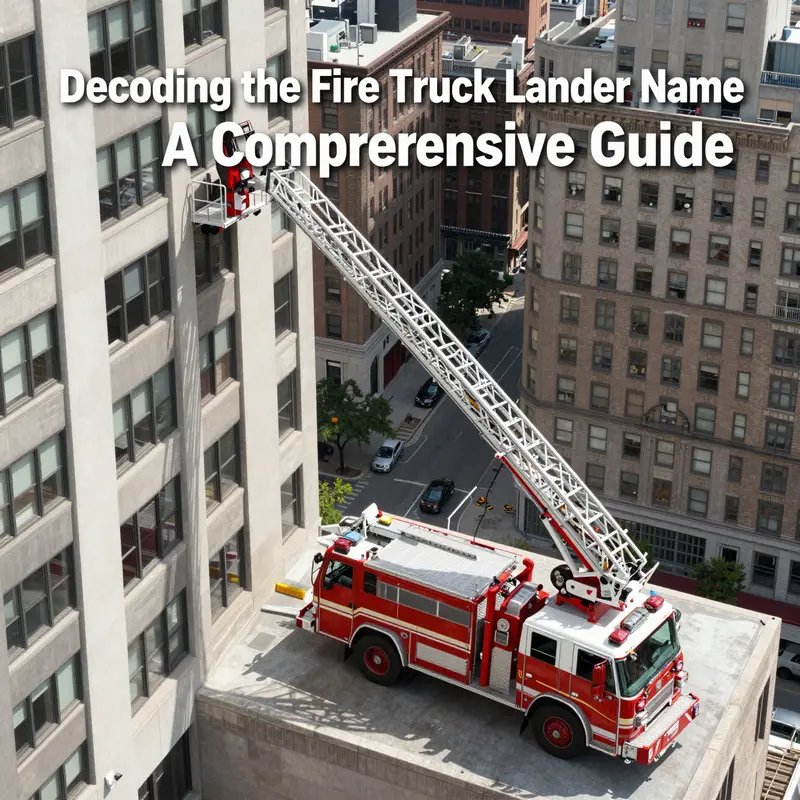
When people hear the phrase fire truck ladder, they often picture a long, extendable beam rising toward a flame-lit window. Yet the language surrounding this crucial tool is more deliberate than a simple label would suggest. In firefighting parlance, the primary instrument used to reach upper stories is commonly called the aerial ladder, but it is also recognized under alternative names such as ladder truck or aerial apparatus. Each term communicates a slightly different emphasis: the aerial ladder foregrounds the mechanism that actually stretches into the air, the ladder truck highlights the vehicle’s overall function as a high-reaching platform on wheels, and the broader term aerial apparatus nods to the array of devices, hydraulics, and controls that together enable vertical access and complex operations. This chapter explores why the name matters as much as the device itself, how the language surrounding it shapes practice, and why the evolution of this terminology mirrors the evolution of the technology and the men and women who operate it.
The name is not a mere label but a map of capability. Firefighting is organized around roles, responsibilities, and reliable communication. When command speaks of deploying an aerial ladder, it signals a deliberate strategy: to access elevated spaces safely, to perform rescues in environments where stairs and ground ladders fall short, and to deliver water from height when the attack needs to come from above. The distinction between an aerial ladder and other high-reaching tools becomes immediately practical in the field. A ground ladder is a crucial, general-purpose tool for lower levels and quick access. A pump apparatus focuses on water movement and ground-level suppression. An aerial ladder, by contrast, embodies vertical reach, stability in the air, and the specialized habitability of a platform that can sustain firefighters and tools aloft during critical operations. The terminology helps responders, incident commanders, and dispatchers coordinate in real time, aligning expectations about reach, load, accessibility, and potential hazards at height.
What makes the aerial ladder stand apart begins with the engineering that enables height without sacrificing safety. The core concept is straightforward: a telescoping ladder that can extend and tilt, supported by a robust chassis and stabilizing outriggers. But the reality is a symphony of hydraulic systems, counterweights, load sensors, and electronic control mechanisms that translate human intention into precise motion at the edge of a high-rise. This blend of hydraulics and electronics must overcome the physics of wind, weight, and the opportunistic risks of fire environments. The ladder section itself is engineered for extension and pivoting, a combination that provides extraordinary versatility in dense urban landscapes where a straight-line approach to a window is rarely possible. The ability to angle and steer the ladder means firefighters can place people in the most favorable position for rescue, while water streams or monitors can be aimed with accuracy even when the ladder is far from level ground.
The wind becomes a constant factor once an aerial ladder leaves the ground. Even a slight gust can translate into amplified sway at height, turning what looks like a simple reach into a precarious balance. Modern aerial ladders are designed with wind resistance as a foundational consideration, not an afterthought. They incorporate stabilizing hardware and advanced control logic that helps operators maintain a steady, intentional trajectory as weather and building geometry challenge stability. This is not a luxury feature but a core safety requirement. Aerial ladders must perform under diverse conditions—urban canyons that funnel wind, building projections that alter airflow, and the heat and turbulence produced by active fires. The name itself—“aerial”—conveys the essential domain of operation: in the air, where dynamics shift rapidly and the margin for error narrows.
Beyond reach and balance, the ladder platform is a sophisticated firefighting tool in its own right. Many aerial ladders are equipped with integrated firefighting tools that extend the ladder’s utility beyond mere elevation. Monitors and nozzles mounted on the ladder allow water to be deployed directly from height, a capability that can conserve precious time in rescue and suppression efforts. The presence of on-board lighting systems further enhances the ladder’s utility in low-visibility conditions, enabling crews to conduct searches, rescue operations, and water application with greater confidence after dusk or within smoke-filled interiors. In this light, the naming of the device—an aerial ladder—reads as a compact summary of a highly integrated apparatus: a height-ready platform with tools, lighting, and control systems all engineered for sustained work at elevation.
Yet the significance of the name extends beyond technical function. It also communicates a standardized identity that helps public expectations align with operational realities. When people see a vehicle designated as a ladder truck or an aerial ladder unit, they anticipate a response designed to gain vertical access quickly, to protect occupants who cannot descend via stairs, and to deliver life-safety measures from an elevated position. This shared understanding matters in the public domain as well as on the fire ground. Communities learn to recognize the raised platform of an aerial ladder as a signal that a complex scenario—potentially involving high-rise occupancy, blocked egress, or compromised access routes—requires specialized capabilities. The name, then, embodies a promise: a commitment to reach, to rescue, and to suppress from height with a blend of precision and caution that only extensive training can instill.
The name also helps differentiate roles within a brigade’s fleet. In a city with a dense skyline, several vehicle types may respond to a single incident, each contributing a different piece of the overall strategy. The aerial ladder represents a distinct balance between reach, stability, and operational complexity. It is not merely a longer ladder attached to a truck; it is a platform that can be maneuvered with careful choreography. The designation matters in command decisions about where to place apparatus, how to stage crews, and which lines or devices to deploy from the ladder. Communicators rely on concise, universally understood terminology to avoid misinterpretation under pressure. The term aerial ladder, therefore, acts as a shared code that synchronizes actions across teams and agencies, reducing ambiguity when seconds count.
This clarity becomes even more important as capabilities continue to expand. Advances in ladder technologies have pushed the envelope of height and reach, enabling access to increasingly tall structures. A recent development in the broader landscape of aerial ladders includes devices capable of exceptional vertical extension, reaching hundreds of feet and bridging the gap to high-rise interventions in a way that was unimaginable a generation ago. While the specifics of each advancement may vary by manufacturer and jurisdiction, the underlying trend remains clear: cities demand higher, more capable aerial platforms to protect residents and workers in the face of taller buildings and more complex urban forms. The name keeps pace with capability, signaling a shift in expectations about what is possible at height and how that potential should be exercised responsibly on the fire ground.
The conversation around terminology cannot overlook safety and training. Aerial ladders demand a level of expertise that goes beyond basic ladder handling. Operators must be proficient in hydraulic control, ladder stabilization, tilt and rotation coordination, and the interpretation of wind and load conditions. Training curricula emphasize the risk calculus involved in deploying a high-velocity platform over an urban terrain, considering the stability of the truck, the strength of outriggers on varied surfaces, and the need to communicate clearly with ground crews and occupants inside the building. The name, in this sense, becomes a reminder of responsibility: it invites ongoing practice, rigorous maintenance, and disciplined decision-making. NFPA standards and other national or regional guidelines provide the framework that ensures these devices remain reliable under the stress of real emergencies. The standardization embedded in the name—an aerial ladder—also supports mutual aid responses, where different departments must operate together with a shared language and consistent expectations about equipment capability.
Public-facing knowledge of the aerial ladder also intersects with the storytelling that surrounds fire service work. The ladder becomes a powerful image in media and community discussions, a symbol of vertical access, rescue, and dramatic intervention. When communities understand that the ladder’s purpose is to reach people and protect lives from above, they gain a deeper appreciation for the technical and logistical choreography that unfolds during a response. The name, therefore, carries a quiet pedagogy: it teaches by implication that height is a critical dimension of safety and that specialized machinery is required to address the risks that height introduces. This educational function reinforces the trust between a fire department and the public it serves, ensuring that when a call requires ascent, the public understands the seriousness and capability behind the response.
The evolution of the aerial ladder’s capabilities mirrors the broader evolution of urban fire protection. As cities rise and the built environment becomes more vertical, the tools of rescue and suppression must adapt in tandem. The development arc includes longer reaches, faster deployment times, improved stability mechanisms, and enhanced operator controls that permit more precise positioning under pressure. It is plausible to imagine a future where the upper limits of ladder height continue to grow, where automation and sensor feedback contribute to safer operation, and where life-safety considerations drive the design of even more integrated systems. In every iteration, the name remains a concise thread connecting history, present practice, and future ambition. It communicates not just what the device is, but what the device enables: access to lives, access to truthfully communicated reality in smoke and heat, and access to the critical vantage point from which effective firefighting can happen.
The weight of naming also informs how incidents are documented and analyzed afterward. After-action reports often reference the aerial ladder in precise terms to assess operational effectiveness, deployment timing, and the conditions under which the ladder was used. These records contribute to a cycle of learning that improves equipment design, training programs, and tactical decision-making. They also reinforce a culture of accountability, where teams reflect on the choices made at height and how those choices influenced outcomes for victims, crews, and bystanders. In short, the name is not a passive flourish; it is a dynamic element of safety culture, operational planning, and continuous improvement.
To look toward the horizon, industry observers note that the language of aerial access will remain a focal point as urban fire protection continues to evolve. The public, the media, and the fire service itself rely on a shared vocabulary to describe capabilities, limitations, and the responsibilities that come with height. In this sense, the name functions as both a technical descriptor and a cultural signpost. It signals to professionals what the apparatus can do, to policymakers where resources should be directed, and to the community what their safety apparatus is prepared to do when a building walls itself with smoke and flames. The term aerial ladder thus serves as a compact, practical embodiment of a broader commitment: to keep people safe, to navigate complexity with discipline, and to rise to the demands of a skyline that changes with every new floor added to a city’s silhouette.
In closing, the naming of the fire service’s high-reach tool is more than a linguistic choice. It is a reflection of function, a guide for action, and a bridge between complex engineering and everyday safety. The distinction between aerial ladder, ladder truck, and aerial apparatus encapsulates a spectrum of concepts—reach, stability, integration, and purpose—that together define how modern fire departments respond to emergencies in our increasingly vertical world. As structures climb higher and the demands of rescue and suppression intensify, the name will continue to carry weight in the planning room, on the fire ground, and in the shared understanding between emergency responders and the communities they protect. The aerial ladder is, in essence, a symbol of elevated capabilities: a tool designed to take safety to places where it is most at risk, and a name that reminds everyone involved that height, when managed with skill, becomes not a peril but a pathway to rescue and hope.
External resource for deeper exploration: https://www.fireengineering.com/articles/2026/03/exploring-fire-truck-aerial-ladder-composition-standards-and-best-practices-for-applications.html
Rising Names, Rising Capabilities: From Ladder Truck to Aerial Apparatus in Firefighting Lexicon
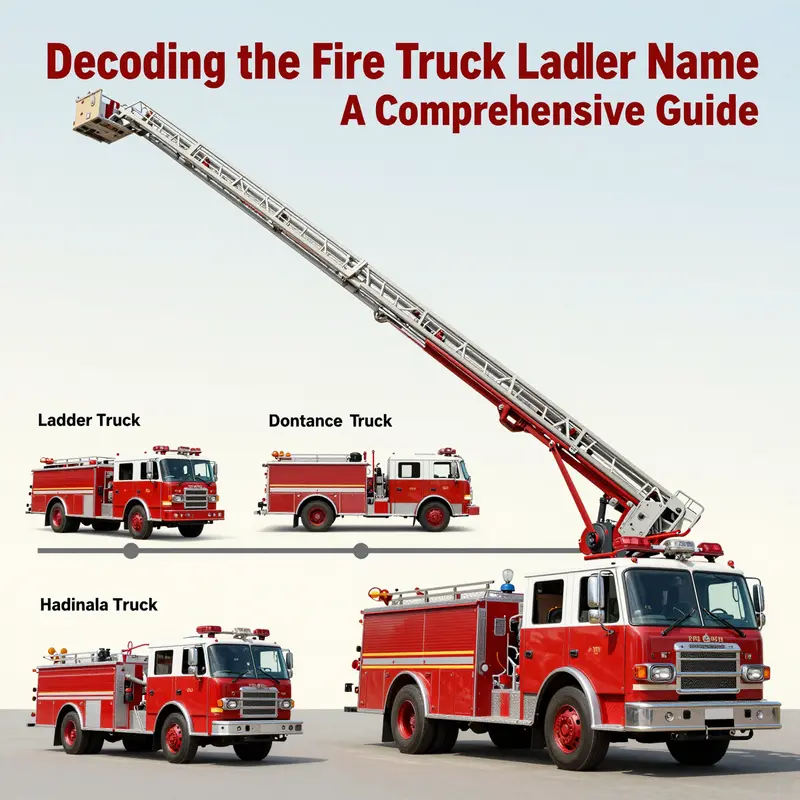
In the language of emergency response, words carry weight. The name given to a fire service vehicle signals not only its appearance but its function, its capabilities, and the expectations set for the crew who operate it. The evolution of the fire truck ladder’s name mirrors a broader shift in how we understand the tools used to reach danger, rescue the vulnerable, and confront fires in urban skylines. What began as a straightforward descriptor—a ladder that could be extended to gain access to higher floors—has grown into a nuanced vocabulary that encodes complexity, capability, and a standard of practice. This chapter traces that transformation, tracing a path from a simple ladder truck to what professionals now call an aerial apparatus, and explaining why the shift matters beyond semantics. When we look closely at the terminology, we see more than a fashion in labels; we see the story of innovation, safety, and a disciplined approach to elevated firefighting that has expanded what is possible in even the most demanding environments.
Historically, the first fire apparatus to bear any name related to height were known to the ranks as ladder trucks. The naming was practical and transparent: a truck carrying ladders for high access. It was a straightforward description, and it matched the world’s needs at the time. Early engines were built with a simple, fixed ladder or an extendable ladder boom, enough to reach the upper levels of a shop, a single-story apartment, or the edge of a roof. The ladder itself was the star feature, and the vehicle’s identity followed that priority. In those days, rescue and suppression were anchored in close, ground-level action. Water pressures, hose layouts, and the dynamics of a ladder were central to training and practice. The name matched the mission: the ladder opened routes to spaces otherwise inaccessible, and the truck became known by its primary tool.
As fire protection evolved, so did the concept of mobility. The cityscape grew taller and more complex. Buildings rose into the sky, and new challenges emerged. Firefighters needed more reach, more precision, and more stability when operating at extreme heights. The ladder began to be viewed not as a single fixed tool but as part of a larger system. The term aerial ladder truck emerged, signaling a dramatic shift in both capability and design philosophy. The word aerial conveyed ascent and elevation, while ladder reminded witnesses and responders that the device remained a climbable instrument. This hybrid label captured a critical transition: the apparatus could extend, tilt, and maneuver to access elevated fronts, while still offering a functional ladder as a working element. It was a necessary clarification for training, dispatch, and coordination in high-rise operations, where miscommunication about reach and angle could have severe consequences.
Today’s firefighting vocabulary has shifted again. The umbrella term aerial apparatus now serves as a more comprehensive designation that encompasses a family of elevated devices. Aerial ladders remain a core component of this family, but the term broadens the scope to include platform or bucket units as well as articulated booms and hybrid configurations. Why does this matter? Because the equipment’s capabilities extend far beyond a ladder that can reach higher floors. Modern aerial apparatus integrate a suite of tools and systems that enhance safety, efficiency, and effectiveness. Monitors and nozzles perched at the end of long booms can deliver water or foam with precision from a height. Built-in lighting illuminates the rescue zone at night or in smoke-blanked environments. Elevators or tool platforms can transport crews and equipment, smoothing the choreography of a complex rescue. Describing such a machine as an aerial apparatus communicates a multi-faceted instrument rather than a single long ladder. It signals that a rescue, once thought to require lowering a line or hauling someone down a stairwell, can be assisted by a controlled, elevated workspace with integrated capabilities.
The practical implications of this nomenclatural expansion are substantial. For responders, the language sets expectations for what the apparatus can and cannot do. It informs training curricula, maintenance priorities, and procedural wills during an incident. An aerial apparatus with a telescoping ladder is not merely taller; it is more stable, safer to operate at one hundred feet and more, and capable of delivering water from above while simultaneously deploying personnel into a high-risk zone. The engineering advances behind these machines emphasize wind resistance, structural integrity, and dynamic stability. When the boom extends, the platform’s sway is mitigated by counterweights, stabilizers, and precise hydraulic control. These features are not cosmetic add-ons; they are core design principles that protect crews as they maneuver through high winds, across uneven surfaces, and over urban canyons where updrafts and gusts can threaten balance. In this sense, the shift from ladder truck to aerial apparatus encodes a philosophy of safety and versatility that is as important as reach itself.
Aerial apparatus also reflects a new logic of tool integration. The ladder is no longer an isolated climbing device; it is part of a coordinated system that includes access ladders, rescue baskets, and tool carriers. The integrated elevators and tool transports represent a breakthrough in how crews move in and out of the elevated workspace. Rather than a ladder alone, the apparatus provides a moving, protected zone where personnel can operate, assess, and manipulate tools in a controlled environment. The presence of these features expands the range of operations that a single platform can support. It enables rapid deployment of rescue teams to high-rises with blocked stairwells, allows firefighters to bring heavy equipment to the scene without exhausting urgent energy on shuttling gear up stairs, and improves the ability to perform systematic sweeps of a building from above. In densely built cities, this layered approach to access becomes a practical necessity rather than a luxury.
The terminology change also echoes a deeper shift in professional standards and interoperability. As jurisdictions share best practices and adopt common training frameworks, a consistent vocabulary reduces confusion during mutual aid operations. When a unit arrives on scene and is described as an aerial apparatus, the incident commander has an immediate mental model of what the vehicle can deliver: height, reach, a user-friendly elevated workspace, and integrated systems that support suppression and rescue. The clarity of this language helps coordinate actions with other units, helicopters when applicable, building engineers, and hospital teams preparing for a high-rise medical evacuation. It also supports procurement and maintenance considerations. A city purchasing agent who understands the aerial apparatus family can prioritize features such as extended reach, platform stability, or hydraulic speed in a way that is consistent across the fleet, rather than chasing a disparate set of ladder-centric designs. In this way, vocabulary becomes a strategic tool, one that aligns training, operations, and asset management with the evolving demands of urban rescue work.
The design evolution that underpins this shift is not accidental. It reflects a response to real-world challenges encountered on tall structures, in industrial facilities, and in landscapes where accessible egress is scarce. As buildings grew taller and more complex, the chance of entrapment, entanglement, or structural collapse increased. The modern aerial apparatus is engineered to address these threats with greater reliability. The telescoping ladder, once a simple extension device, now forms part of a robust system capable of withstanding adverse wind conditions, maintaining stability on uneven ground, and delivering a controlled flow of water to a target area. The integrated features reduce the need for ad hoc improvisation during critical moments. Instead, responders have a predictable, repeatable protocol backed by mechanical design, safety standards, and ongoing testing. The effect is a higher level of preparedness and a more methodical approach to rescue and suppression at height.
The terminology also reflects an embrace of versatility. Aerial ladders can be deployed for traditional laddering tasks, but they can also support elevated water streams, vertical ventilation, and access for fined areas in a multi-disciplinary rescue. Platform or bucket units broaden the scope even further by giving crews a seated working space at height, enabling sustained operations, patient care, or precision cutting tasks. The shift to aerial apparatus makes this breadth explicit. It communicates that the vehicle is not tethered to a single function but is a platform for a range of high-altitude responses. In urban environments where time, space, and safety converge, such versatility can determine whether a fire is contained quickly or escalates into a longer, more dangerous incident.
This evolution in naming is not merely retrospective nostalgia. It informs ongoing debates about standards, training, and the design of future equipment. Guidance documents and professional articles increasingly frame aerial apparatus as the standard bearer for elevated firefighting. They discuss the measures that matter most at height: stability in gusty winds, the precision of the tip-mounted nozzle, the reliability of the platform controls, and the ease with which crews can maneuver in tight urban canyons. The language embedded in these discussions reinforces the idea that the equipment is designed to work as a system. The ladder is part of a broader, integrated solution that combines reach, protection, and operational flexibility. In this sense, the vocabulary becomes a map of capabilities, guiding engineers, trainers, and responders toward unified expectations and safer outcomes. It helps ensure that when a unit arrives on scene, everyone from the incident command to the newest recruit shares a clear picture of what is available and how best to employ it.
At the same time, the evolution of the term helps bridge generations of firefighters. Veterans who recall the days of the ladder truck recognize the continuity of purpose in a new nomenclature. New recruits, trained on modern aerial apparatus, gain a sense of continuity with the older mission through the shared ambition to reach, to rescue, and to protect. The language thus carries memory and momentum. It honors the core values of courage, teamwork, and incremental improvement that characterize professional firefighting. By tracing the shift from ladder truck to aerial ladder and finally to aerial apparatus, we document a story of how the craft adapts to changing cities without losing sight of its essential mission. The result is a vocabulary that is precise enough to guide practice, flexible enough to accommodate new technologies, and grounded in the historical responsibilities that define the profession.
Looking forward, the terminology is likely to continue to adapt as new capabilities come online. Advances in stabilization systems, automation, and sensor fusion promise to give crews even more trust when operating at height. The name may expand to emphasize these innovations, or it may settle into a new, shared phrase that captures both reach and reason. In any case, the thread running through this evolution is clear: the ladder, once a simple runged tool, has become part of a holistic platform for elevation. The language reflects that reality. It reminds us that the highest reaches of a city are not merely spatial challenges but opportunities to redefine how rescue and firefighting are performed. And as cities continue to grow, so too will the lexicon that describes the machines designed to defend them.
In sum, the journey from ladder truck to aerial apparatus is more than a historical footnote in equipment catalogs. It is a visible arc of professional maturation. It marks the shift from a single, isolated device to a comprehensive platform capable of lifting teams, tools, and tactics to the scene of danger. The language encodes this growth in capability, safety, and coordination. It signals a commitment to reach, to protect, and to rescue with greater confidence, no matter how high the flame climbs or how complex the building’s geometry may be. For readers following the broader arc of firefighting technology, the name change is a signpost pointing toward greater integration, more resilient designs, and a future where elevated operations are as routine as ground-level strategies. As the field continues to evolve, the lexicon will likely adapt again, always striving to capture the blend of reach, control, and safety that defines modern elevated firefighting.
External reference for further reading: https://www.fireengineering.com/articles/2026/03/exploring-fire-truck-aerial-ladder-composition-standards-and-best-practices-for-applications.html
افکار نهایی
Understanding the terminologies associated with fire truck ladders, particularly the aerial ladder and its variants, is essential for business owners involved in firefighting and emergency response. The aerial ladder’s functional attributes and its evolution highlight the critical advancements in firefighting technology designed to save lives. As the firefighting industry continues to innovate, staying informed about this terminology will help organizations seek optimal solutions and maintain high safety standards. The fire truck ladder name is more than just a title; it reflects an investment in safety and efficiency in crisis management.