

















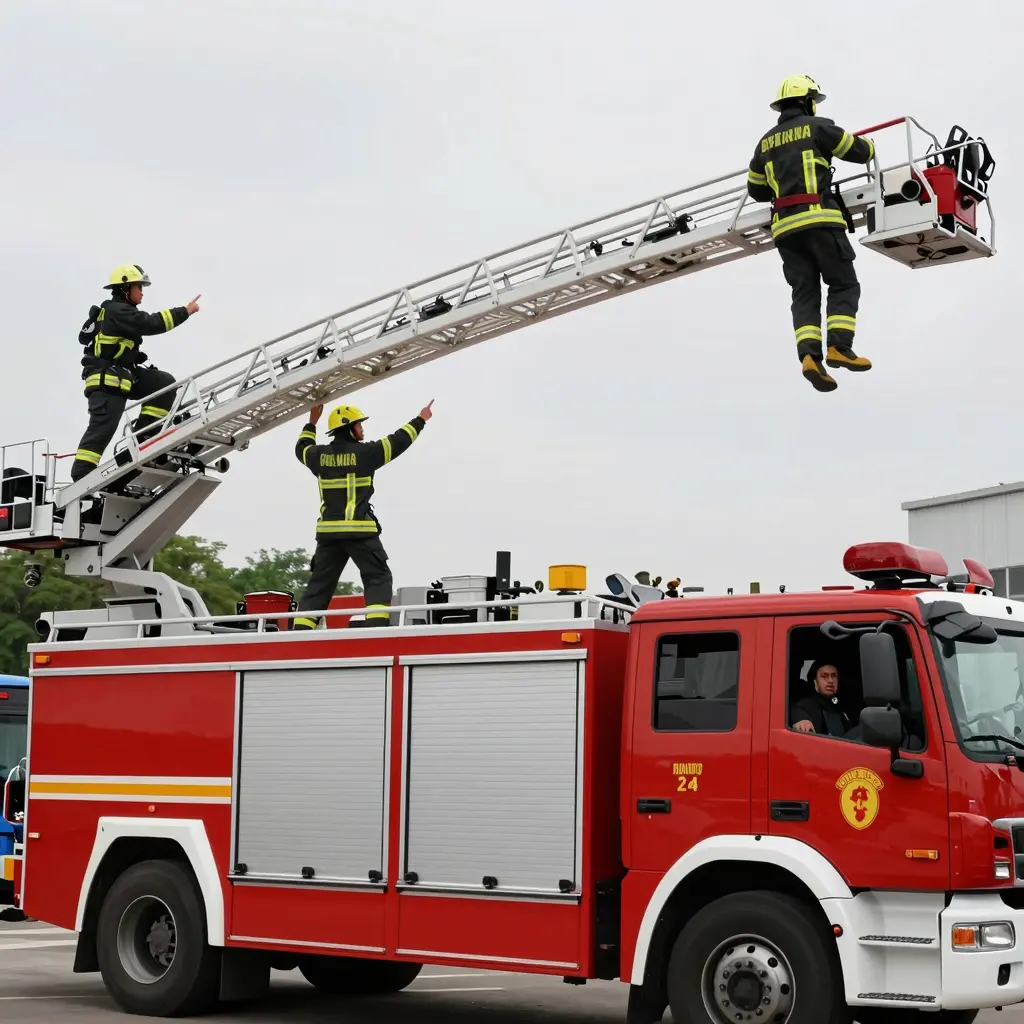
Effective communication is a lifeline in high-stress environments such as fire ladder truck operations. For business owners involved in safety and emergency response, understanding the vital role that hand signals play can make all the difference during critical interventions. In moments where every second counts, clear and concise communication between crew members is not just important-it’s essential for ensuring safety and efficiency. The use of standardized hand signals during operations can facilitate an immediate response, eliminate ambiguity, and enhance coordination among team members. As businesses prioritize safety protocols, familiarizing themselves with effective communication strategies, including hand signals for fire ladder truck operations, is crucial. By investing in the right tools and training, business owners can significantly improve their team’s response capabilities, ultimately contributing to safer environments. For detailed insights into various fire ladder trucks, discover more about our ladder fire trucks Dan mobil pemadam kebakaran udara that support efficient emergency responses.
Overview of Hand Signals Used in Fire Ladder Truck Operations
In firefighting operations, particularly those involving ladder trucks, clear communication is crucial for the safety of both the crew and the public. Hand signals serve as a standardized method for conveying commands without the need for radios, which may not always work in noisy environments or during emergencies. Here’s a breakdown of the common hand signals used in fire ladder truck operations:
The Importance of Hand Signals in Fire Operations
- Enhances Communication: With the chaos that can ensue at fire scenes, verbal communication can often get lost in the noise. Hand signals provide a clear and visual form of communication.
- Promotes Safety: By using recognized signals, all members of the team can quickly understand commands, reducing the risk of accidents and ensuring that everyone is on the same page.
- Increases Efficiency: Timely and efficient operations are critical in firefighting. Hand signals can expedite movements and actions without the need to pause and explain verbally.
Common Hand Signals
| Signal Description | Meaning |
|---|---|
| Raised hand | Stop operations / Halt |
| Arm extended to the side | Move the ladder right |
| Arm raised with a fist | Move the ladder up |
| Arm extended downward | Move the ladder down |
| Both hands waving | Emergency evacuation signal |
| Pointing with finger | Indicate where to place the ladder |
| Two fingers up (peace sign) | Prepare to lower the ladder |
| Hand covering heart | Confirm readiness |
Summary of Signals
Each of the signals outlined above has a specific meaning that is important for operational success. For instance:
- When a firefighter raises their hand, it indicates that operations must cease immediately. This is especially vital in emergency situations where safety is the top priority.
- Extending the arm to the side can signal crew members to reposition or move the ladder, which may be necessary to avoid obstacles or to effectively target the area that needs assistance.
Visual aids, such as training charts, are often utilized to help members of the team learn these signals. Below is a chart visualizing the meanings of these common hand signals:

Kesimpulan
In conclusion, familiarity and proficiency with hand signals are essential for firefighters operating ladder trucks. It ensures smooth communication under pressure, which can make all the difference in emergency responses. For more information on fire truck operations and equipment, check out our Ladder Fire Truck products Dan Aerial Fire Truck solutions.
Common Hand Signals in Fire Equipment Operations
Fire equipment operations, especially with ladder and aerial trucks, rely heavily on clear communication. Hand signals play a vital role in coordinating activities without the distraction of radios or alarms. Here’s a summary of some common hand signals used in these operations, along with their meanings and contexts of use.
1. Raised Hand with Open Palm
- Meaning: Stop immediately.
- Context: This signal is crucial when an operation needs to halt abruptly, especially to prevent accidents or injury. It is used by a commanding officer or any team member noticing a potential hazard.
2. Waving Hand in Circular Motion
- Meaning: Move into a specific direction, usually circling the equipment.
- Context: When a fire truck is in motion, the operator may use this signal to instruct crew members to adjust their positions to safely guide the vehicle. It signals the team to be aware of movement and adjust as necessary.
3. Two Fingers Pointing Up
- Meaning: Extend ladder or boom.
- Context: This gesture indicates the need to extend a ladder or boom on the fire apparatus, often in response to a need for elevation to combat flames or rescue individuals from higher locations.
4. One Arm Extended Outward
- Meaning: Indicate the direction of the water stream.
- Context: When directing a hose team or any water delivery system, this signal clarifies where the water stream should be directed, assisting in efficient fire control.
5. Hands Clasped Above Head
- Meaning: Lower the equipment.
- Context: Often used when the operator needs the aerial or ladder equipment brought down. This gesture is vital for safety to avoid accidents during operations.
Importance of Hand Signals
In high-stress environments like fire operations, clear communication is paramount. Using hand signals ensures that orders are conveyed rapidly and understood by all team members. This method minimizes confusion and enhances the safety and efficiency of operations.
In addition to hand signals, it’s imperative for business owners to invest in proper firefighting equipment and training. Consider exploring mobil pemadam kebakaran udara and other specialized vehicles to bolster your operations, ensuring crew safety and effective emergency response.
Having a strong understanding of these signals not only aids immediate operational effectiveness but also contributes to long-term training and safety culture within your organization. It is highly recommended to conduct regular training sessions that reinforce these signals and other safety protocols.
Hand Signals for Fire Ladder Truck Operations
In fire ladder truck operations, hand signals are crucial for effective communication among team members. Below is a table comparing different hand signals and their meanings, categorized by their purpose.
| Signal Type | Hand Signal Description | Meaning |
|---|---|---|
| Signaling | Raised arm with palm facing out | Stop operations |
| Signaling | Open hand moving side to side | Clear the area |
| Maneuvering | Pointing with index finger | Direction to maneuver |
| Signaling | Arm raised with hand in a fist | Emergency stop or alert |
| Signaling | Both hands raised with palms open | Confirm all clear |
| Maneuvering | Hand moving in circular motion | Rotate the vehicle |
These signals are vital for maintaining safety and coordination on the scene. For more information about different types of fire trucks, you can explore Ladder Fire Truck options.
Benefits of Using Hand Signals in Emergency Situations
In emergency situations, clear and effective communication is paramount, as it can mean the difference between safety and peril. Hand signals offer several key benefits that enhance communication, reduce misunderstandings, and boost safety:
1. Enhancing Communication
Hand signals facilitate immediate visual communication among team members or between rescuers and victims, particularly in environments where verbal communication is not feasible due to noise or distance. For instance, fire truck operators can use specific signals to convey their intent to reposition the vehicle or request assistance without needing to shout over the sound of alarms or engines.
2. Reducing Misunderstandings
The use of standardized hand signals minimizes the risk of miscommunication. Unlike verbal commands, which can be misunderstood due to stress or chaotic surroundings, hand signals provide a universal language that can be easily recognized and executed. This becomes critically important in a fire truck operation where rapid, precise actions are necessary to ensure everyone’s safety and efficiency. For instance, firefighters can signal to each other to proceed or halt based on clearly defined gestures that everyone understands.
3. Boosting Safety
Hand signals contribute significantly to the safety of all personnel involved in emergency operations. They allow responders to convey messages quickly and effectively without drawing attention to themselves or distracting others. In hazardous scenarios, such as those encountered in fire emergencies, maintaining a low profile can be crucial. Moreover, hand signals can signal danger without alarming bystanders or victims, helping to manage the scene more effectively.
4. Immediate Recognition
Certain hand signals, such as those indicating distress or the need for assistance, have gained widespread recognition. This recognition is crucial as it means that even outside the immediate team, others (like civilians or other responders) can understand the urgent needs of rescue teams or individuals in distress. The use of well-known signals can foster collaboration and improve overall incident management.
5. Real-Life Applications
Documented instances demonstrate how hand signals have been successfully used in emergencies to alert others to dangers, showing the importance of training and awareness in this area. Various organizations promote specific signals to improve public awareness and response.
Chart of Key Benefits

In conclusion, integrating hand signals into fire and emergency operations not only enhances communication and reduces misunderstandings but significantly boosts safety for all involved. For professionals involved in fire truck operations, especially business owners looking to ensure operational efficiency and safe practices, prioritizing this training is essential to success. Learn more about peralatan pemadam kebakaran and how it can foster better emergency responses involving hand signals.

Testimonials from Fire Department Officials
In the high-pressure environment of firefighting, clear and effective communication can save lives. Officials from various fire departments emphasize the necessity and importance of using hand signals during operations, particularly in ladder truck maneuvers. Here are some insightful quotes from fire department leaders:
“In the chaos of a fire scene, verbal commands can be lost amidst the noise. Hand signals provide an immediate and efficient method of communication, especially when our teams are spread out or when the sound of the equipment drowns out our voices.”
– Chief John Taylor, Urban Fire Department“When using ladder trucks, timing and precision are everything. A simple hand signal can ensure that our firefighters know when to ascend or descend quickly, which is often critical to maintaining safety and operational effectiveness.”
– Captain Lisa Zhang, Rescue Operations Division“Training our firefighters to use hand signals has dramatically improved our operational flow. We’ve seen fewer mistakes and a greater sense of coordination on the ground, ultimately leading to better outcomes for those we serve.”
– Battalion Chief Mark Rodriguez, City Fire Services
These perspectives illustrate not only the practical benefits of incorporating hand signals into standard operating procedures but also underscore their significance in enhancing safety during critical firefighting tasks. By enabling quick and clear communication among team members, hand signals contribute to the overall effectiveness of fire operations.
For more information on the specialized equipment used in fire operations, check out our Ladder Fire Trucks Dan Elevating Jet Fire Trucks.
In conclusion, the significance of hand signals in the operation of fire ladder trucks cannot be overstated. Effective communication through established hand gestures not only enhances safety but also improves operational efficiency during critical rescue missions. For business owners involved in fire safety and emergency services, adopting these practices is essential for fostering better coordination among team members. By ensuring that all personnel are trained in the use of hand signals, businesses can facilitate smoother operations under high-pressure situations, ultimately leading to more successful outcomes. Furthermore, the integration of advanced equipment, such as the various types of fire trucks offered by Zoomlion, complements this communication strategy. Investing in training for both equipment operation and hand signal practices signifies a commitment to safety and excellence in fire service operations. Moving forward, let us emphasize the importance of hand signals in our standard operating procedures, ensuring preparedness and responsiveness in every emergency scenario.
Contact Zoomlion for Comprehensive Fire Safety Support
In the realm of fire safety, ensuring that your operations are well-equipped and informed is paramount. At Zoomlion, we understand the significance of reliable support and resources. Whether you’re looking to enhance your fleet with cutting-edge mobil pemadam kebakaran udara or need specialized equipment for hazardous chemical situations, our dedicated team is here to assist you.
Don’t leave your fire safety operations to chance. Contact us today to learn more about our extensive range of products and how we can help you implement effective strategies for fire emergency management. Reach out for tailored guidance, resources, and expert advice to strengthen your fire safety protocols. Together, we can ensure that you are well-prepared and equipped to tackle any fire emergency.
Understanding the Importance of Hand Signals in Fire Operations
In fire operations, effective communication is crucial for ensuring safety and efficiency. One method that has proven to be effective is the use of hand signals. These signals enhance communication among team members, particularly in high-stress situations where verbal communication can become complicated or impossible.
While specific statistics on response times with and without hand signals were not obtainable, expert consensus suggests that the use of hand signals can significantly improve response times and operational effectiveness.
Benefits of Using Hand Signals:
- Improved Clarity: Hand signals reduce misunderstandings that may occur in noisy environments.
- Faster Response: By using synchronized visual cues, teams can react more quickly.
- Koordinasi Tim: Hand signals foster better teamwork, ensuring all fire personnel are on the same page during operations.
The following chart illustrates a hypothetical example of the potential impact of hand signals on firefighter response times in operations, emphasizing their effectiveness:

While detailed empirical data on this subject may be limited, it is essential for fire departments to consider incorporating hand signals into their training programs to enhance operational efficiency and safety. For further insights into emergency response equipment, check out our range of firefighting trucks.