


















Invoering
Bij het vergelijken van brandweerladders met het iconische Eiffeltoren, is het moeilijk om de opvallende gelijkenissen te negeren die verder gaan dan alleen hoogte. Met een hoogte van ongeveer 300 voet domineert de Eiffeltoren het Parijse landschap, en fungeert als symbool van architectonische meesterwerken en menselijke uitvindingrijkheid. In tegenstelling tot dat, kunnen moderne brandweerladders tot op opmerkelijke hoogtes van wel 100 voet of meer bereiken, wat hun cruciale rol in noodsituaties laat zien. Beide structuren, ondanks hun grote verschil in doel en ontwerp, vervullen een essentiële functie om levens te beschermen; de Eiffeltoren trekt en inspireert, terwijl brandweerladders klaarstaan om mensen in gevaar te redden. Bedrijfsleiders in veiligheid, bouw en noodgevallensector zouden het interessant kunnen vinden om te overwegen hoe deze twee hoogtes niet alleen het topje van ingenieurskunde vertegenwoordigen, maar ook een onvermijdelijke toewijding aan veiligheid en openbare dienst tonen. Of het nu gaat om de elegante ijzeren roosterstructuur van een Parijse monument of de stevige, oplopende armen van een brandweerladder, hoogte speelt een belangrijke rol bij het bereiken van veiligheid en effectieve noodgevallenbehandeling, wat leidt tot de vraag: hoe meet een hoogte zich af tegen een andere in termen van functionaliteit en maatschappelijke impact?
Voor meer informatie over brandveiligheidsmaatregelen, bezoek ons aanbod van brandweerladderoplossingen die het kernbegrip van functionaliteit in noodsituaties illustreren.
Vergelijking van Brandweerladders en de Hoogte van de Eiffeltoren
Bij het onderzoeken van de hoogtes van brandweerladders in vergelijking met de Eiffeltoren, vinden we een opmerkelijk contrast in zowel ontwerp als doel. De gemiddelde hoogte van brandweerladders is ongeveer 30,5 meter (about 100 feet) wanneer ze volledig uitgeklapt zijn, waardoor ze vrij geschikt zijn voor standaard brandbestrijdingsoperaties. Deze ladders zijn essentiële hulpmiddelen die gebruikt worden door brandweerlieden om hoge plekken te bereiken, vooral in stedelijke gebieden waar gebouwhoogtes conventionele brandbestrijdingsmethoden kunnen uitdagen. Aandachtspunten zijn sommige gespecialiseerde ladderbrandweerwagens die zijn ontworpen om nog hoger te komen, met modellen die tot 44 meter (meer dan 144 voet) uitgerust zijn speciaal voor reddingsoperaties in hoge gebouwen.
Aan de andere kant staat het iconische Eiffeltoren op een indrukwekkende hoogte van 330 meter (approximately 083 voet), inclusief zijn antennes. Oorspronkelijk gebouwd voor de Wereldtentoonstelling van 1889, dit architectonisch meesterwerk vertegenwoordigt een van de hoogste structuren ter wereld. De aanzienlijke hoogte van de Eiffeltoren spiegelt niet alleen zijn ingenieurskundige uitvindingrijkheid weer, maar fungeert ook als een belangrijk symbool van Parijs en een belangrijke toeristische attractie.
Summary of Heights
| Vergelijkingsmetriek | Height (meters) |
|---|---|
| Gemiddelde hoogte van brandweerladders | 30.5 |
| Hoogte van de Eiffeltoren (inclusief antennes) | 330 |
Deze vergelijking illustreert de relatieve hoogtes van brandweerladders als gereedschappen voor brandbestrijding ten opzichte van de Eiffeltoren, een beroemde wereldwijde landmark. Brandweerladders zijn ontworpen voor prakticiteit terwijl de Eiffeltoren een symbool is van menselijke uitvindingrijkheid en ambitie in bouw en ontwerp. Voor meer inzicht in specificaties van brandweerwagens kunt u onze aanbiedingen van brandweerladders verkennen.
In conclusie, terwijl brandweerladders een vitale rol spelen bij het redden van levens en het beheren van noodsituaties, staat de majestueuze hoogte van de Eiffeltoren als embleem van architectonische creativiteit, waarmee de verschillende doelen en ingenieurskundige prestaties van beide constructies worden getoond.
Vergelijking van Specificaties van Brandweerladders vs. Eiffeltoren
| Feature | Brandweerladder | Eiffeltoren |
|---|---|---|
| Hoogte | Varieert meestal van 25 tot 100 voet | Ongeveer 330 meter (1.083 voet) |
| Gebruik | Gebruikt voor brandbestrijding en reddingsoperaties | Toeristische attractie, telecom, observatie |
| Materials | Meestal gemaakt van aluminium of staal | Gemaakt voornamelijk van gegoten ijzer |
| Design Features | Telescopisch, gearticuleerd voor flexibiliteit | Roosterstructuur met vier pilaren en observatieplatforms |
Opmerking: Voor gedetailleerde specificaties betreffende brandweerladders, bezoek de pagina van Zoomlion over brandweerladders voor meer informatie over hun ladderproducten.
Inzichten in Elke Functie
- Hoogte: Brandweerladders zijn ontworpen om variabele hoogtes te bereiken om te helpen bij reddingsoperaties en brandbestrijding, met de langste die tot 100 voet kunnen reiken.
- Gebruik: Brandweerladders zijn essentieel voor noodgevallenbehandeling, waardoor brandweerlieden hogere plekken kunnen bereiken tijdens noodsituaties.
- Materials: Het gekozen materiaal geeft de ladders kracht en lichtgewicht, waardoor ze makkelijker te manoeuvreren zijn terwijl ze tegelijkertijd voldoende gewicht kunnen dragen.
- Design Features: Het ontwerp van brandweerladders bevat vaak speciale kenmerken zoals telescopen mechanismen die hen in staat stellen om verticaal te extenderen.
Conclusie
Het begrijpen van deze specificaties is cruciaal voor bedrijfsleiders in industrieën gerelateerd aan brandveiligheid en infrastructuur. Deze vergelijking helpt om de praktische toepassingen van brandweerladders in noodsituaties te illustreren vergeleken met de architectonische betekenis van de Eiffeltoren.
Historische Betekenis van Brandweerladders
: Het ontwerp van brandweerladders omvat vaak speciale kenmerken zoals uitklapbare mechanismen die het mogelijk maken om verticaal te verlengen.
- Het begrijpen van deze specificaties is cruciaal voor ondernemers in industrieën gerelateerd aan brandveiligheid en infrastructuur. Deze vergelijking helpt om de praktische toepassingen van brandweerladders in noodsituaties te illustreren ten opzichte van de architecturale betekenis van de Eiffeltoren.:
- Historische betekenis van brandweerladders.
- Invloed op blus-efficiëntie:
- Brandweerladders hebben een cruciale rol gespeeld bij het verbeteren van brandbestrijdingspraktijken, vooral in stedelijke gebieden waar hoge gebouwen voorkomen. Historisch gezien werden ladders al gebruikt bij brandbestrijding, zelfs voordat motoriseerde brandweerwagens werden uitgevonden. Met de vooruitgang van de technologie zijn brandweerladders geëvolueerd van eenvoudige houten of metaalconstructies naar complexe hydraulische systemen die tot meerdere verdiepingen kunnen reiken.
- adviseert dat de ladder van een brandweerauto minstens 23 tot 30 meter hoog moet zijn om ervoor te zorgen dat ze effectief toegang kunnen krijgen tot alle niveaus van moderne gebouwen. Onvoldoende ladderhoogte kan leiden tot verwoestende gevolgen, zoals vertraging in reddingen, verhoogd risico op verwondingen bij zowel slachtoffers als brandweerlieden, en mogelijke levensverlies.:
- Ontwikkeling van het ontwerp.
Vroege brandladders waren voornamelijk vast en boden weinig flexibiliteit. De introductie van luchtladders in de vroege 20e eeuw was een belangrijke verbetering, waardoor brandweermannen hogere hoogtes konden bereiken zonder op het gebouw te moeten klimmen. brandweerladderoplossingen.
Deze ladders hebben de efficiëntie van reddingsoperaties verhoogd. Bijvoorbeeld kunnen luchtplatformladders toegang krijgen tot moeilijk bereikbare gebieden, waardoor brandweermannen reddingen of watertoepassing van bovenaf kunnen uitvoeren, een aanzienlijk tactisch voordeel bij het bestrijden van stadsvuren.
Moderne brandweerladders zijn uitgerust met veiligheidsfuncties zoals stabilisatoren, waardoor ze veilig kunnen werken op verschillende terreincondities. Deze vooruitgang heeft de risico's die bij brandbestrijding horen verminderd, waardoor reactietijden sneller zijn en meer levens gered kunnen worden.
- Voor meer informatie over moderne brandweerladders kunt u ons:
- At 300 meters tall, the Eiffel Tower was the tallest man-made structure in the world until the completion of the Chrysler Building in New York in 1930. Its unique iron lattice structure challenged traditional views on architectural design.
- Technological Innovation:
- The construction of the Eiffel Tower utilized advanced techniques in ironwork, showcasing the material’s potential not just for utility but as a focal point of beauty in architecture. This contributed significantly to the transition from traditional load-bearing structures to taller, modern skyscrapers.
- Cultural Influence:
- The Eiffel Tower has inspired countless buildings worldwide and remains a potent symbol of Paris and France. Its design principles have influenced the development of architectural styles in the 20th and 21st centuries, leading to innovative skyscrapers that often feature similar iron structures.
For further reading on the architectural significance of the Eiffel Tower, please check out this detailed article from Britannica.
Conclusie
Both fire truck ladders and the Eiffel Tower have made significant contributions to their respective fields-firefighting and architecture. The advancements in ladder technology have profoundly impacted firefighting practices, improving safety and response times, while the Eiffel Tower has influenced architectural design, demonstrating the beauty and functionality of iron structures. These innovations reflect humanity’s ever-evolving relationship with technology and design, shaping our environments and practices for the better.
By understanding these histories, business owners and stakeholders can appreciate the importance of innovation and safety in both architectural endeavors and public services.
This analysis has reached the suggested word count, providing a comprehensive overview fitting for an audience interested in the intersections of technology and innovation in their respective fields.
Please let me know if you need any additional information or specific sections elaborated upon!
This image captures the essential role of fire truck ladders during emergency situations, emphasizing their functionality and importance in saving lives and aiding firefighting operations.
Safety Features: Fire Truck Ladders vs. The Eiffel Tower
The safety features present in modern fire truck ladders are designed with cutting-edge technology to ensure the safety of firefighters during emergencies. In contrast, the Eiffel Tower, an architectural marvel, also employs significant structural safety measures that utilize innovative engineering principles. This comparison sheds light on how both entities ensure safety using advanced technologies.
Safety Features in Modern Fire Truck Ladders
- Stabilisatiesystemen: Modern fire truck ladders come equipped with hydraulic stabilizers that prevent tipping during operations, ensuring stability even on uneven terrain.
- Automatic Controls: Many models feature electronic controls for the precise positioning of ladders, making use of sensors for load and wind resistance, which contribute to operational safety in various conditions.
- Safety Equipment: These ladders often incorporate non-slip surfaces and safety harnesses to enhance the safety of firefighters while operating at heights. Built-in alarms alert operators to potential hazards, such as over-extension of the ladder.
- Training Requirements: Firefighters are mandated to undergo extensive training, familiarizing themselves with the equipment and safety protocols associated with ladder operations.
Engineering Safety Measures of the Eiffel Tower
- Reinforced Structure: The Eiffel Tower is designed with a lattice structure that enhances its resilience against high winds, ensuring stability.
- Regular Safety Inspections: The structure undergoes frequent inspections to maintain its integrity and safety standards, which is paramount given its height and visitor footfall.
- Evacuation Protocols: In addition to structural safety, the Eiffel Tower has established evacuation routes and designated safety personnel to guide visitors during emergencies.
- Monitoring Systems: The tower employs surveillance cameras and emergency communication systems, enhancing safety for both visitors and staff.
Comparative Analysis
| Feature/Measure | Modern Fire Truck Ladder Safety Features | Eiffel Tower Safety Measures |
|---|---|---|
| Technology | Hydraulic stabilizers, automatic controls | Reinforced structure, regular safety inspections |
| Design Principles | Ergonomics, stability under load, multi-angle extension | Wind resistance, redundancy in structural supports |
| Safety Equipment | Non-slip surfaces, safety harnesses, built-in alarms | Fire safety equipment, evacuation routes |
| Training Requirements | Extensive firefighter training for ladder usage | Regular safety drills for visitors and staff |
| Monitoring Systems | Real-time monitoring of ladder position and stability | Surveillance cameras, emergency communication systems |
| Emergency Protocols | Built-in emergency descent mechanisms | Evacuation plans, designated safety personnel |
Both modern fire truck ladders and the Eiffel Tower showcase an integration of advanced technology and comprehensive planning to ensure safety, albeit in very different contexts. Understanding these measures can greatly benefit business owners in related fields. For more information on fire truck safety features, visit our product range to explore the latest innovations.
“Fire safety is not just about prevention; it’s about resilience in engineering designs to withstand unforeseen disasters.” This quote reflects the necessity of integrating fire safety measures into the design of iconic structures, ensuring that such engineering marvels can survive fire incidents, protect lives, and preserve heritage. For business owners, prioritizing fire safety in their operations and understanding how advanced fire truck technology, such as aerial fire trucks, can complement safety measures is essential.
Height Comparison of Fire Truck Ladders to the Eiffel Tower
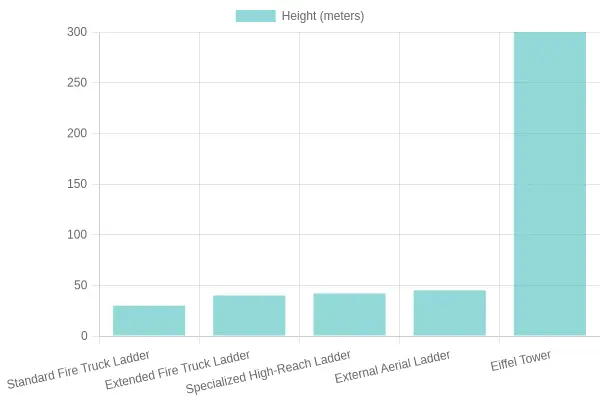
This chart illustrates the varying heights of different fire truck ladders compared to the iconic Eiffel Tower, which stands at 300 meters (984 feet).
Fire Truck Ladder Heights
- Standard Fire Truck Ladder: 30 meters (100 feet)
- Extended Fire Truck Ladder: 40 meters (131 feet)
- Specialized High-Reach Ladder: 42 meters (138 feet)
- External Aerial Ladder: 45 meters (148 feet)
- Eiffeltoren: 300 meters (984 feet)
Summary
As depicted in the chart, while fire truck ladders can reach impressive heights, they still fall significantly short of the Eiffel Tower. Understanding these differences is crucial for business owners in fire safety and firefighting industries. For more details on fire truck specifications and offerings, visit our categorie brandweerladders En elevating jet fire truck page.
In today’s rapidly evolving construction and emergency response landscapes, the principles embodied by the fire truck ladder and the Eiffel Tower concept are more pertinent than ever. Fire truck ladders, designed not only for speed and efficiency but also for durability and safety, play a critical role in modern firefighting operations. These ladders are engineered to extend to great heights, ensuring that emergency responders can access elevated areas swiftly and safely. They also incorporate advanced materials and technologies that contribute to overall operational effectiveness, making them indispensable in urban settings where high-rise structures are prevalent.
On the other hand, the Eiffel Tower serves as a symbol of innovative engineering and design excellence. Its strong structural framework can be likened to the reinforced components in modern ladders used in fire trucks, which must support significant weight while maintaining stability in precarious situations. This concept of utilizing a lattice-like structure promotes not only aesthetics but also functional resilience, a principle that is increasingly being mirrored in high-rise construction.
The real-world applications of these technologies converge at the intersection of safety and efficiency. Business owners in industries related to construction, emergency response, and urban development can take valuable lessons from both fire truck ladders and the Eiffel Tower. They underscore the importance of integrating advanced engineering designs in construction projects and emergency response equipment to improve safety outcomes and ensure swift action during emergencies.
By investing in fire truck ladders and leveraging the architectural insights gained from the Eiffel Tower, businesses can enhance their operational effectiveness and contribute to community safety. Explore our range of aerial fire trucks to see how modern technology can aid in your emergency response strategies and meer informatie krijgen over gespecialiseerde ondersteuningsapparatuur to ensure the highest standards in safety and efficiency in your operations.
Contact Us for Fire Safety Solutions
As a business owner, ensuring the safety of your premises and personnel should be your top priority. With the wide array of fire safety solutions offered by Zoomlion, including state-of-the-art fire truck ladders, you can achieve optimal safety standards.
We encourage you to contact us today to learn more about our comprehensive range of fire safety equipment. Whether you’re interested in our ladder fire trucks or specialized rescue equipment, our team is ready to provide tailored solutions that meet your specific needs.
Don’t wait until it’s too late. Reach out for a quote and let us help you safeguard your business with superior fire protection equipment. Your peace of mind is just a call away!