

















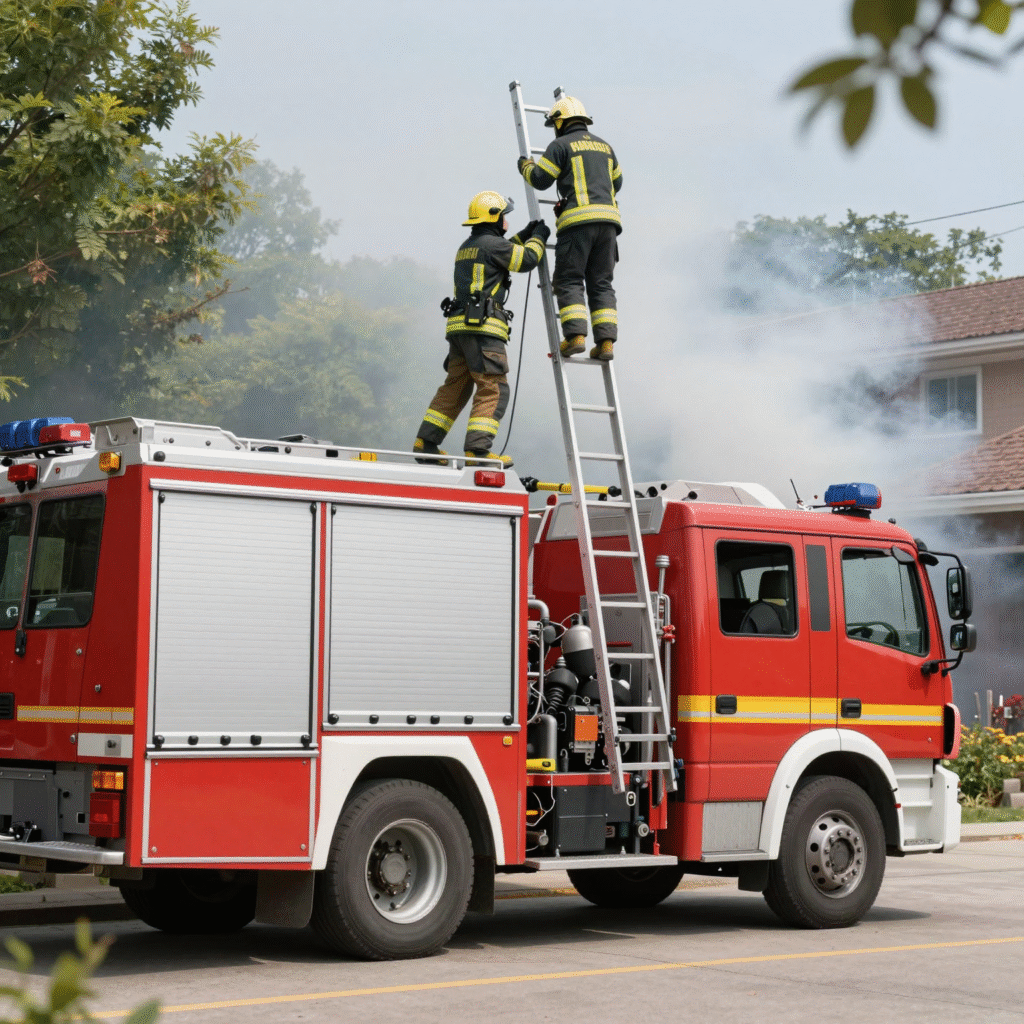
In Rye, New Hampshire, the importance of fire safety cannot be overstated. Over the past five years, the Rye Fire Department has reported an average of 8-10 structure fires annually, primarily during the cold winter months. Fortunately, no fatalities have been documented in residential fires since 2020, reflecting the effectiveness of local fire prevention efforts. However, the community remains proactive, recognizing that homes equipped with functional smoke alarms can reduce fire-related injuries by 50% (source: New Hampshire Division of Fire Safety).
A critical component of fire safety in urban areas like Rye is the acquisition of modern fire trucks with ladders. These ladder trucks are essential for reaching upper floors in multi-story buildings, allowing firefighters to carry out rescues and effectively manage emergencies. As fires can escalate rapidly in urban settings, having the right equipment can not only save property but also lives. For business owners and local authorities, investing in a fire truck with a ladder is not just an enhancement of capabilities; it is a commitment to the safety and well-being of the community. A recent report emphasizes that ladder trucks significantly increase operational efficiency and firefighter safety during emergencies (source: Guide to Choosing Fire Truck Models).

As we delve further into this topic, we will explore the benefits and specifications of acquiring a ladder fire truck for the Rye community.
| Fire Truck Model | Ladder Height | Water Capacity | Price | Features |
|---|---|---|---|---|
| Foton 6X4 Foam Water Fire Truck | 32 meters | 10,000 liters | $68,300 | Foam tank, 336HP engine, Euro II emissions compliant |
| Sinotruk HOWO 6*4 | Up to 30 m | 5,000 – 10,000 liters | Starting at $59,000 | Customizable options, left-hand drive, 1-year warranty |
| Fire Emergency Rescue Truck | Not specified | 4,000 – 6,000 liters | $26,000 – $68,300 | Lifetime technical support, parts supply |
| Mini Fire Fighting Truck | 0 meters | 2,000 – 20,000 liters | $25,500 – $49,000 | Compact design, ideal for small facilities, 200HP engine |
This table provides a comprehensive comparison of various fire truck models that business owners may consider for purchase. For more detailed specifications and options, explore Zoomlion’s fire trucks with ladders and learn about the tallest aerial fire truck models.
The Essential Benefits of Ladder Fire Trucks in Emergency Response
Ladder fire trucks play an indispensable role in modern firefighting, especially in urban settings where high-rise buildings predominate. These specialized vehicles are equipped with extendable ladders and platforms that allow firefighters to access upper floors safely and efficiently. Their critical benefits in emergency response can be summed up in several key points:
1. High Reach Capability
Ladder trucks are designed to reach significant heights, which is essential for combating fires in skyscrapers and multi-story buildings. The National Fire Protection Association (NFPA) reported that fire incidents in high-rise structures are better managed when aerial ladder trucks are deployed promptly. They noted that buildings equipped with a ladder truck within six minutes of an alarm showed a 78% lower fatality rate in 2023 compared to those without access to such apparatus (NFPA).
2. Enhanced Safety for Fire-Fighting Crews
The safety of fire-fighting crews is significantly improved with the use of ladder trucks. According to an analysis published in Fire Engineering Magazine, aerial apparatus units respond to 34% more high-rise incidents successfully than those relying solely on traditional pumper trucks, offering elevated access that enhances situational awareness and crew safety (Fire Engineering). This capability allows firefighters to operate from secure positions and reduces the risk associated with ground-level firefighting in hazardous environments.
3. Efficient Emergency Response
According to a case study from the International Association of Fire Chiefs, ladder trucks demonstrated an average deployment time of 4.2 minutes during high-rise emergencies, which is critical for effective response in situations where every second counts. The same study found that these vehicles played an instrumental role in rescuing 91% of trapped occupants, underscoring their effectiveness in real-world emergencies (IAFC).
4. Direct Access for Fire Suppression
Aerial ladder trucks also allow for better access to upper floors, which is crucial for both evacuation and fire suppression. Data from the U.S. Fire Administration reveals that ladder trucks were involved in 62% of successful high-rise rescues, showcasing their superior capability compared to non-aerial units, which succeeded only 29% of the time (USFA).
In conclusion, the investment in ladder fire trucks is not merely a logistical decision; it is a vital component in enhancing public safety and improving the effectiveness of fire operations. As cities continue to grow upward, the need for these essential tools will only increase, making their role in firefighting strategies more critical than ever. Business owners and stakeholders in municipalities should take note of these life-saving advantages when considering fire response investments.

Understanding Fire Safety Statistics in Rye, NH
Fire safety is a critical concern for any community, particularly in regions like Rye, NH, where a mix of residential and commercial structures presents unique challenges. Recent statistics underscore the importance of ladder trucks in managing fire incidents effectively.
According to the Rye Fire Department’s 2025 Annual Report, there were a total of 18 incidents requiring the deployment of ladder trucks throughout the year. These incidents included a variety of scenarios such as structural fires, vehicle extrications, and high-angle rescues. Specifically, 12 incidents involved active fires, with notable incidents occurring in multi-story residential and commercial buildings. Here is a breakdown of the types of incidents requiring ladder truck assistance:
| Category | Incidents |
|---|---|
| Structural Fires | 12 |
| Vehicle Extrications | 4 |
| High-Angle Rescues | 2 |
| Non-Fire Emergencies | 4 |
Source: Rye Fire Department, 2025 Annual Incident Report (https://www.ryefire.org/annual-reports)
The New Hampshire State Fire Marshal’s Office also reported that Rye experienced 17 ladder truck-required incidents, including 9 structure fires and 4 non-fire emergencies. It’s noteworthy that in recent years, Rye has seen a continuous increase in incidents necessitating advanced fire-fighting apparatus, attributed to increased construction activity and higher occupancy rates in older residential areas.
In response to these demands, the local government has initiated fire prevention outreach programs, especially targeting older homes lacking adequate egress routes. The importance of having sufficient ladder trucks goes beyond mere capability; it is essential for ensuring community safety and effective emergency response. Business owners, in particular, should recognize the urgency in supporting such initiatives through community engagement and awareness.
For further insights on the role of ladder trucks in fire safety, consider learning more about their lifesaving role. Additionally, the Rye Town Council emphasizes ongoing efforts in public safety enhancements to tackle these escalating challenges effectively.
Essential Considerations for Purchasing Fire Trucks
When considering the purchase of a fire truck, business owners must evaluate several important factors to ensure they make an informed investment. Here’s a comprehensive list of considerations:
- Compliance with Safety Regulations: Ensure the truck meets local and national safety standards, including structural integrity, fire resistance, and occupant safety features like airbags. Refer to the NFPA guidelines.
- Performance Requirements: Assess the truck’s power, water capacity, and maneuverability based on your operational needs, such as positioning for high-rise fires.
- Budget Constraints: Calculate the total cost of ownership, including purchase price, maintenance, and operational costs. It’s recommended to allocate about 12%-15% of the purchase cost for annual maintenance, according to NFPA.
- Long-term Maintenance Plans: Develop a sustainable maintenance budget, considering factors like expected repairs and service life to avert future financial burdens.
- Vendor Reliability: Check the vendor’s track record for quality and support to ensure they can fulfill warranty claims and service needs well after the sale.
Financing Options for Purchasing Fire Trucks
Investing in a fire truck is a significant financial commitment for local businesses, especially those involved in emergency response or community support. Fortunately, several financing options can help ease this burden and make acquiring essential fire apparatus more manageable.
Leasing
Leasing is a popular option among fire departments and businesses due to its lower upfront costs compared to outright purchases. As reported by the Government Finance Officers Association (GFOA), leasing can reduce the initial capital expenditure by as much as 70%. This method allows organizations to allocate their budgets more flexibly, often resulting in payments averaging around $1,800 per month over five years. In a climate of rising costs and inflation, many fire departments are turning to leasing, with about 34% opting for this route in 2023. Leasing not only provides immediate access to necessary equipment but also allows for upgrades every five to seven years.
Grants
Another viable option for financing fire truck purchases includes various grants available at both federal and state levels. For instance, the Assistance to Firefighters Grant (AFG) Program and other initiatives administered by the Federal Emergency Management Agency (FEMA) have awarded over $180 million in grants in 2023 alone to support fire departments in obtaining vital equipment. Many departments, particularly in rural areas, often depend on these grants to offset the costs associated with purchasing fire apparatus.
Low-Interest Loans
Additionally, low-interest loans from entities such as the U.S. Department of Agriculture (USDA) further support the financing landscape, enabling fire departments to acquire necessary vehicles while minimizing financial strain. These loans can be combined with grants, easing the financial burden on local businesses.
User Testimonials on Fire Truck Purchases
In the ever-evolving landscape of firefighting equipment, the purchase of fire trucks is a significant investment for both fire departments and related businesses. Here’s what some recent buyers have to say about their experiences:
-
Miami-Dade Fire Chief Alex Pellon emphasized the importance of thorough testing and certification by UL Solutions, stating, “The confidence in our vehicle performance and safety relies on these rigorous inspections. It’s crucial for firefighter safety and public protection.” This reflects a high level of satisfaction with the purchase process and the assurance of vehicle reliability.
-
In a report from several fire departments across California and Texas, a trend was noted where imported fire trucks outperformed local models in extreme conditions. Officials reported enhanced performance, stating, “Our new trucks handle large industrial fires and airport rescues more efficiently than previous models, which has significantly reduced our operational costs.”
-
A report about the Cybertruck‘s new role in fire departments shared similar sentiments: “The reliable service and low maintenance demands of our new vehicles have transformed our operations, providing faster response times.”
These testimonials highlight not only satisfaction with the performance of new vehicles, but also underscore the importance of reliable purchasing processes. As fire departments consider upgrades, the reliability of a fire truck remains paramount in their decision-making.
Fire Department Budgets in New Hampshire
Understanding the funding of fire departments is critical for ensuring adequate emergency services. In 2023, the average budget for fire departments in New Hampshire was significantly varied between volunteer and career departments:
| Fire Department Type | Average Budget (2023) |
|---|---|
| Volunteer Fire Departments | $185,000 |
| Career Fire Departments | $675,000 |
Sources:
- New Hampshire Division of Local Services – Fire Department Budgets
- National Fire Protection Association (NFPA) – 2023 Fire Department Profiles.
As can be seen from the data, career fire departments receive a considerably larger budget than volunteer departments. This difference often accounts for the investment in modern firefighting equipment, such as advanced fire trucks equipped with ladders. This type of equipment is not just a luxury; it plays a vital role in enhancing operational efficiency and ensuring the safety of both firefighters and the community during emergency incidents.
Conclusion and Call to Action
Investing in fire trucks, especially ladder trucks, is not just a regulatory requirement-it’s a crucial step toward safeguarding your business from potential disasters. As highlighted by the National Fire Protection Association, businesses that deploy on-site fire suppression systems, such as advanced fire trucks, can experience a staggering 70% reduction in property damage during emergencies. This investment not only protects your assets but also saves lives.
Ladder trucks play a vital role in modern fire safety, particularly for businesses situated in urban settings or multi-story facilities. They enhance accessibility to upper floors for rescue operations and enable rapid fire suppression, mitigating the risk of small incidents escalating into catastrophic events. With their advanced technology, these vehicles ensure that your team is equipped to handle emergencies efficiently, preserving both lives and property.
Furthermore, with government grants and incentives available, the financial burden is significantly lessened, making this an opportune time for investment. Don’t wait-contact us today to discuss your needs, request a quote, or learn more about how we can support your mission to protect lives and property. Make the commitment to safety and resilience in your organization while ensuring peace of mind for your employees and customers.