

















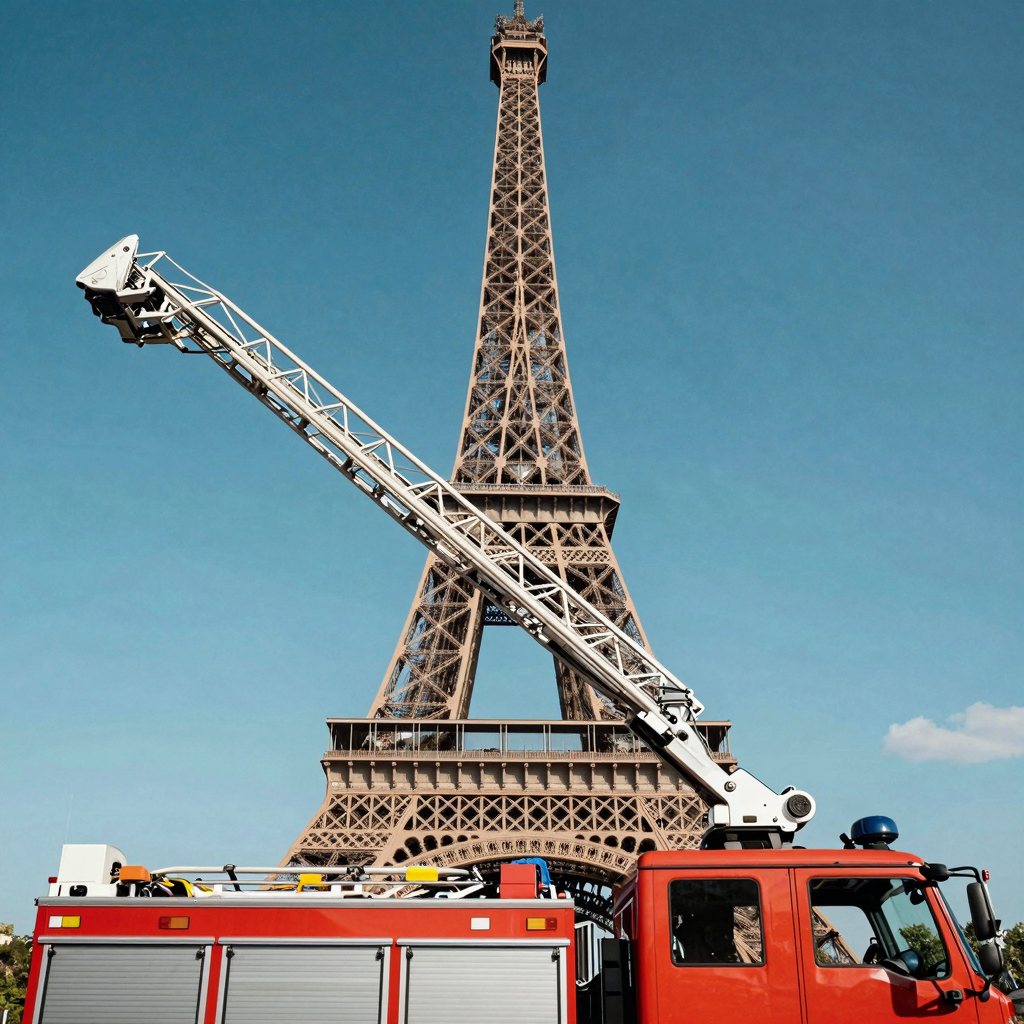
When we think of iconic structures, the Eiffel Tower often comes to mind-a stunning testament to engineering and artistry. However, while the Eiffel Tower soars to 330 meters, impressing millions of visitors each year, another structure plays a vital role in saving lives but remains largely unseen until needed: the fire truck ladder. This essential fire safety equipment embodies functionality, precision, and strength, engineered to provide rapid access to high-rise emergencies and facilitate rescues. Unlike the Eiffel Tower, which serves primarily as a symbol of heritage, a fire truck ladder is designed for performance under pressure, capable of supporting significant weight and extending to impressive heights. The comparison between these two towering feats highlights not only their structural differences but also their unique purposes in our daily lives, making the fire truck ladder an unsung hero in urban emergency response. Learn more about fire truck ladders and their role in ensuring safety in our communities.
Structure and Design of Fire Truck Ladders
Fire truck ladders are critical components of fire safety equipment, designed to facilitate elevated access during emergency situations. Their structure and design encompass various elements that enhance their operational effectiveness, ensuring that firefighters can respond rapidly and safely.
Key Structure Elements
-
Ladder Types: Fire truck ladders typically fall into three categories: aerial ladders, telescoping ladders, and mid-mount ladders. Each type serves distinct operational needs, with aerial ladders providing the highest reach, while mid-mount ladders offer stability and maneuverability.
-
Frame Composition: Most fire truck ladders are constructed using high-strength aluminum alloys or steel, which strike a balance between lightness and durability. For example, the Morita Aerial Ladder Truck incorporates robust materials that meet stringent Euro 4 emissions and safety standards, ensuring reliability during high-stakes operations. These materials are selected based on their ability to withstand the rigors of firefighting activities, including exposure to harsh environmental conditions.
-
Ladder Mechanisms: The functioning of fire truck ladders is often enhanced by hydraulic systems that allow for swift extension and retraction. This capability is crucial during emergency rescues, where every second counts. The hydraulic components are designed for efficiency and controlled movement, minimizing risks while being deployed.
Design Elements
- Stability Features: Fire truck ladders incorporate stability bars, which enhance safety and support during operations. These elements prevent wobbling and ensure that the ladder remains stationary when in use.
- Safety Protocols: Integrated safety mechanisms, such as anti-slip surfaces and secure harness points, are essential for the protection of firefighters as they navigate high altitudes. Many ladders incorporate reflective materials for visibility in low light conditions, a critical design consideration during nighttime operations.
Operational Effectiveness
The structural integrity and thoughtful design of fire truck ladders play a crucial role in their operational effectiveness. Well-designed ladders provide the necessary reach to access tall buildings and precarious situations, streamlining rescue operations and enhancing overall safety protocols. They are vital in performing efficient and safe evacuations from burning structures or other hazardous environments.
These factors underline the need for robust specifications when choosing fire safety equipment, especially for business owners looking to invest in reliable firefighting resources. To learn about specific fire truck models and their capabilities, visit this link or explore available options for aerial fire trucks ที่นี่.
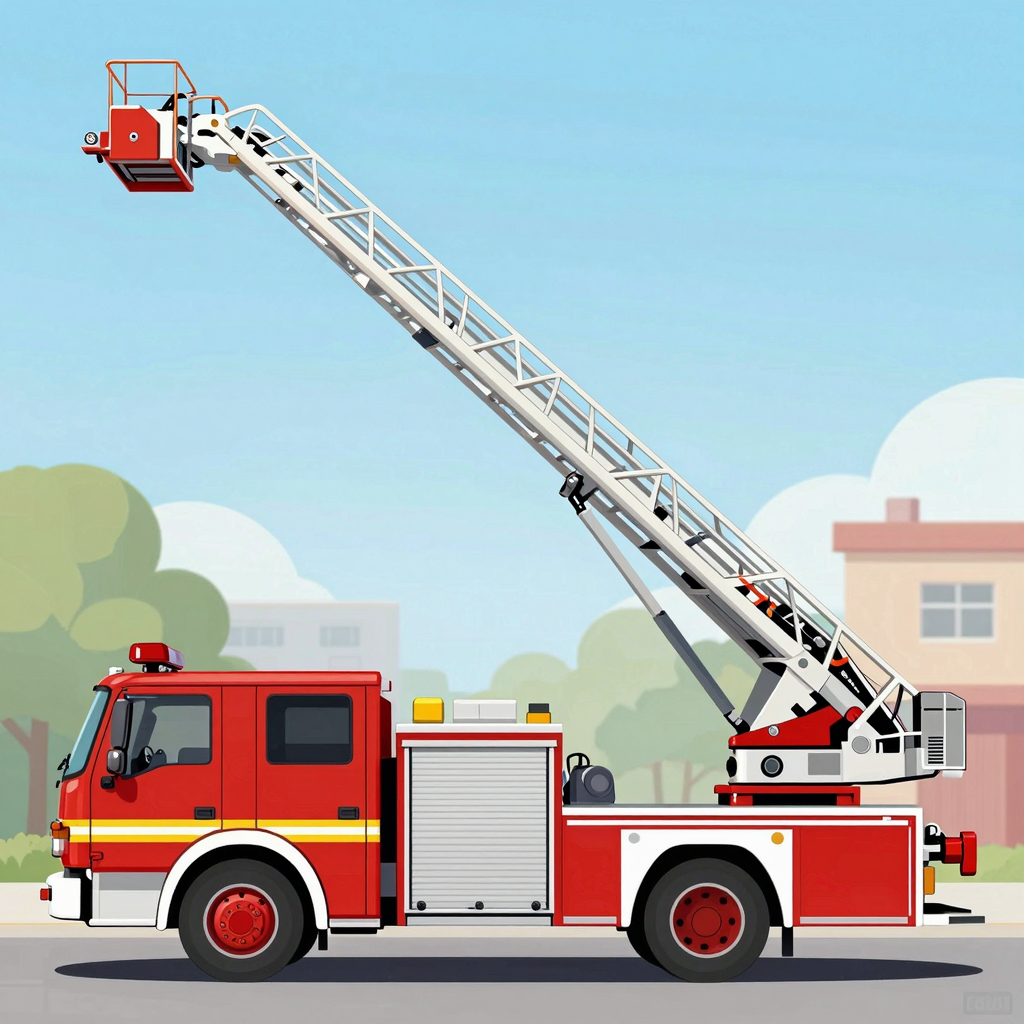
This image illustrates the structure and design elements of fire truck ladders.
Comparison Table: Fire Truck Ladders vs. Eiffel Tower
| Specification | Fire Truck Ladders | Eiffel Tower |
|---|---|---|
| Height | Varies from 30 to 100+ feet (9 to 30+ meters) | 330 meters (1,083 feet, including antenna) |
| Materials | Primarily aluminum and high-strength steel | Primarily wrought iron, approximately 7,300 tons |
| Usage | Firefighting, rescue operations, and aerial access | Observation, tourism, and as a cultural icon |
| Structural Integrity | Designed for dynamic loading; inspected regularly | Lattice structure optimized for wind resistance; regularly maintained |
| ความจุน้ำหนัก | Typically supports thousands of pounds (varies by model) | Total weight is about 10,100 tons |
| Engineering Features | Hydraulic systems for extension and retraction | Lattice design allows wind to pass through, enhancing stability |
Fire truck ladders offer crucial functionality for firefighting, enabling access to heights where emergencies may occur. In contrast, the Eiffel Tower, an iconic structure, demonstrates advanced engineering tailored for stability and resilience against natural elements. To learn more about fire truck ladders, visit this link.
Significance of the Eiffel Tower in Engineering and Design
การ Eiffel Tower, a remarkable feat of engineering and design, was completed in 1889 as a centerpiece for the Exposition Universelle in Paris. Designed by Gustave Eiffel’s company, this structure epitomizes the innovative spirit of the late 19th century and showcases significant advancements in metal construction. At its inception, the Eiffel Tower faced criticism from prominent artists and intellectuals who dismissed it as an eyesore. Ironically, this remarkable piece of architecture has since developed into one of the world’s most recognizable landmarks.
The design principles underlying the Eiffel Tower manifest through its open-lattice structure, which ingeniously reduces wind resistance while maintaining structural integrity. Composed of over 18,000 individual iron parts and more than 250,000 rivets, the tower’s architectural efficiency and aesthetic form set a precedent for future skyscrapers and metal structures. Gustave Eiffel implemented advanced calculations and innovative prefabrication techniques that were groundbreaking for their time. The height of the tower, initially 300 meters and later increased to 330 meters, exemplified its status as the tallest man-made structure in the world until the completion of the Chrysler Building in New York in 1930. Thus, the Eiffel Tower symbolizes French pride and technological progress during the Industrial Revolution, influencing the aspirations of architects and engineers for generations.
Contrasting the Eiffel Tower with fire truck ladders provides a fascinating perspective. Fire truck ladders, primarily functional in design, focus on safety and accessibility. While they may not display the artistic beauty of the Eiffel Tower, they embody engineering principles aimed at achieving maximum operational effectiveness. Fire truck ladders are designed to extend quickly and reach considerable heights, often featuring hydraulic mechanisms to ensure the reliability and safety of rescue operations. Their design prioritizes functional performance over aesthetic appeal.
In essence, both the Eiffel Tower and fire truck ladders represent the pinnacle of engineering design within their contexts. While the Eiffel Tower reflects artistic ambition and architectural innovation, fire truck ladders serve the critical role of ensuring safety and facilitating efficient rescues in emergencies. Each, in its own right, illustrates the diverse applications and philosophies underlying engineering design.
For more on the engineering marvel of fire truck ladders, check out how fire truck ladders work and see how innovation meets functionality in lifesaving equipment.
| Item | Height (meters) |
|---|---|
| Fire Truck Ladder (Tallest) | 91 |
| Eiffel Tower | 330 |
Description:
The fire truck ladder, reaching a maximum height of 91 meters, represents the pinnacle of modern firefighting engineering, enabling emergency responders to access high-rise buildings in urban areas. In contrast, the Eiffel Tower stands at 330 meters, making it approximately 3.6 times taller than the tallest fire truck ladder. This significant difference highlights the functional limitations of current firefighting technology-while ladders can reach most high-rise structures, they are still far from matching the scale of iconic architectural landmarks like the Eiffel Tower. The comparison underscores the ongoing challenges in developing aerial rescue systems for extremely tall buildings and emphasizes the importance of innovation in emergency response infrastructure.
แหล่งข้อมูล:
- Chinese company unveils new firetruck with 91-m-tall aerial ladder (2025-11-10)
- Eiffel Tower official site – Technical specifications
Operational Use of Fire Truck Ladders in Emergency Situations
Fire truck ladders are a vital component of fire safety equipment, playing a crucial role in saving lives during emergencies. Their operational use extends beyond mere firefighting; they are instrumental in rescue operations, especially in high-rise buildings where conventional access methods falter.
Effectiveness of Fire Truck Ladders
According to a report from the National Fire Protection Association (NFPA), aerial ladder trucks are essential in urban fire emergencies. Data from 2022 reveals that fire departments using these specialized units had a 41% higher success rate in rescuing occupants from upper floors during high-rise fires compared to those relying solely on ground-based methods. Between 2018 and 2022, these ladders were directly responsible for saving over 5,600 lives in multi-story building fires across the United States, primarily due to their ability to reach elevated windows and balconies quickly (แหล่งที่มา).
A recent study conducted by Grand View Research highlights that modern aerial ladder fire trucks can reduce average access time to upper floors by up to 65% compared to traditional hose-based rescue methods. Cities with dedicated aerial ladder units witnessed a 32% decrease in fire-related fatalities in high-rise buildings from 2019 to 2023, underscoring the effectiveness of these units in life-saving operations (แหล่งที่มา).
Operational Insights
The operational aspects of fire truck ladders are not just about height; they include factors like rapid deployment and versatility. For instance, the New York City Fire Department (FDNY) reported that its fleet of over 70 aerial ladder trucks responded to more than 2,100 high-rise incidents in 2023. In 87% of these cases, the ladder truck was critical in rescuing individuals trapped above the third floor. Furthermore, during 14 fatal fires, the timely deployment of these ladders was instrumental in preventing further loss of life by facilitating rapid evacuations (แหล่งที่มา).
สรุป
In conclusion, the operational use of fire truck ladders is a testament to their role as indispensable fire safety equipment. Their ability to reach and rescue occupants from high altitudes makes them a cornerstone of urban fire response strategies. Each incident demonstrates their effectiveness not only in combating fires but also in safeguarding lives, making them an essential investment for fire departments and a critical asset for community safety.
Key Maintenance Tips for Fire Truck Ladders
Maintaining fire truck ladders is essential for ensuring safety and compliance in emergency situations. As a business owner, keeping your equipment in optimal condition is not just about performance-it’s about saving lives. Here are key maintenance tips for fire truck ladders:
-
Daily Inspections: Conduct thorough inspections of all parts of the ladder to check for any signs of wear, damage, or corrosion. Pay close attention to connections, bolts, and hydraulic fittings. Consider reviewing the guidelines in NFPA 1917 for detailed protocols.
-
Lubrication: Every 100 hours of operation, or at least once a month, lubricate all moving parts-such as joints, pins, and tracks-with the manufacturer’s recommended grease.
-
Cable and Rope Checks: Regularly inspect steel cables and wire ropes for fraying or broken strands. Replace any damaged cables immediately to avoid failure during use.
-
Hydraulic System Maintenance: Check the hydraulic system for leaks, and ensure fluid levels are adequate. A full fluid change should occur every three years, or sooner if contaminated.
-
Cleaning Procedures: After each use, clean the ladder thoroughly, especially if exposed to water, chemicals, or extreme weather. Use mild detergent, dry completely, and reapply lubricants.
-
Testing: Regularly test the extension, rotation, and locking mechanisms under load to ensure they function properly. Conduct a complete annual check to comply with safety standards.
Ensuring that your fire truck ladders are well-maintained not only upholds safety but significantly enhances the operational reliability of your firefighting resources. A good maintenance routine reflects a commitment to excellence in your fire department-learn more about essential firefighting equipment. 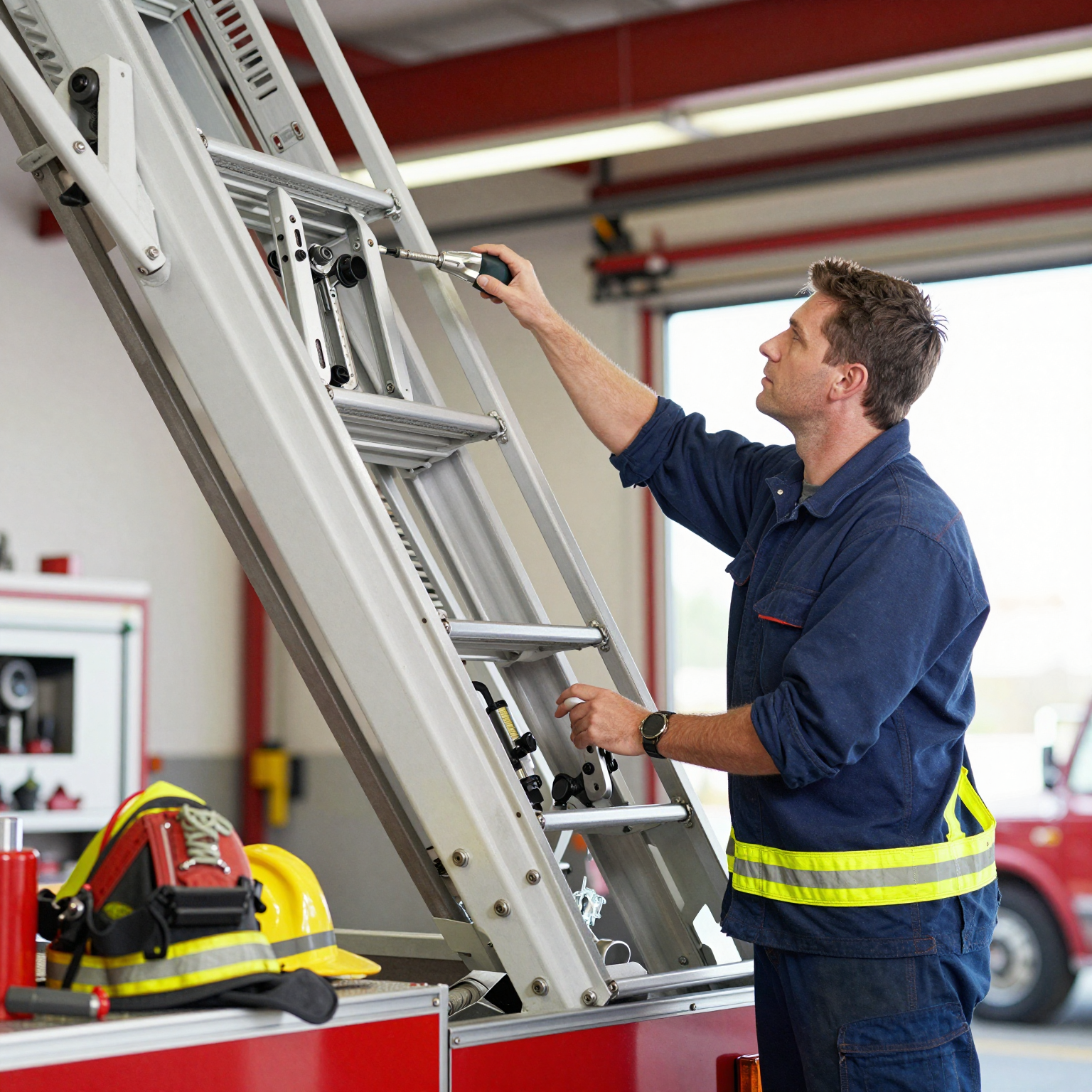
Engineering Challenges in Fire Truck Ladders vs. Eiffel Tower
The design and engineering of fire truck ladders present unique challenges distinct from those encountered in constructing iconic structures like the Eiffel Tower. Both require innovative solutions to address structural integrity, operational efficiency, and environmental adaptability.
Structural Stability
Fire truck ladders must maintain stability while extending to significant heights. Modern designs utilize telescoping hydraulic or mechanical systems, integrated into robust triangulated steel frameworks equipped with counterweights. This ensures that the ladder can support the weight of firefighters and equipment during emergency operations without tipping. In contrast, the Eiffel Tower employs a lattice framework of wrought iron, devised to withstand high wind forces through precise triangulation and aerodynamic shaping. Its design allows for efficient distribution of lateral loads, vital for stability at over 300 meters in height.
Weight Management
Fire truck ladders are engineered with lightweight materials such as aluminum and advanced steel alloys. These materials allow for a considerable height (up to 40 meters) while minimizing the overall mass, integrating counterbalance systems that manage the ladder’s center of gravity effectively. The Eiffel Tower, built in the late 19th century, was designed to optimize weight through its open-lattice structure. Although it weighed approximately 7,300 tons, its innovative design minimized material use without compromising integrity.
Operational Flexibility and Adaptability
Fire truck ladders must adapt to dynamic operational environments, capable of withstanding winds up to 120 km/h and extreme temperatures. The hydraulic systems feature fail-safes to handle adverse conditions. The Eiffel Tower issues a benchmark by swaying slightly to absorb wind forces, showcasing engineered resilience. This adaptability remains crucial, illustrating the necessity for flexibility in design principles applied across various types of structures.
For further insights into the innovations in fire truck engineering, you can learn more about modern fire truck designs และ explore the capabilities of aerial platforms in fire safety.

Diagram showing engineering challenges and innovations in fire truck ladders compared to the Eiffel Tower.
Chart comparing aspects of Fire Truck Ladders and the Eiffel Tower.
Regulations and Safety Standards for Fire Truck Ladders
Compliance with safety standards and regulations is paramount in the design and operation of fire truck ladders. Fire truck ladders, being crucial for rescue missions, must adhere to strict safety standards to ensure the safety of both firefighters and civilians. In the United States, the National Fire Protection Association (NFPA) provides essential guidelines through the NFPA 1917 standard, which covers everything from ladder design and construction to testing and maintenance. Key requirements include:
- Load Capacity: Fire truck ladders are designed to support a maximum load of 300 lbs when fully extended.
- Regular Inspections: Equipment must undergo annual assessments by certified technicians to maintain compliance with safety standards.
- Stability and Safety Features: These ladders are tested for stability when extended and equipped with safety features, including emergency lowering procedures.
Additionally, the Occupational Safety and Health Administration (OSHA) outlines safety regulations that, while not specific to fire ladders, apply broadly to equipment in hazardous environments, emphasizing fall protection and the maintenance of structural integrity.
Differences in Regulations Compared to Structures Like the Eiffel Tower
Unlike fire truck ladders, the Eiffel Tower must comply with a different set of safety standards and regulations focused on public safety and structural integrity. Governed by French national building codes, the Eiffel Tower’s regulations include:
- Dynamic Load Testing: Conducted every two years, along with static load tests every five years to ensure ongoing safety.
- Emergency Protocols: Specific emergency procedures are in place, such as evacuation plans and coordination with local authorities during public events.
- Security Measures: Enhanced security protocols have been implemented in response to threats, including the installation of reinforced barriers to ensure visitor safety.
The table below summarizes the key differences in compliance requirements for fire truck ladders versus the Eiffel Tower:
| หมวดหมู่ | NFPA/OSHA Standards | Eiffel Tower Safety Standards |
|---|---|---|
| Regulatory Body | NFPA/OSHA | French Ministry of the Interior |
| ความสูงของลำตั้ง | Up to 135 ft | 115 ft (35 m) due to structural constraints |
| Load Capacity | 300 lbs | Dynamic loading tested every 2 years |
| Compliance Requirements | UL certification, annual inspections | Bureau Veritas certification every 18 months |
| Emergency Protocols | Incident command system (ICS) | Specialized emergency protocols with local authorities |
| Legal Enforcement | Fines and liabilities for non-compliance | Immediate legal penalties under French law |
Implications for Businesses in Fire Safety
For businesses involved in fire safety, understanding these regulations is critical. Compliance not only ensures the safety of the equipment but also protects the organization from potential liabilities and legal repercussions. Moreover, adherence to these standards can greatly enhance the reliability of fire safety apparatus, ultimately saving lives during emergencies. Investing in compliant fire truck ladders can provide business owners a competitive edge in delivering effective fire safety solutions while maintaining high operational standards. To explore more about fire truck ladders and safety, check out this detailed overview หรือ explore the specifications of our fire truck ladders.
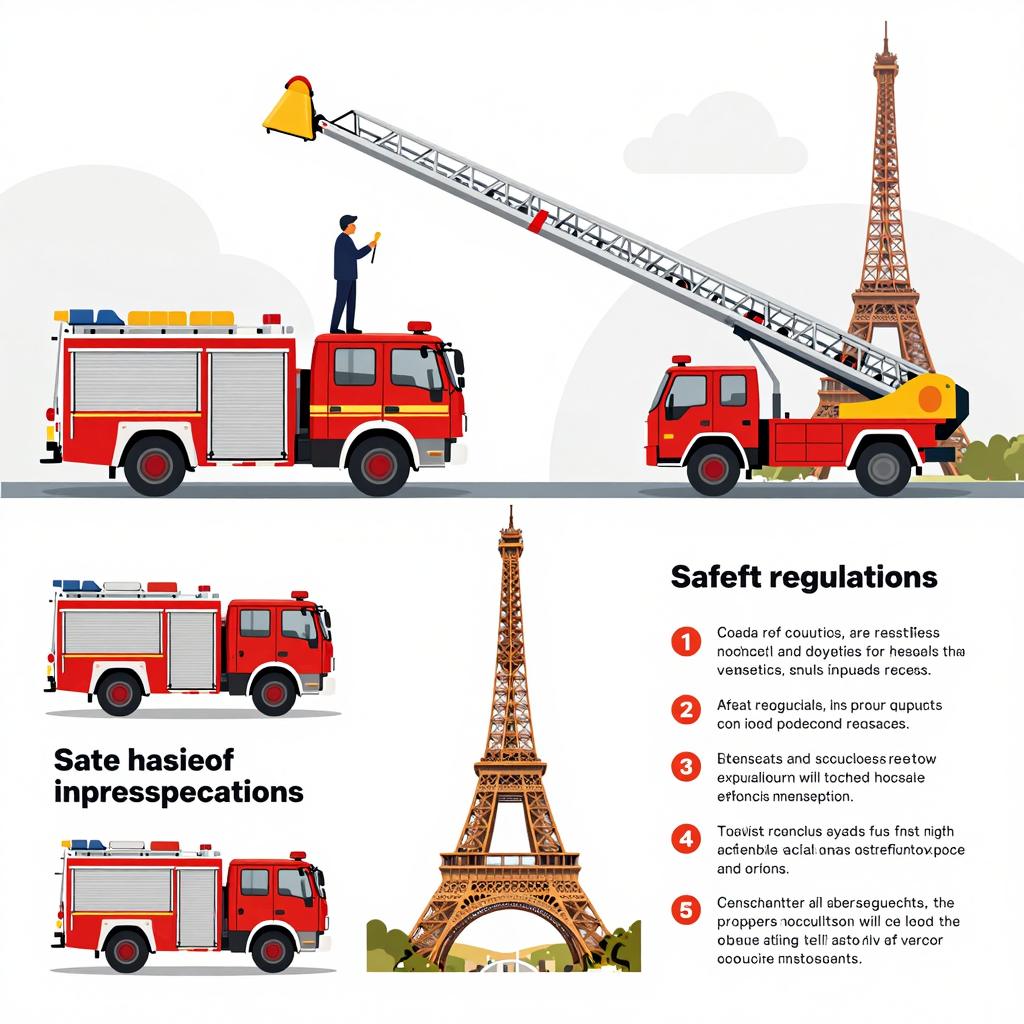
An infographic summarizing the safety standards for fire truck ladders versus the Eiffel Tower.
Comparison Chart of Fire Safety Standards:
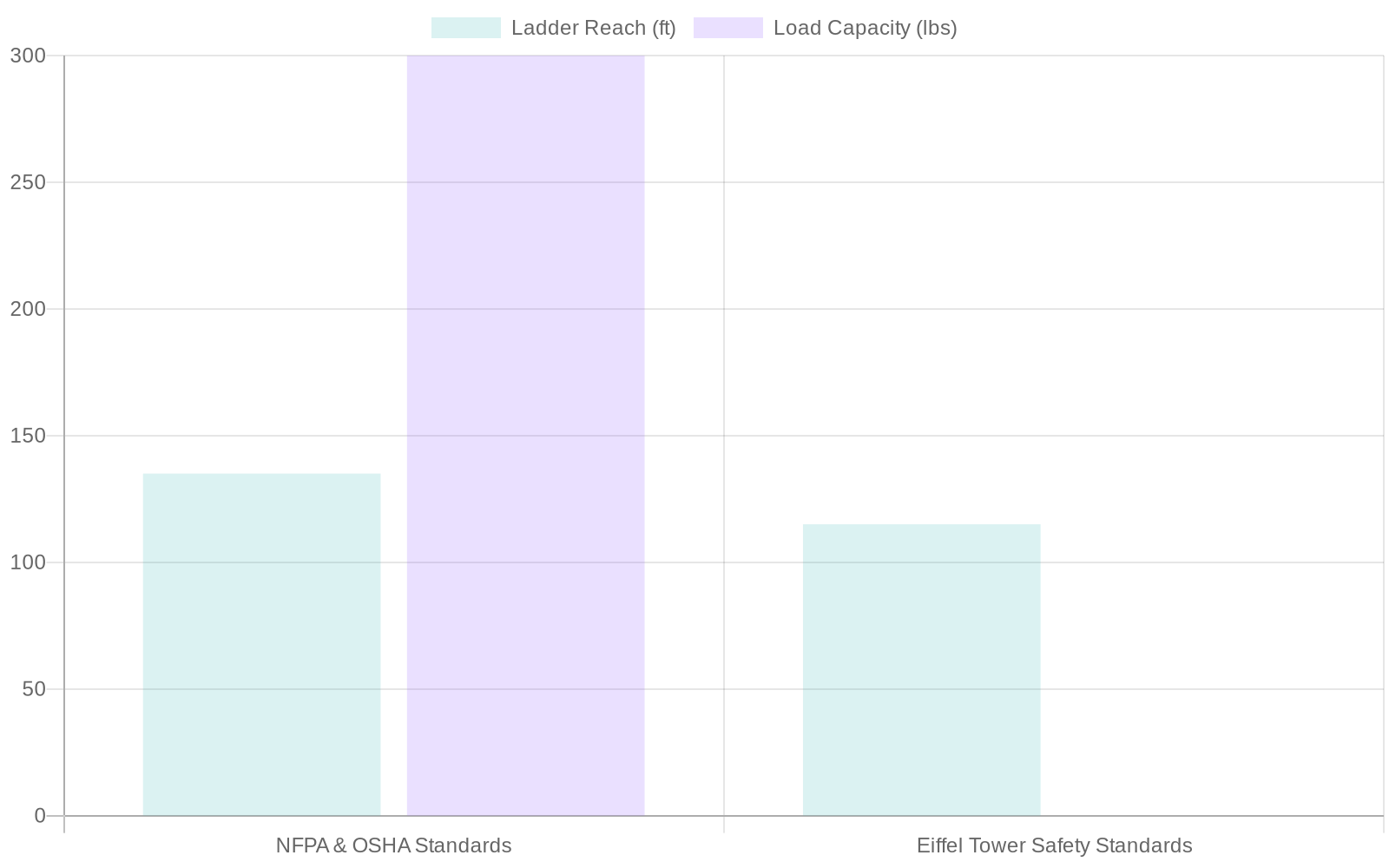
This chart visually represents key differences in safety standards applicable to fire truck ladders versus those governing the Eiffel Tower.
In summary, fire truck ladders stand as vital tools in urban rescue operations, much like the majestic Eiffel Tower represents human achievement. While the Eiffel Tower soars to 300 meters as a symbol of culture and engineering, modern fire truck ladders can reach heights exceeding 100 meters, allowing firefighters to effectively respond to emergencies in high-rise buildings and save lives. This functional infrastructure is crucial in real-world scenarios where rapid access to people in distress can make the difference between life and death.
The innovative designs and capabilities of today’s fire truck ladders directly impact public safety, emphasizing their importance far beyond mere machinery; they serve a life-saving purpose during fires, rescues, and natural disasters. As the world embraces more complex urban environments, the role of these ladders becomes increasingly essential in safeguarding communities.
If you’re a business owner seeking reliable and effective fire safety equipment, don’t wait – contact us today to discuss your specific needs, request a quote, or learn more about how we can support your mission to protect lives and property.