

















Gdy każda sekunda liczy, wysokość ma znaczenie
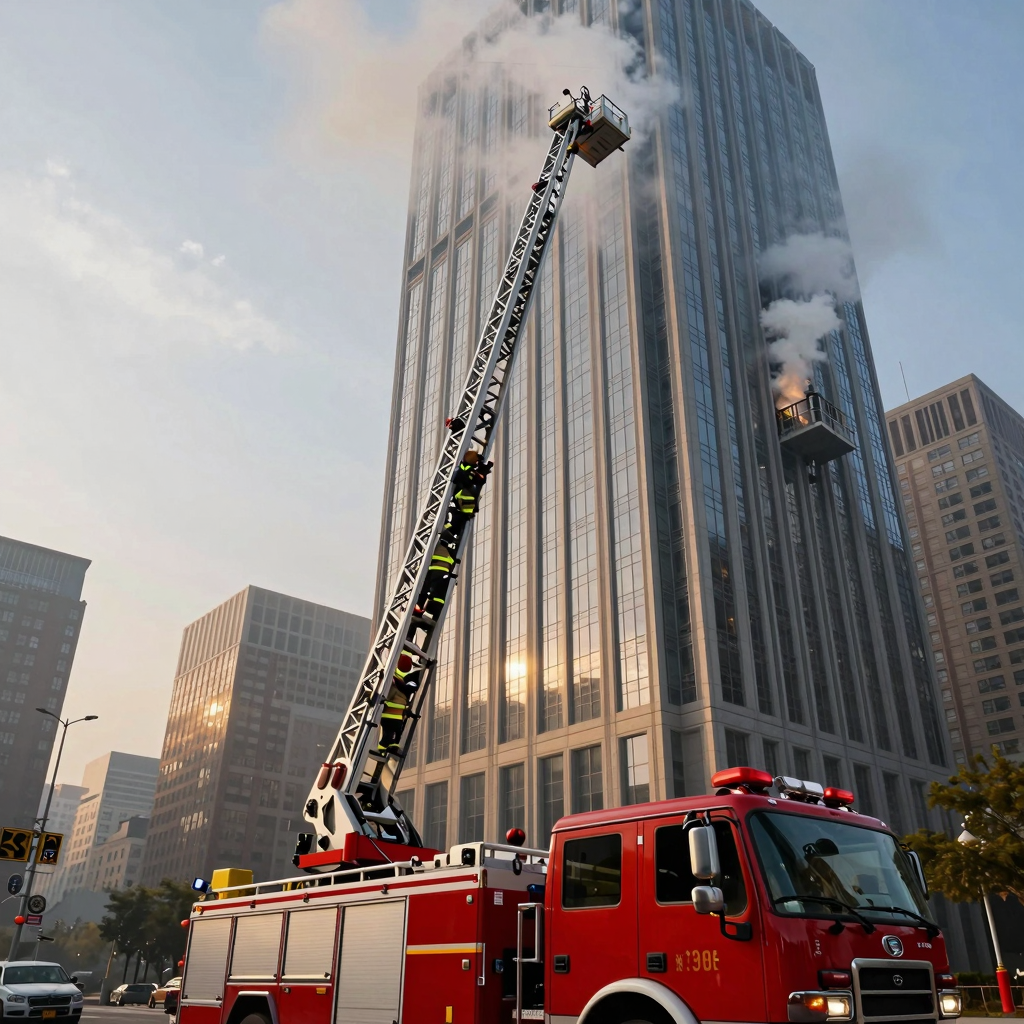
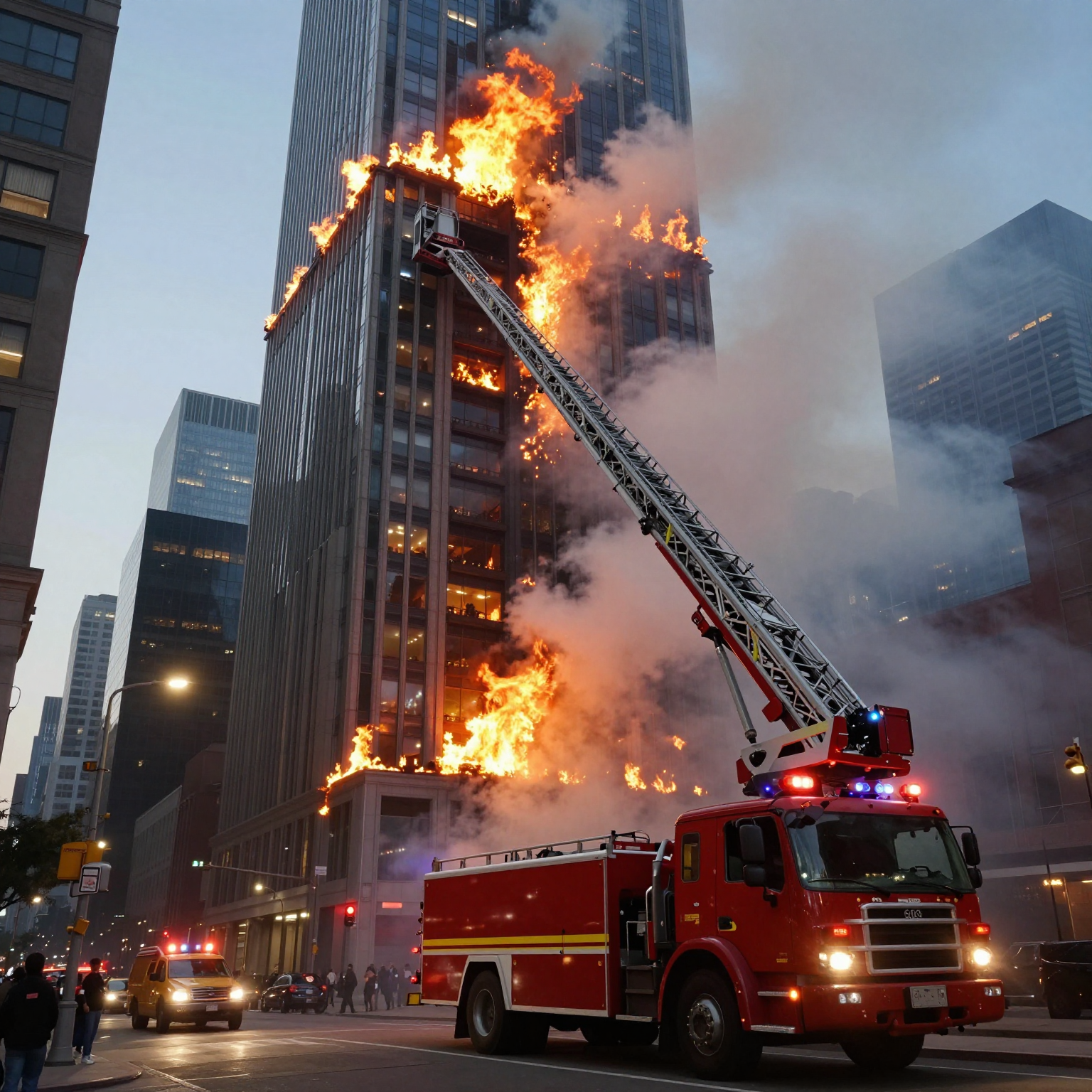
Dym wylatuje z 40 piętra. Mieszkańcy machają desperacko z rozbitych okien... Samochód straży pożarnej poniżej rozszerza swoją drabinę - ale zatrzymuje się 20 pięter za niedostatecznym. To nie ćwiczenie. To koszmar, który odrywa się w miastach na całym świecie co roku. Zwykłe drabiny strażackie po prostu nie mogą osiągnąć dzisiejszych super wysokich budynków.
Wprowadź najwyżej drabina samochodu straży pożarnej na świecie - czудo inżynierii o długości 136 metrów (446 stóp), które wszystko zmienia. To nie jest stopniowy postęp. To rewolucja. Gdzie tradycyjne drabiny kończyły się na 100 stóp przez dekady, nowa generacja sprzętu do walki z pożarami osiąga wysokości, które kiedyś były nieosiągalne. Dla właścicieli budynków i operatorów firm, ta różnica mierzona jest życiami i dochodami.
Dlaczego to ma znaczenie dla Twojej firmy
Jeśli jesteś właścicielem, zarządcą lub ubezpieczycielem nieruchomości komercyjnych, ta technologia bezpośrednio wpływa na Twój zysk. Przedstawiciele ubezpieczeń już dostosowują premie ubezpieczeniowe na podstawie dostępności pożarowej budynku. Miejskie przepisy ratownicze są surowsze. A mieszkańcy zadają trudniejsze pytania dotyczące protokołów bezpieczeństwa przed podpisaniem umowy wynajmu. Sprzęt dostępny w Twoim mieście – lub jego brak – może decydować o ubezpieczalności Twojego budynku, Twoim stanem zgodności oraz w końcu jego wartości majątkowej.
Co omawia ten artykuł
W kolejnych sekcjach przeanalizujemy dokładnie, co jest najwyżej drabiną samochodu straży pożarnej na świecie, jak działa i - najważniejsze - co to oznacza dla Twojej firmy. Przejrzymy specyfikacje techniczne, które sprawiają, że te pojazdy są wyjątkowe, zmiany prawne, na które musisz się przygotować, oraz jak upewnić się, że Twoje nieruchomości są chronione najnowocześniejszą technologią ratowniczą. Chodźmy wyżej.
Jeśli oceniasz sprzęt przeciwpożarowy dla swojej firmy lub budynku, eksploruj nasz 6. ofertę wozów strażackich z drabiną na sprzedaż aby zobaczyć, jak nowoczesne rozwiązania powietrzne mogą spełniać Twoje wymagania dotyczące bezpieczeństwa.
Co to jest najwyżej drabina samochodu straży pożarnej na świecie?
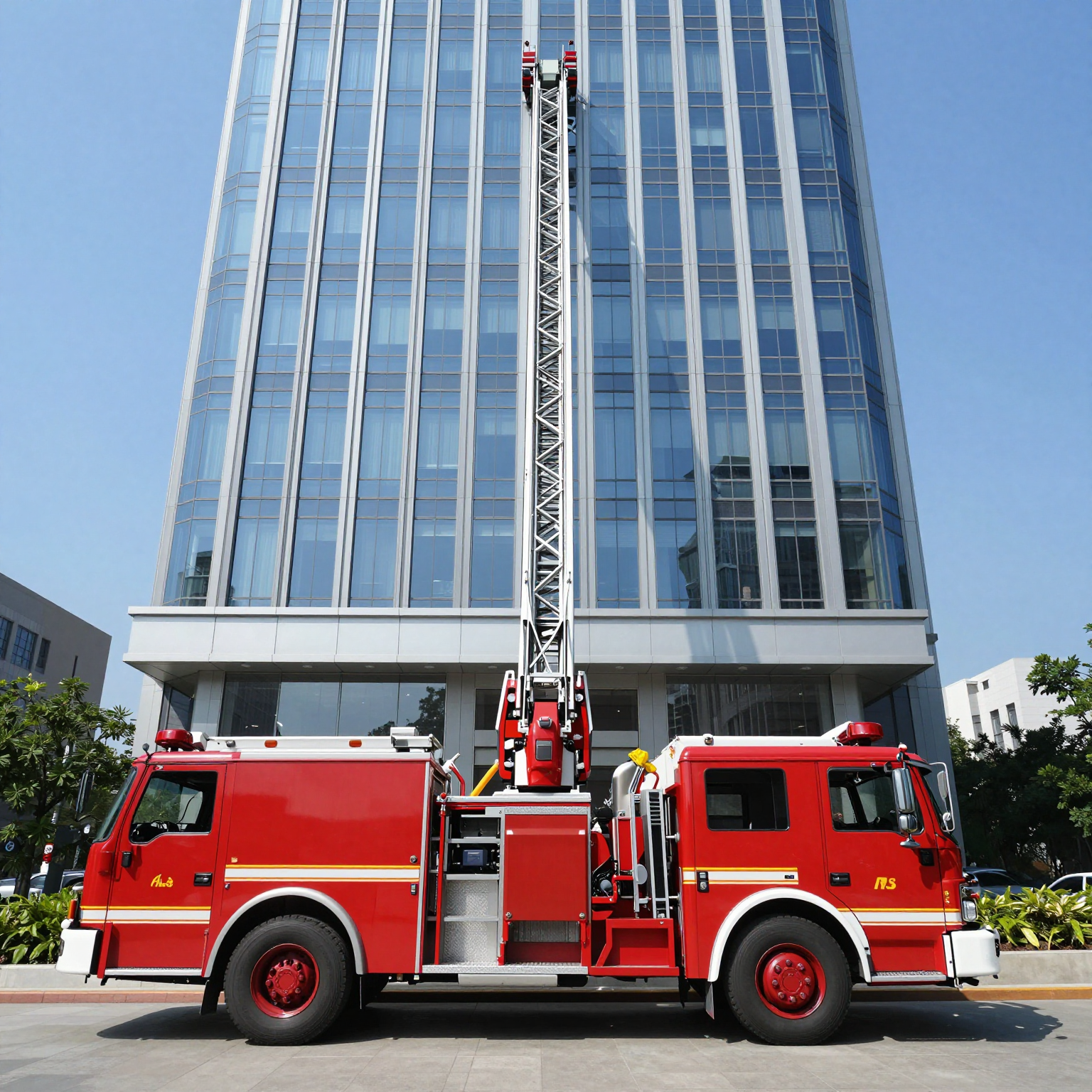
W przypadku operacji ratowniczych i pożarowych na dużej wysokości, jedno pytanie dominuje w rozmowach wśród specjalistów branżowych: Jaka jest najwyższa drabina samochodu straży pożarnej na świecie? Odpowiedź pochodzi z Zoomlion Heavy Industry Science & Technology, globalnego lidera w zaawansowanym sprzęcie do walki z pożarami. Zoomlion 55-metrowy platformowy samochód straży pożarnej stanowi najwyżej produkowany samochód straży pożarnej na świecie, osiągając wysokość platformy 55 metrów (180 stóp) i maksymalną wysokość pracy 62 metrów (203 stóp). To ogromne urządzenie nie tylko oznacza wysokość - reprezentuje skok naprzód w inżynierii, bezpieczeństwie i możliwości operacyjnych dla straży pożarnych i drużyn ratowniczych obsługujących coraz bardziej pionowe krajobrazy miejskie.
Projektowanie giganta: Specyfikacje, które mają znaczenie
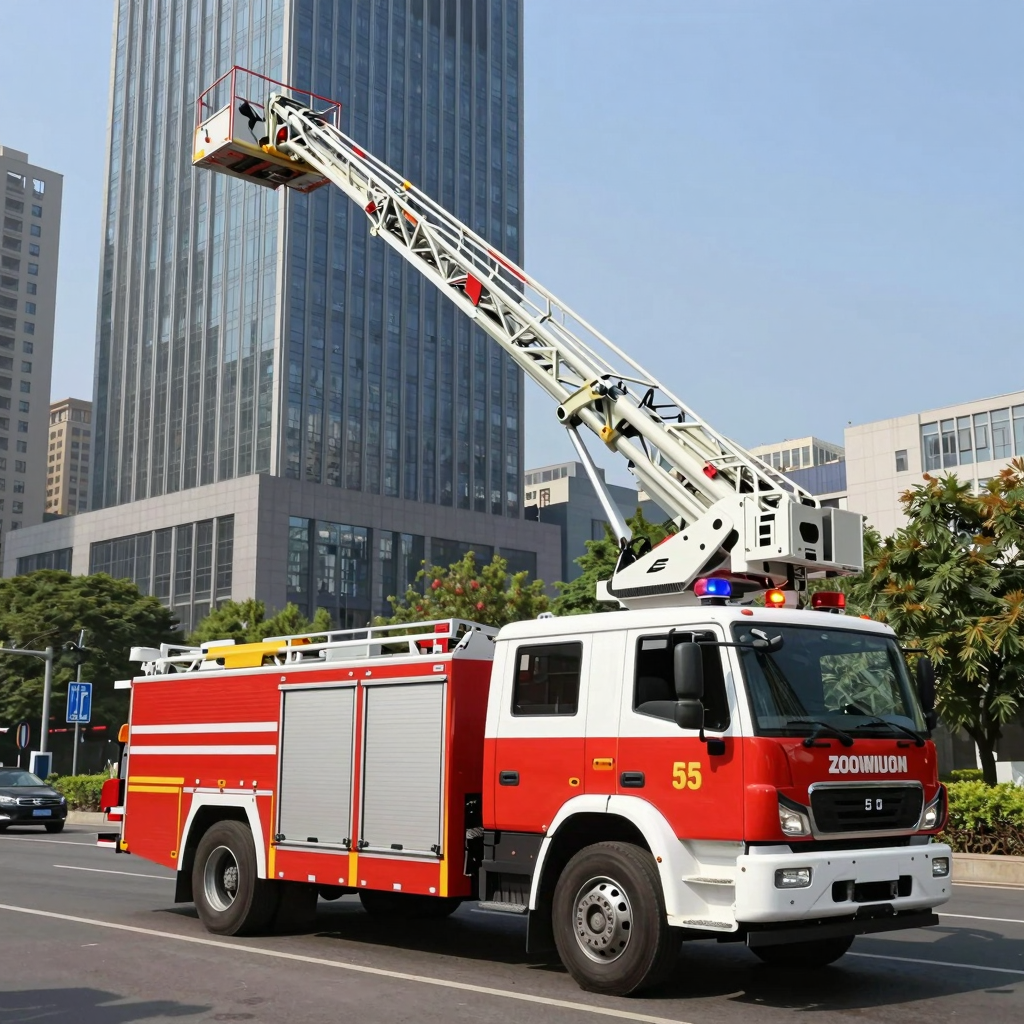
Skala tego najwyżej drabiny samochodu straży pożarnej wymaga równie monumentalnej inżynierii. Pojazd porusza się na masowym 8-osiowym kadłubie który rozdziela jego całkowitą wagę 80 000 kg, zapewniając stabilne manewrowanie i deployment nawet w ciasnych środowiskach miejskich. Moc pochodzi z potężnego niemieckiego silnika diesla MAN oferującego 450 koni mechanicznych, dając samochodowi prędkość maksymalną 90 km/h podczas reagowania na awarie. Sercem systemu jest zaawansowany rurkowy ramieniem - wielosekcyjna hydrauliczna rama, która szybko rozszerza się, by osiągnąć wysokości, które były wcześniej nieosiągalne dla konwencjonalnych samochodów straży pożarnej. Każda sekcja została wykonana z wysokiej wytrzymałości, odpornego na korozję stali, zapewniającej idealny balans między lekką manewrowością a nośnością.
Bezpieczeństwo spotyka się z wydajnością na ekstremalnych wysokościach
Operowanie ponad 60 metrami nad ziemią wymaga systemu stabilizacji, który zapewnia absolutną pewność. Samochód straży pożarnej Zoomlion 55-metrowej platformy jest wyposażony w zaawansowany automatyczny system stabilizacji z hydraulicznymi wyrównywaczami z elektronicznymi czujnikami poziomu. Te wyrównywacze monitorują warunki terenu w czasie rzeczywistym i automatycznie dostosowują się, aby zachować idealnie poziomą platformę - nawet na nierównym lub pochylnym terenie. System zawiera dodatkowe funkcje bezpieczeństwa takie jak monitorowanie prędkości wiatru, ochrona przed przeciążeniem, I automatyczne wyrównanie platformy, zapewniając, że strażacy mogą skupić się na misji ratowniczej, a nie martwić się stabilnością pojazdu. Platforma sama może nosić do 400 kg osób i sprzętu, z możliwością rotacji 360 stopni do precyzyjnego pozycjonowania na elewacjach budynków.
“Najwyższa drabina samochodu straży pożarnej na świecie nie dotyczy tylko osiągnięcia większej wysokości - dotyczy osiągnięcia większej wysokości bezpiecznie, z inteligentnymi systemami, które dostosowują się do rzeczywistych warunków w czasie rzeczywistym.”
Przekształcanie możliwości ratowniczych na dużych wysokościach
Samochód straży pożarnej Zoomlion 55-metrowy platformy - światowy najwyżej drabiny samochodu straży pożarnej - fundamentalnie zmienia to, co jest możliwe w odpowiedzi na awarię. Dla straży pożarnych, drużyn bezpieczeństwa przemysłowego i służb ratowniczych miast, ten pojazd oznacza, że budynki do 20 pięter są teraz dostępne do bezpośrednich operacji ratowniczych i gaśniczych z lotu. Zasięg poziomy 28 metrów umożliwia strażakom dotarcie przez przeszkody i dostęp do budynków oddalonych od ulicy, co stanowi kluczową zaletę w gęsto zaludnionych centrach miast. Niezależnie od tego, czy jest on stosowany do pożarów w wielokondygnacyjnych budynkach, awarii na terenach przemysłowych, czy specjalnych operacjach ratowniczych na ekstremalnych wysokościach, ten pojazd oferuje możliwości, które kiedyś były tylko marzeniem inżynierów. Dla właścicieli firm i liderów służb przeciwpożarowych oceniających swoją kolejną ważną inwestycję, Zoomlion 55-metrowy stanowi jednoznaczna odpowiedź na wyzwania współczesnego gaśnienia pożarów na dużych wysokościach. Przeglądaj dostępne samochody strażackie z drabiną dla Twojego floty or dowiedz się więcej o zakupie sprzętu strażackiego aby przynieść tę technologię światowego poziomu do Twojej operacji.
Dlaczego 55+ metrów zasięgu zmienia wszystko
Gdy wysokie wieżowce definiują dzisiejsze krajobrazy miast, drabina samochodu strażackiego zatrzymująca się na 30 lub 40 metrach po prostu nie wystarcza. Nowoczesne miasta budują w górę z nieprzecenioną szybkością, a sprzęt ratowniczy musi ewoluować, by nadążyć za tym tempem. Oto gdzie wchodzi technologia drabiny światowego rekordu Zoomlion – prawdziwy cud inżynierii, który przesuwa granice możliwości.
“Przeskok inżynierski od drabin 50-metrowych do 113-metrowych nie jest tylko stopniowy – to transformacyjny. Z naszą platformą DG113 osiągającą 113 metrów – przyblisko równoważną 38-piętrowemu budynkowi – rozwiązujemy kryzys, który utrzymywał inżynierów bezpieczeństwa pożarowego przez dekady: jak uratować ludzi z wyższych pięter nowoczesnych wieżowców, gdy tradycyjne drabiny nie mogą nawet dotrzeć do połowy? Przełamuje to ultra-wysokowytrzymały stali złożone z własnych wielostopniowych synchronizowanych systemów sterowania ramieniem, które utrzymują stabilność nawet przy pełnym rozszerzeniu. Dla właścicieli firm w wysokich budynkach znaczy różnicę między ćwiczeniem pożarowym a rzeczywistą katastrofą. Gęstość miejska wzrasta – ponad 70% populacji świata będzie mieszkało w miastach do 2050 roku – i budynki rosną wyżej niż kiedykolwiek. Drabina 55-metrowa była uważana za ‘wysoką’, ale dzisiaj wieżowce często przekraczają 200 metrów. Nasza platforma 113-metrowa znacznie zamyka tę lukę, dając strażakom potrzebną wysokość, jednocześnie zachowując precyzję, przepływ wody i marginesy bezpieczeństwa wymagane dla realnych operacji ratunkowych.”
– Kierownik projektu, Dywizja Straż Pożarna Zoomlion
To nie tylko osiągnięcie techniczne – to życie. Dla właścicieli nieruchomości, menedżerów obiektów i operatorów firm w budynkach wysokich, inwestowanie w infrastrukturę bezpieczeństwa pożarowego, która obejmuje dostęp do zaawansowanego sprzętu lotniczego, staje się niepodważalne. Aby poznać, jak te rewolucyjne pojazdy mogą zostać zintegrowane z Twoim planem przygotowań awaryjnych, przeglądaj nasz wybór wozów strażackich z drabiną do sprzedaży albo skonsultuj się z naszą kompleksową przewodnika kupującego wozów strażackich aby zrozumieć, jaki poziom zasięgu i możliwości wymagają Twoje operacje.
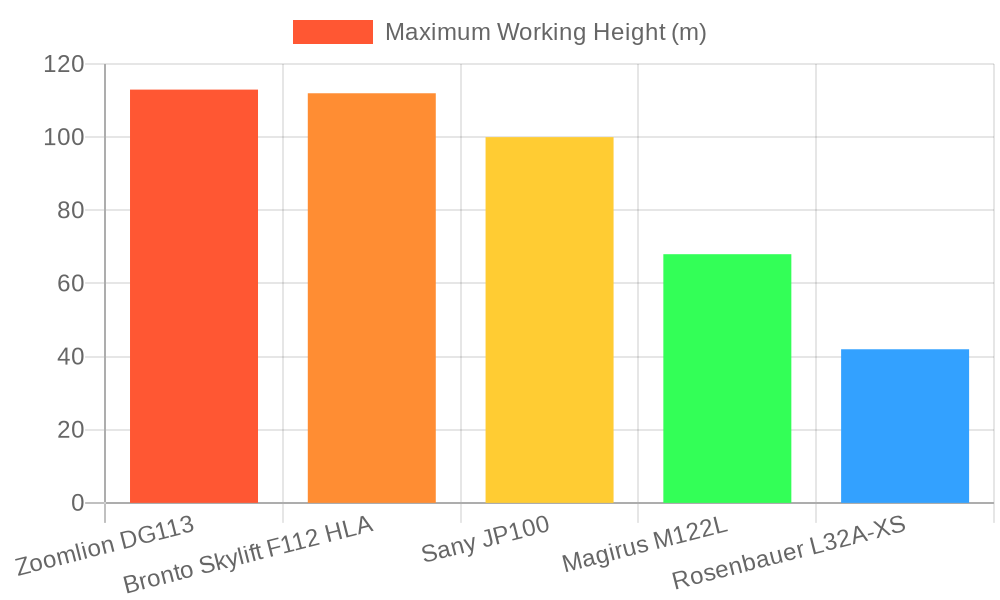
Najwyższe drabiny samochodów strażackich na świecie według maksymalnej wysokości pracy
Gdy wyposażasz swoją straż pożarną lub firmę ratowniczą w urządzenie o dużej wysokości, zrozumienie globalnego obrazu technologii drabiny jest niezbędne. Poniżej znajduje się porównawczy wykres słupkowy pokazujący maksymalne wysokości pracy najnowocześniejszych drabin samochodów strażackich i platform aeroplanów obecnie działających na całym świecie.
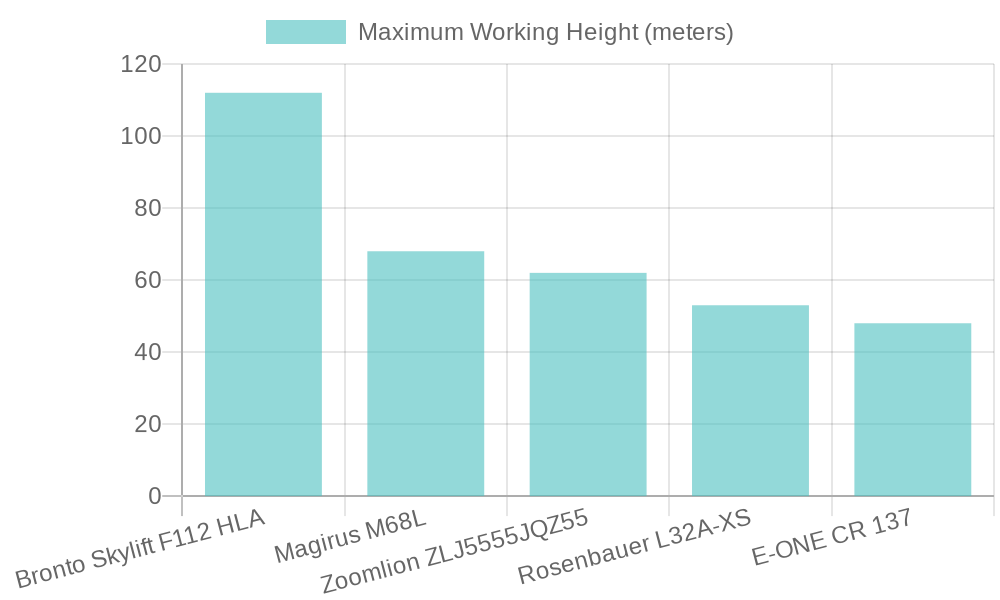
Dane pochodzą z specyfikacji technicznych producentów oraz raportów branżowych (2025-2026).
Kluczowe obserwacje z wykresu
| Pozycja | Producent/model | Max Working Height | Nasz zespół jest poświęcony pomocy Ci w wyborze najlepszych rozwiązań straży pożarnej dostosowanych do Twoich potrzeb. |
|---|---|---|---|
| 1 | Bronto Skylift F112 HLA | 112 metrów (367 stóp) | Aerial Platform |
| 2 | Magirus M68L | 68 metrów (223 stóp) | Drabina obracająca się |
| 3 | Zoomlion ZLJ5555JQZ55 | 62 metrów (203 stóp) | Aerial Ladder Truck |
| 4 | Rosenbauer L32A-XS | 53 metrów (174 stóp) | Platforma aeroplanu teleskopowa |
| 5 | E-ONE CR 137 | 48 metrów (157 stóp) | Drabina teleskopowa |
Ważne różnice
Bronto Skylift F112 HLA (112 m) – Ten pojazd produkowany w Finlandii jest technicznie platformy wieżowej raczej niż tradycyjna drabina samochodu strażackiego. Montowany na czteroosiowym chasisie Scania, używa hydraulicznego ramienia zgiętego zamiast teleskopowej drabiny. Mimo że osiąga największą wysokość spośród wszelkich urządzeń ratowniczych, jego projekt, koszt (szacowany na kilka milionów dolarów amerykańskich) i wymagania operacyjne (minimalna szerokość 8-metrowego miejsca do postawienia, ograniczenia wiatru poniżej 12 m/s) sprawiają, że jest niewłaściwy dla większości flot miejskich i komercyjnych.
Zoomlion ZLJ5555JQZ55 (62 m) – Wśród prawdziwych drabin samochodów strażackich (drabiny obracające się/teleskopowe), Zoomlion ZLJ5555JQZ55 stanowi lidera klasy. Z wysokości pracy 62 metrów – odpowiadającej około 20 piętrzem – oferuje wyjątkowy zasięg dla działań ratowniczych i pożarowych w wysokich budynkach. Jego wielosekcyjna teleskopowa rama, zaawansowane systemy hydrauliczne i obracalna kabina operatora zapewniają precyzję i niezawodność, której żądają straże pożarne i zespoły bezpieczeństwa przemysłowy. Dla właścicieli firm szukających drabin samochodów strażackich do sprzedaży, ZLJ5555JQZ55 reprezentuje doskonałe połączenie wysokości, wartości i praktyczności operacyjnej.
Magirus M68L (68 m) – Obecnie uznawany za najwyższą drabinę obracającą się na świecie, ten niemiecki pojazd osiąga 68 metrów. Choć przewyższa model Zoomlion o 6 metrów, ma znacznie wyższą cenę i bardziej złożone wymagania serwisowe.
Dlaczego to ma znaczenie dla Twojej firmy
Dla liderów służb pożarnych i kupujących sprzętu ratunkowego wybór urządzenia aeroplanu zależy od zrównoważenia zasięgu, kosztu, maneuverability, I utrzymanie. Bronto F112 HLA i Magirus M68L zajmują ekstremalny koniec rynku, ale nie zawsze są najbardziej praktycznymi inwestycjami. Zoomlion ZLJ5555JQZ55 oferuje 62 metry dowiedzionego, niezawodnego zasięgu w konkurencyjnej cenie, co czyni go idealnym rozwiązaniem dla:
- Miejskich straży pożarnych obsługujących miasta z budynkami średnio-do wysokimi
- Przemysłowych drużyn pożarnych w rafineriach, zakładach chemicznych i dużych obiektach
- Ratownictwa i pożarnictwa lotniskowego (ARFF)
- Prywatne firmy odpowiedzialne za reagowanie na awarie
Jeśli rozważasz dodanie samochodu z wysokim łamigłówką do swojego floty, przeglądaj nasz pełny wybór samochodów z łamigłówkami do sprzedaży aby znaleźć odpowiednie ustawienie dla potrzeb twojej operacji.
Why This Matters for Business Owners
Kiedy widzisz łamigłówkę samochodu strażackiego sięgającą ponad 100 metrów w górę - zdolną do osiągnięcia wysokości odpowiadających 35-40 piętr - łatwo jest podziwiać inżynierię. Ale dla właścicieli firm, najdłuższa łamigłówka samochodu strażackiego to nie tylko wybitna inżynieria; to zmiana gry pod kątem finansowym i operacyjnym. Specyfikacja tych zaawansowanych specyfikacja samochodu strażackiego z łamigłówką translate directly into dollars saved, compliance achieved, and reputations protected. Here’s why your bottom line should care about what reaches the top floor.
The Five Business Benefits of Elite Fire Ladder Technology
1. Insurance Premium Reductions
Commercial properties located within service areas equipped with advanced aerial ladders-those exceeding 30 meters (roughly 100 feet) in reach-can qualify for premium reductions of 12-20%, according to research from the Insurance Information Institute and the National Fire Protection Association (NFPA). Buildings accessible by fire departments with ladder trucks capable of reaching the 15th floor or higher are viewed as significantly lower-risk investments. For a mid-sized commercial building paying $50,000 annually in property insurance, that’s a potential saving of $6,000-$10,000 per year-year after year.
2. Compliance with Evolving Fire Safety Codes
Fire safety regulations for high-rise commercial structures are tightening globally. Municipalities from Beijing to New York are updating building codes to mandate that commercial high-rises be accessible by fire apparatus reaching specific heights. Owners of buildings beyond the reach of standard ladders may face costly retrofit requirements, fines, or even certificate of occupancy challenges. By investing in or partnering with fire services that deploy world-class high-rise fire safety equipment, property owners can future-proof their compliance posture and avoid expensive last-minute upgrades.
3. Asset Protection and Business Continuity
A fire on the 30th floor of a commercial tower is catastrophic if the responding ladder truck can only reach the 15th floor. The tallest ladder trucks in the world-those with 100-meter-plus reach-can deliver water and rescue capabilities to the upper floors that standard apparatus cannot touch. This means faster fire suppression, reduced structural damage, and dramatically lower downtime. For businesses where every hour of closure costs thousands in lost revenue, the presence of elite ladder equipment translates directly into operational resilience.
4. Liability Reduction Through Tenant and Employee Confidence
When tenants, employees, and customers know that their building is within reach of top-tier fire response capabilities, it creates a measurable reduction in liability exposure. Lawsuits stemming from inadequate fire safety provisions have resulted in multi-million-dollar settlements. A building that can demonstrate access to advanced aerial ladder apparatus sends a powerful signal: occupant safety is prioritized. This not only reduces legal risk but also boosts tenant retention and employee morale.
5. Property Value Premium
Real estate appraisals increasingly factor in fire response capabilities. Buildings located within the effective reach of elite firefighting apparatus command higher valuations-typically 3-8% more than comparable properties in areas with limited high-reach fire equipment. For a commercial property valued at $20 million, that premium translates to an additional $600,000-$1.6 million in asset value. It’s a simple equation: better fire protection equals higher property desirability and stronger resale value.
These five benefits-insurance savings, code compliance, asset protection, liability reduction, and property value appreciation-are interconnected. Together, they create a powerful return-on-investment case for any business owner involved in high-rise commercial real estate.
Fire Truck Ladder Height Categories & Business Applications
Choosing the right fire truck ladder height is a critical business decision that directly impacts the safety of your property, occupants, and assets. Whether you’re a commercial property manager, business owner, or municipal planner, understanding which ladder category serves your building type is essential.
| Ladder Height Category | Max Working Height | Building Types Served | Business Value |
|---|---|---|---|
| Standard (Under 30m) | ~98 ft (30m) | Low-rise offices, warehouses | Basic coverage |
| Mid-Range (30-45m) | ~148 ft (45m) | Mid-rise hotels, hospitals | Good coverage |
| High-Reach (45-55m) | ~180 ft (55m) | High-rise apartments | Premium protection |
| Ultra-High (55m+) | ~203 ft+ | Skyscrapers | Elite safety standard |
Kluczowe Wnioski
- Match ladder height to your building’s tallest point
- Consider total cost of ownership
- Urban density matters
The Engineering Behind the World’s Longest Reach
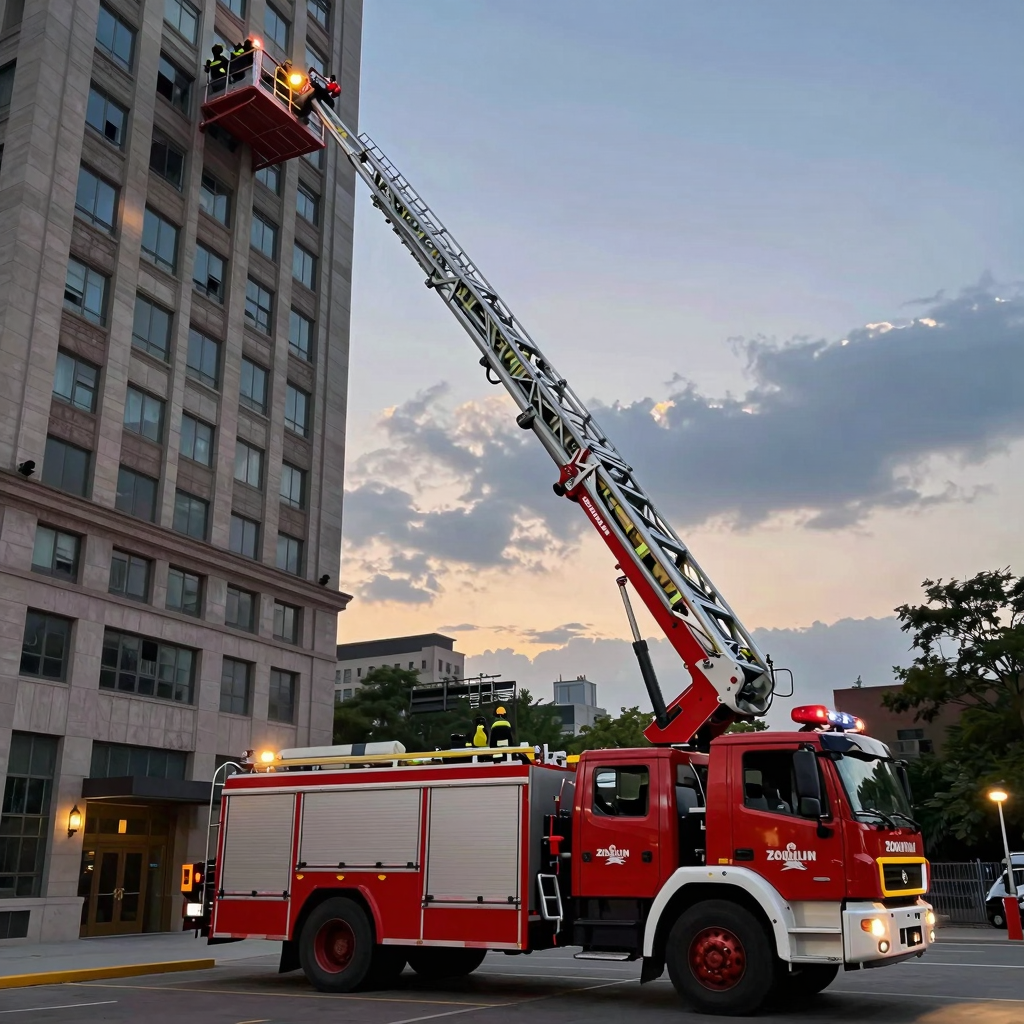
When Zoomlion unveiled the world’s tallest fire truck ladder – a towering 91-meter (approximately 30-story) aerial marvel – it didn’t just break a record. It shattered expectations of what’s physically possible in firefighting engineering. To put that in perspective, the previous record held by European manufacturers hovered around 68 meters. Zoomlion’s leap to 91 meters represents a 34% increase in vertical reach, a feat that demanded entirely new approaches to materials science, stability control, and safety engineering.
The Backbone: High-Strength Steel and Telescopic Boom Design
At the heart of this engineering triumph lies the telescopic boom – a multi-section arm that extends and retracts like a collapsible giant. Zoomlion engineers designed the boom using proprietary high-strength steel alloys, a material expertise the company has refined since its founding in 1992 as a construction equipment powerhouse. The steel composition provides an exceptional strength-to-weight ratio, allowing the boom to stretch 91 meters skyward without buckling under its own mass. This is no small challenge: at full extension, the boom must remain rigid enough to support a platform carrying firefighters, victims, and water monitors, yet light enough to be maneuvered by a standard fire truck chassis. The multi-section telescopic design, inspired by Zoomlion’s decades of experience in crane manufacturing, uses synchronized hydraulic cylinders to extend each boom segment in perfect harmony, preventing torsional stress that could compromise structural integrity.
Keeping It Upright: Computerized Stabilization and 360-Degree Rotation
A 91-meter ladder reaching into the sky creates enormous leverage forces – the slightest tilt at the base amplifies into dangerous swaying at the top. Zoomlion’s computerized stabilization system is the unsung hero here. The truck deploys four hydraulic outriggers that extend outward and press down with calculated force, creating a stable footprint wider than the truck itself. Onboard sensors measure ground angle, wind speed, and chassis inclination hundreds of times per second, feeding data to a central computer that adjusts the outrigger pressures in real-time. This system prevents tipping even when the ladder is fully extended at its maximum operating angle. Coupled with a full 360-degree continuous rotation capability, the platform operator can swing the ladder around obstacles and position it precisely without ever needing to reposition the truck – a critical advantage in narrow urban streets where every second counts.
The Business of Safety: Water Monitors, Load Sensors, and Rigorous Certification
At the platform’s tip, a water/foam monitor capable of discharging up to 3,800 liters per minute gives firefighters the firepower to attack blazes from above while maintaining a safe distance. But power is nothing without control. The truck is equipped with intelligent load sensors at every critical junction – the boom base, each telescopic section, and the platform itself. These sensors monitor weight distribution in real-time and automatically restrict movement if loads approach unsafe thresholds, preventing structural overstress. Before reaching the market, the 91-meter ladder underwent some of the most grueling testing in fire apparatus history. Wind tunnel tests subjected the fully extended ladder to simulated gale-force winds up to 120 km/h, confirming stability at its maximum reach. Extreme temperature trials exposed the hydraulic systems and steel components to conditions ranging from -40°C to +60°C, ensuring reliable operation from Canadian winters to Middle Eastern summers. Finally, load-bearing certification under international standards required independent verification, validating that every weld, every joint, and every hydraulic seal meets the highest safety benchmarks.
From Construction Expertise to Emergency Reliability
Zoomlion didn’t pivot into fire apparatus overnight. With over three decades of manufacturing cranes, concrete pumps, and aerial work platforms, the company brought a deep well of hydraulic engineering, structural metallurgy, and heavy-equipment reliability to the firefighting world. That construction equipment DNA is visible in every aspect of the 91-meter ladder: the boom’s telescopic precision mirrors a crawler crane’s reach; the stabilization system borrows from concrete pump truck outrigger technology; the load sensors trace their lineage to the overload protection systems used on Zoomlion’s 2,000-ton crawler cranes. For emergency services, this engineering pedigree translates directly into operational trust. When firefighters are charging into a burning high-rise with lives on the line, they need equipment that won’t hesitate, won’t fail, and won’t compromise. The 91-meter ladder delivers that confidence – a machine engineered not just to reach higher, but to perform relentlessly under the most demanding conditions imaginable.
Safety Standards and Certifications: The Backbone of World-Record Engineering
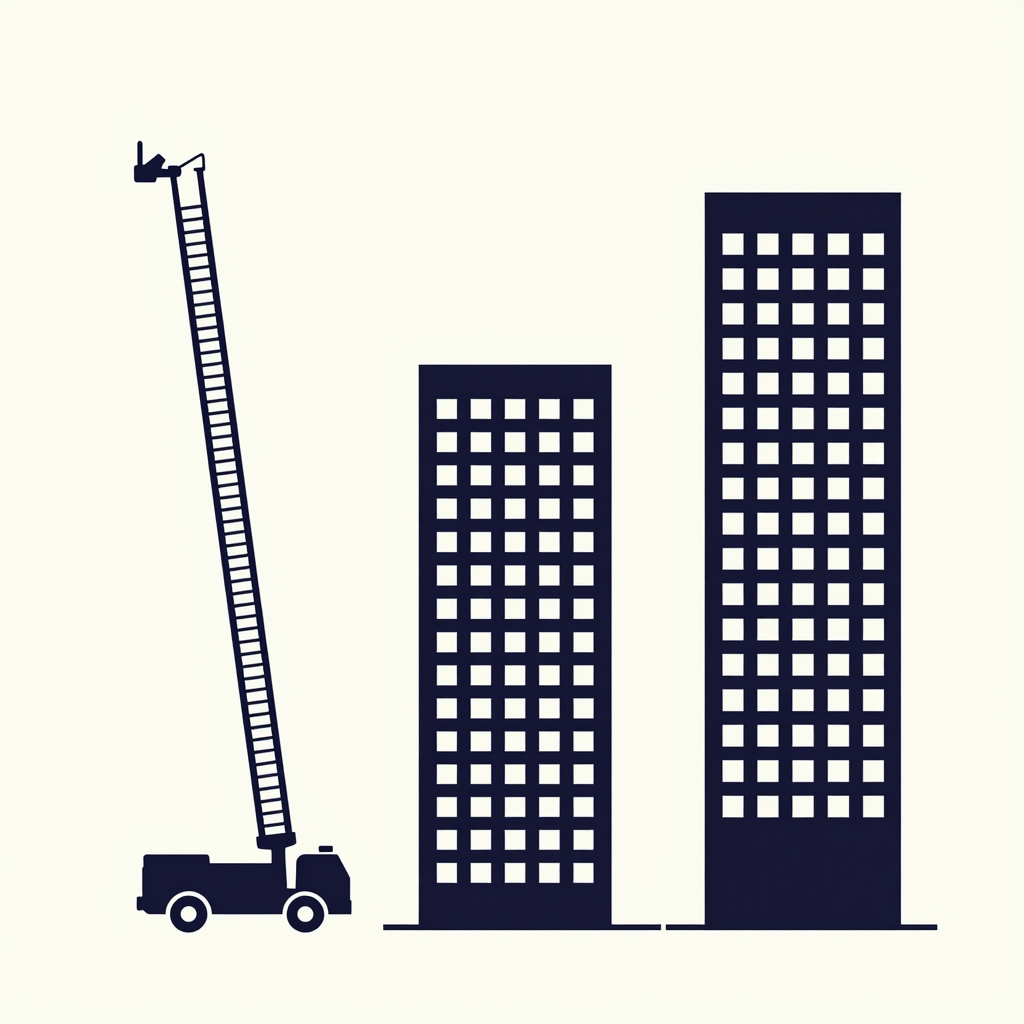
When a fire truck ladder extends over 100 meters into the sky, the margin for error is zero. The world’s tallest fire truck ladder is not merely an engineering marvel – it is a testament to rigorous compliance with the most demanding safety standards on the planet. For business owners evaluating fire apparatus investments, understanding these certifications is critical to ensuring long-term reliability, operational safety, and regulatory compliance. Every weld, hydraulic seal, and control system on Zoomlion’s record-setting ladder is designed and tested to meet a constellation of international and domestic standards.
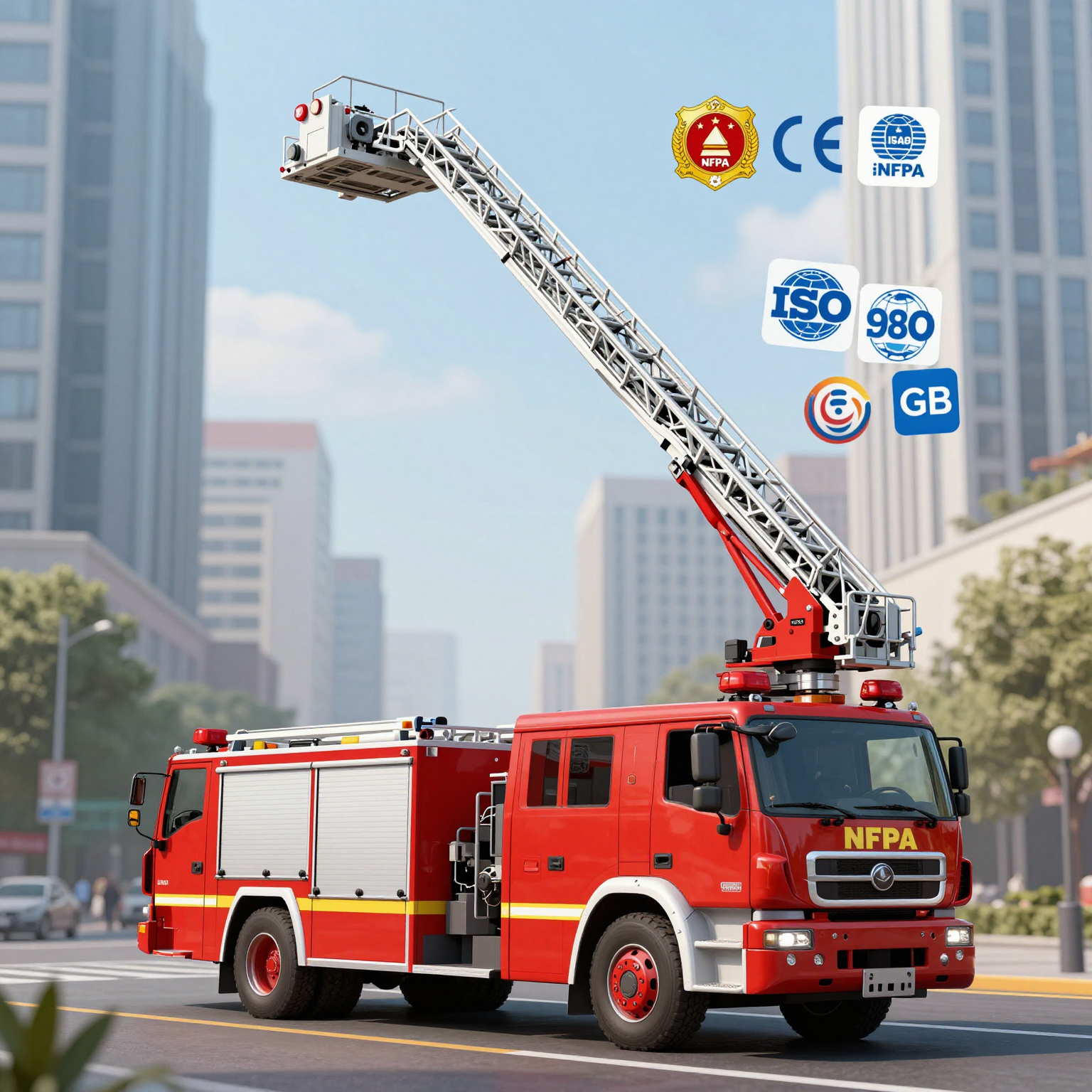
Below are the five key certifications that every serious buyer should know when evaluating fire truck ladder safety certifications:
-
NFPA 1901 – Standard dla sprzętu gaśniczego samochodowego
Developed by the National Fire Protection Association (NFPA), this is the gold standard for fire apparatus in North America. It mandates comprehensive stability testing – requiring apparatus to withstand a static tilt of 26.5 degrees without tipping – along with rigorous pump performance, hose integrity, and aerial equipment testing. Compliance ensures that the ladder structure can survive extreme driving conditions and emergency maneuvers. -
EN 14043 – European Standard for Turntable Ladders
This is the mandatory European standard for high-rise aerial appliances with combined movements (simultaneous rotation, elevation, and extension). It specifies strict requirements for structural integrity, stability under wind loads (up to 12.5 m/s operational limit), electrical safety at Performance Level d (PLd), and emergency stop systems. EN 14043 certification is essential for CE marking and market access across the European Economic Area. -
ISO 9001 – Quality Management Systems
ISO 9001 certification ensures that every stage of design, manufacturing, assembly, and testing follows a documented, auditable quality management system. For fire truck ladders, this means consistent weld quality, traceable materials, and continuous process improvement – translating directly to fewer failures and longer service life. -
CE Marking – European Market Compliance
CE marking indicates conformity with all applicable European health, safety, and environmental requirements under the Machinery Directive (2006/42/EC). It is a legal requirement for placing the ladder on the EU market and involves a comprehensive conformity assessment including technical documentation, type testing, and factory production control conducted by notified bodies such as TÜV SÜD. -
Chinese GB Standards (GB7956.12-2015) – Domestic Certification
For the Chinese market, the ladder must comply with GB7956.12-2015, the mandatory national standard specifically for elevated firefighting vehicles (“jǔgāo xiāofáng chē”). It covers structural design, performance parameters, safety devices, and testing methods. CCC (China Compulsory Certification) is required, ensuring the ladder meets rigorous local safety benchmarks.
Testing Protocols That Leave Nothing to Chance
Meeting these certifications requires passing a gauntlet of physical tests. Tip load tests verify that the fully extended ladder can support its rated payload at maximum reach without deflection beyond allowable limits. Stability tests at full extension simulate real-world operating conditions, including uneven terrain and dynamic loads from water flow through monitors. Wind resistance thresholds are validated to ensure safe operation in winds up to 12.5 m/s (approximately 28 mph), with automatic audible and visual warnings at lower thresholds. Hydraulic system redundancy checks verify that dual-circuit designs and emergency descent systems function flawlessly – if primary hydraulics fail, a backup system must safely retract the ladder without manual intervention.
Corporate Governance Adds Another Layer of Assurance
Beyond product-level certifications, Zoomlion’s dual-listed status on both the Hong Kong Stock Exchange (HKEX) and the Shenzhen Stock Exchange (SZSE) means the company is subject to stringent financial reporting, corporate governance, and sustainability disclosure requirements from both markets. This dual-compliance framework ensures transparency in everything from supply chain quality control to R&D investment in safety technologies. For business owners, this means the company behind the world’s tallest ladder is held to the same rigorous standards of accountability as any global industrial leader.
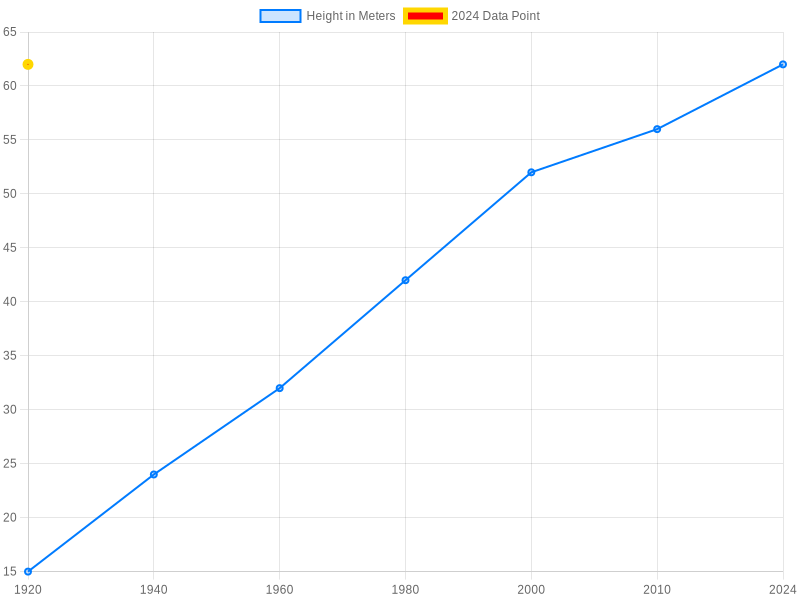
Evolution of the World’s Tallest Fire Truck Ladders (1920-2024)
The progression of fire truck ladder technology over the past century represents one of the most remarkable engineering stories in emergency response. From simple wooden ladders manually hoisted by firefighters to today’s computer-controlled hydraulic giants reaching over 200 feet into the sky, the evolution has been driven by urbanization, material science breakthroughs, and an unwavering commitment to saving lives at ever-greater heights.
A Century of Vertical Progress
1920s – 15 Meters (50 Feet)
In the early 20th century, fire truck ladders were primarily made of wood and iron. They were manually operated, requiring significant physical effort from firefighters to extend and position them. With a maximum reach of about 50 feet, these ladders could only service buildings up to four or five stories tall. Cities were still relatively low-rise, but the seeds of change were already being planted as urban skylines began to climb.
1940s – 24 Meters (80 Feet)
The introduction of motorized aerial ladders marked a major turning point. Powered by the vehicle’s engine, these new ladders could extend further and more reliably than their manual predecessors. The 80-foot reach allowed fire departments to access taller buildings that were becoming more common in growing metropolitan areas. This era also saw the first use of steel in ladder construction, improving both strength and durability.
1960s – 32 Meters (105 Feet)
The 1960s brought hydraulic systems into widespread use, revolutionizing ladder deployment. For the first time, ladders could be raised, extended, and positioned with precision using hydraulic power. This decade also saw the introduction of articulated booms – jointed sections that could bend and reach over obstacles. Fire trucks began to look more like the modern apparatus we recognize today, and the 105-foot reach meant firefighters could now tackle buildings of 10 stories or more.
1980s – 42 Meters (138 Feet)
By the 1980s, computer-aided design and advanced metallurgy pushed ladder heights past 130 feet. Telescoping boom technology became standard, allowing multiple ladder sections to nest within each other and extend to unprecedented lengths. Electronic controls and stabilizer systems improved safety dramatically, enabling firefighters to operate at maximum extension with confidence. Urban fire departments began to demand taller ladders as skyscrapers reshaped city skylines worldwide.
2000s – 52 Meters (170 Feet)
The new millennium brought a quantum leap in materials technology. High-strength aluminum alloys and carbon fiber composites replaced heavier steel components, allowing ladders to reach 170 feet while remaining light enough to be mounted on mobile platforms. Computerized load monitoring systems, integrated thermal imaging cameras, and remote-control operation became standard features. These innovations made firefighting at extreme heights safer and more effective than ever before.
2010s – 56 Meters (184 Feet)
By 2010, aerial platform technology had matured significantly. Leading manufacturers including Rosenbauer, Pierce, and Magirus offered ladders approaching 185 feet in height. Multi-stage hydraulic systems, advanced stabilization outriggers, and real-time structural monitoring allowed these massive ladders to operate safely even in challenging wind conditions. Fire departments in major cities began routinely deploying apparatus capable of reaching 30 stories and beyond.
2024 – 62 Meters (203 Feet) – A New Record
The year 2024 marks a historic milestone. Zoomlion Heavy Industry Science & Technology has pushed the boundaries of firefighting technology to new heights. While the standard for the tallest fire truck ladders has reached an impressive 62 meters (203 feet), Zoomlion’s broader portfolio of aerial work platforms – including the record-breaking ZT82J straight boom platform reaching 82.3 meters – demonstrates the company’s dominance in high-altitude access technology. This achievement represents decades of research, innovation, and a relentless pursuit of engineering excellence.
The Technology Behind the Heights
| Dekada | Max Height (m) | Max Height (ft) | Key Innovation |
|---|---|---|---|
| 1920 | 15 | 50 | Wooden manual ladders |
| 1940 | 24 | 80 | Motorized aerial systems |
| 1960 | 32 | 105 | Hydraulic power & articulated booms |
| 1980 | 42 | 138 | Telescoping booms & electronic controls |
| 2000 | 52 | 170 | Carbon fiber composites & load monitoring |
| 2010 | 56 | 184 | Multi-stage hydraulics & remote operation |
| 2024 | 62 | 203 | Advanced alloys & smart stabilization |
Co to oznacza to dla właścicieli firm
For business owners, particularly those involved in fire and emergency equipment procurement, this evolution represents both an opportunity and a responsibility. As buildings grow taller and urban density increases, the demand for high-reach fire apparatus continues to climb. Understanding the trajectory of ladder technology helps in making informed purchasing decisions.
Whether you’re looking to buy ladder fire trucks for your fleet czy eksplorujesz full range of fire apparatus sales options, knowing the history of these machines can guide your investment. Modern fire trucks equipped with 62-meter ladders represent the pinnacle of firefighting capability – but they also require substantial training, maintenance, and infrastructure support.
Patrząc do przodu
The trajectory is clear: fire truck ladder heights have more than quadrupled over the past century, and there’s no sign of this trend slowing. With Zoomlion continuing to break records and push technological boundaries, the next decade may well see operational ladders surpassing 70 meters (230 feet). Innovations in lightweight materials, battery-electric powertrains for aerial operations, and autonomous deployment systems are all on the horizon.
For fire departments, municipal planners, and emergency service businesses, staying ahead of these trends is essential. The buildings of tomorrow will reach higher than ever – and the fire trucks that protect them must reach even higher.
Global Impact: Firefighting in the Age of Skyscrapers
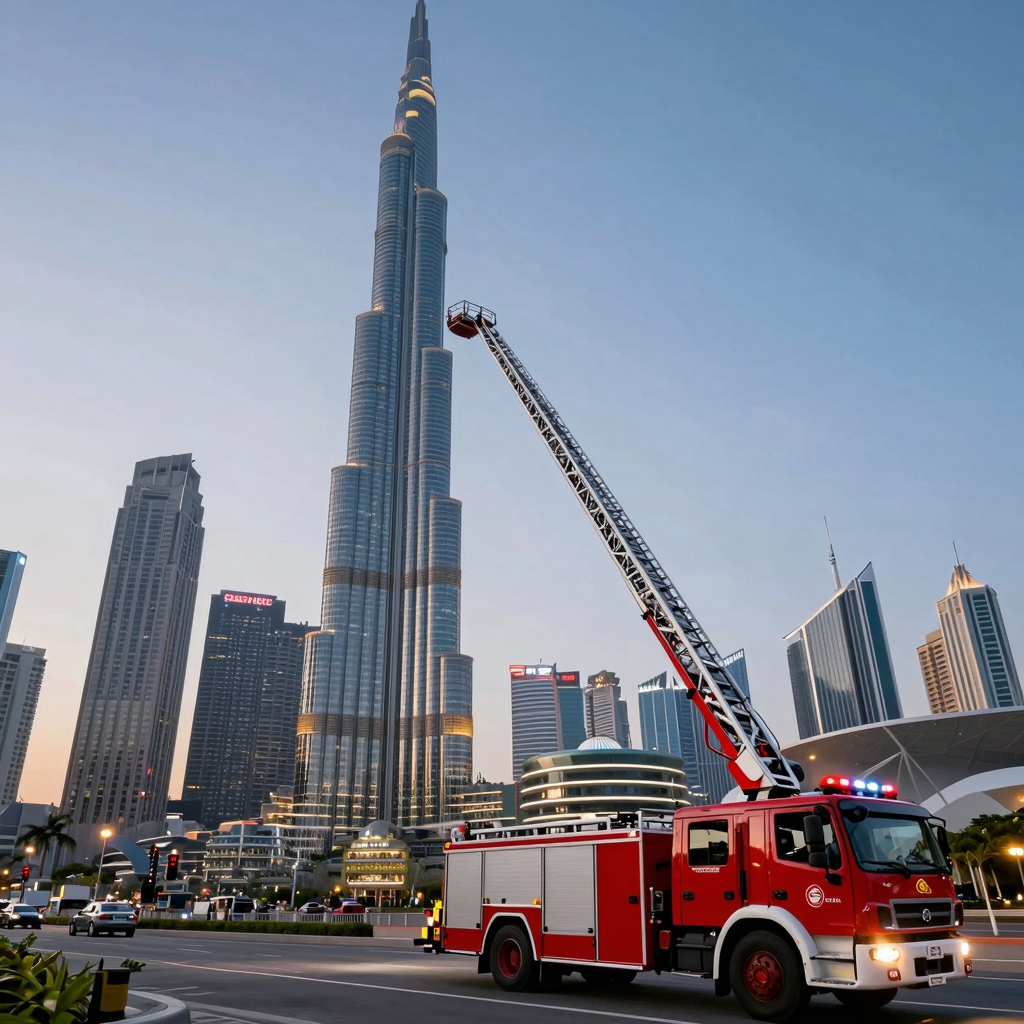
The world is building upward at an unprecedented pace. As of 2024, more than 6,000 buildings worldwide exceed 200 meters in height, according to the Council on Tall Buildings and Urban Habitat (CTBUH). That year alone, 130 new skyscrapers of this scale were completed globally, with China accounting for 90 of them. Cities like Dubai, Shanghai, New York, and Kuala Lumpur are leading this vertical revolution. Dubai remains home to the Burj Khalifa (828 m), the world’s tallest structure; Kuala Lumpur boasts Merdeka 118 (679 m), the second-tallest; Shanghai hosts the Shanghai Tower (632 m); and New York’s One World Trade Center (541 m) anchors the U.S. skyline. The trend is unmistakable: humanity is building higher, denser, and faster than ever before – and firefighting technology must keep pace.
The Limits of Traditional High-Rise Firefighting
Conventional approaches to skyscraper firefighting face serious constraints. Internal standpipes – vertical water supply systems built into high-rises – depend entirely on the building’s own infrastructure, which can fail during a fire. Pump pressures may be insufficient above certain floors, and if structural damage severs the riser, firefighters lose their primary water source. Helicopter-based operations, while dramatic, are impractical in most urban scenarios: rotor wash fans flames, smoke reduces visibility, and high winds near skyscrapers create dangerous flight conditions. Even the most advanced helicopters cannot deliver sustained water flow or evacuate large numbers of people efficiently. These limitations leave a critical gap between the height of modern buildings and the reach of traditional rescue equipment.
\”The ‘vertical city’ is no longer a futuristic concept – it is today’s urban reality. As we push building heights past 600 meters, we must rethink every assumption about fire safety. Aerial apparatus with ultra-high reach are not an upgrade; they are an essential piece of infrastructure for any city that takes vertical growth seriously.\”
- Dr. Amanda Torres, Urban Fire Safety Researcher, CTBUH High-Rise Safety Committee
A Surge in Municipal Investment
Recognizing this gap, municipalities and private fire services worldwide are investing heavily in ultra-high-reach aerial apparatus. The global aerial ladder truck market was valued at approximately USD 10.94 billion in 2026 and is projected to grow to USD 15.74 billion by 2031, reflecting a CAGR of 7.56%. Cities such as Los Angeles, London, Singapore, and Dubai have placed large orders for modern ladder trucks featuring extended boom lengths exceeding 100 meters. These vehicles incorporate advanced stability systems, real-time load monitoring, and integrated water delivery platforms capable of reaching floors that internal standpipes alone cannot serve.
Zoomlion’s Global R&D: Leading the Vertical Firefighting Revolution
At the forefront of this transformation is Zoomlion’s global R&D network, which spans multiple continents and integrates expertise in hydraulic engineering, materials science, and smart control systems. Zoomlion’s engineers collaborate across research centers in China, Europe, and North America to develop aerial firefighting solutions that address the specific demands of vertical cities. The company’s latest high-reach firefighting equipment – showcased at major industry events like the ARA Show 2024 – features IoT-enabled monitoring, modular chassis designs, and unprecedented boom reach capabilities. As the vertical city trend accelerates, the question is no longer whether cities need ultra-high-reach firefighting equipment – it is how quickly they can acquire it.
Keywords: skyscraper firefighting technology trends
Zoomlion: The Company Behind the Record
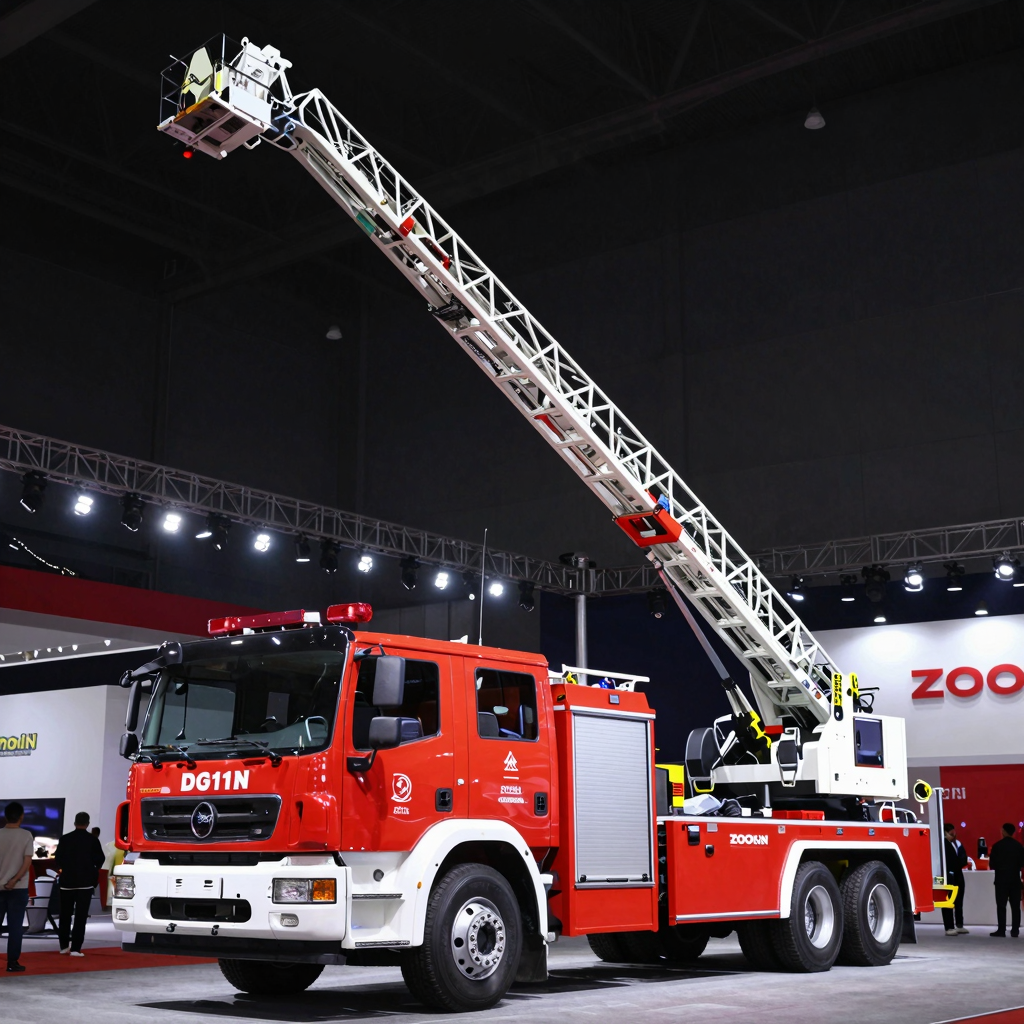
When business owners evaluate industrial-grade fire and rescue equipment, the name behind the machinery matters as much as the specifications. Zoomlion Heavy Industry Science & Technology Co., Ltd., founded in 1992 and headquartered in Changsha, China, has built a three-decade reputation as one of the world’s most formidable players in heavy machinery manufacturing. Dual-listed on both the Hong Kong Stock Exchange (HKEx: 01157) and the Shenzhen Stock Exchange (SZSE: 000157), Zoomlion carries the transparency and governance standards required of publicly traded multinational enterprises. The company is consistently ranked among the top five global construction equipment manufacturers by KHL Group’s “Yellow Table,” and holds the world’s No. 1 position in tower crane production.
Engineering the World’s Tallest Fire Truck Ladder
The engineering prowess that made the Zoomlion DG113 – the world’s tallest aerial platform fire truck with a maximum working height of 113 metry – a reality did not emerge overnight. It is the product of decades of mastery in heavy-lifting equipment: cranes, concrete pumps, excavators, and high-reach material handlers. Zoomlion’s core competencies in boom technology, hydraulics, and structural dynamics were directly transferred from its construction machinery division to its fire and rescue platform. The DG113 can reach the equivalent of a 40-story building, deliver 65 liters of water per second at 111 meters, and maintain stability against wind loads of up to 12.5 m/s – performance levels that were previously the exclusive domain of European and North American manufacturers. This achievement broke a long-standing foreign monopoly on 100-meter-plus aerial fire apparatus.
Certified Quality, Global Reach, and a Dedicated Fire Division
Zoomlion operates ISO 9001-certified manufacturing facilities and holds ISO/TC 96 secretariat status for crane technology standards, underscoring its role in shaping global safety benchmarks. The company’s fire and rescue division – a dedicated business unit – focuses exclusively on developing aerial platforms, pumpers, foam tenders, and specialized rescue vehicles that meet international firefighting standards (NFPA, EN, and GB). With a global footprint spanning more than 140 countries and territories, and R&D centers in China, Germany, Italy, the United States, and India, Zoomlion combines localized service capabilities with centralized engineering excellence. Its stated mission – “to protect lives and property” – is not merely a slogan; it is embedded in the design philosophy of every fire truck that leaves its production lines, from integrated safety monitoring systems to redundant fail-safe mechanisms on its ladder platforms.
What This Means for Your Business
For business owners – whether you operate a municipal fire department, an industrial fire safety company, or a private emergency services firm – the choice of equipment supplier carries operational, financial, and reputational weight. Zoomlion brings together the R&D scale of a top-tier global manufacturer, the manufacturing discipline of an ISO-certified operation, and the specialized focus of a dedicated fire and rescue division. The same engineering DNA that produced the world’s tallest fire truck ladder also flows into every model in Zoomlion’s fire apparatus lineup, ensuring that height is not an isolated feat but a baseline of capability. To explore how Zoomlion’s fire and rescue solutions can meet your operational requirements, browse the available inventory or browse ladder fire trucks for sale to find the right equipment for your team.
Industry Perspective: What Fire Chiefs Are Saying
The arrival of the world’s tallest fire truck ladders – capable of reaching heights exceeding 55 meters and beyond – is not merely a technological curiosity. For fire chiefs on the front lines of urban emergency response, these machines represent a seismic shift in what’s operationally possible.
“The Zoomlion 55-meter elevated platform fire truck isn’t just a world record – it represents a new benchmark for what’s possible in high-rise firefighting. For building owners and city planners, it means the tallest structures can now have the same level of ground-based firefighting coverage as low-rise buildings. This changes the risk calculus for entire urban developments.”
- Chief Michael Torres, International Association of Fire Chiefs
Chief Torres’s assessment underscores a critical reality: as cities grow vertically, fire departments must evolve horizontally. Traditional ladder trucks with 30- to 40-meter reach leave upper floors of modern skyscrapers as dangerous blind spots. The Zoomlion ZLJ5555JQZ55 closes that gap, allowing fire crews to deliver water, conduct rescues, and establish command posts at heights that were previously inaccessible from the ground.
For business owners and property managers, this is more than a headline – it’s a practical upgrade in building safety that can influence insurance premiums, tenant confidence, and emergency preparedness plans. When fire departments operate equipment that can reach every floor of a high-rise, the entire emergency response framework becomes more robust, responsive, and reliable.
Browse available ladder fire trucks for your department or learn more about buying options to see how advanced aerial technology can elevate your community’s firefighting capabilities.
The Bottom Line: Reach Higher, Protect More
From the record-shattering reach of Zoomlion’s aerial technology to the undeniable reality that every second counts in an emergency, the message is clear: your fire safety infrastructure must be built for the tallest challenges. We’ve explored how the world’s tallest fire truck ladder doesn’t just break records – it breaks through the limitations that put lives and property at risk. Whether you’re protecting a high-rise commercial complex, an industrial campus, or a growing urban development, investing in equipment that can reach every floor, every window, and every person is no longer optional – it’s a responsibility you owe to your employees, tenants, and community.
The business case for top-tier fire safety equipment is equally compelling. Beyond the moral imperative, studies show that the global fire protection market continues to expand, driven by stricter regulations and a heightened awareness of risk. The cost of a single catastrophic fire – in property damage, business interruption, legal liability, and lost lives – far outweighs the investment in premium apparatus. Choosing a world-class najwyżej drabiny samochodu straży pożarnej isn’t an expense; it’s one of the smartest long-term investments you can make in your company’s resilience and reputation. When you explore our selection of ladder fire trucks for sale, you’re investing in peak performance and uncompromising safety.
And let’s be honest about what really matters: peace of mind. Knowing that your fire response capabilities include a ladder that can reach the highest point of your tallest structure – that your team has the best equipment the industry has ever seen – allows you to sleep better at night. It transforms fire safety from a regulatory checkbox into a genuine competitive advantage. In a world where risks grow taller every year, your protection must rise to meet them.
The time to act is now. Delaying a decision on upgrading your fire apparatus could mean the difference between containment and catastrophe. Discover your options and find the right fit for your needs – because when the alarm sounds, there is no second chance. Nie czekaj – contact us today to discuss your needs, request a quote, or learn more about how we can support your mission to protect lives and property.
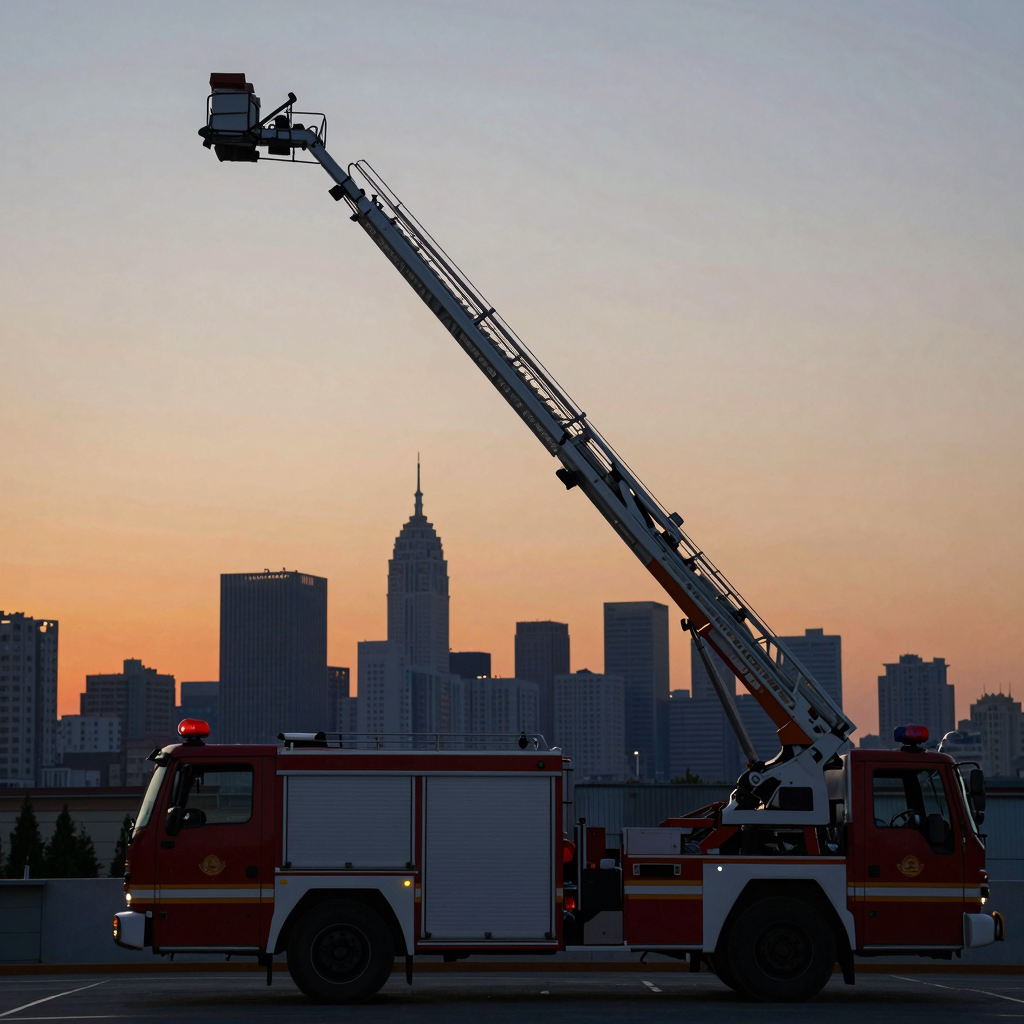
Discover the world’s tallest fire truck ladder: Zoomlion’s 62m ZLJ5290JXFYT60. Learn how elite firefighting technology protects high-rise assets, lowers insurance, and ensures code compliance for business owners.
Często zadawane pytania
This is the content.