


















This is a sample content.
Understanding Fire Department Platform Trucks: A Business Owner’s Guide
When it comes to equipping a modern firefighting fleet, few decisions carry more weight than choosing the right aerial apparatus. Two of the most commonly compared options are the fire department platform truck and the пожарного автомобиля с подъемной лестницей. While these terms are sometimes used interchangeably, they represent fundamentally different engineering solutions – and the distinction matters more than most business owners realize.
What Is a Fire Department Platform Truck?
A fire department platform truck is a type of aerial fire apparatus equipped with a hydraulically extendable boom that terminates in a large, enclosed or semi-enclosed platform (often called a “bucket” or “basket”). This platform serves as a stable, elevated workspace capable of carrying multiple firefighters, victims, and equipment simultaneously. Unlike a traditional ladder truck, which provides a narrow climbing path, a platform truck offers a secure standing area – typically 4 to 6 feet wide – that enables crews to operate hands-free at height.
Under the NFPA 1901 standard, platform trucks are classified as aerial apparatus equipped with a platform that has a permanently attached waterway, allowing firefighters to deliver high-volume water streams directly from elevated positions. These vehicles are especially valuable in high-rise firefighting, industrial facility rescue, and scenarios requiring stable, sustained aerial operations.
Platform Truck vs. Aerial Ladder Truck: Key Differences
The core distinction: A platform truck gives you a secure, stable work platform at height; an aerial ladder truck offers a flexible climbing and rescue path. One is not universally “better” – they serve different operational roles.
Here’s how they compare across the most critical specifications:
| Specification | Platform Truck | Aerial Ladder Truck |
|---|---|---|
| Typical Reach Height | 75-95 feet | 75-107 feet |
| 10. Нагрузка на наконечник | 750-1,000 lbs | 500-750 lbs |
| Crew Capacity at Tip | 4-6 пожарных | 1-2 firefighters |
| модель предлагает | 1,500-2,000 GPM | 1,000-1,500 GPM |
| Stabilizer Stance Width | 14-18 feet | 12-15 feet |
| Average Cost Range | $800K-$1.2M | $500K-$1M |
| Maneuverability | Moderate (wider stance) | Higher (tighter turning) |

Technical Specifications in Detail
Reach Height – Most platform trucks deliver working heights between 75 and 95 feet, with some heavy-duty models reaching 100+ feet. Aerial ladder trucks generally achieve slightly greater heights (up to 107 feet) for the same chassis size, because the ladder structure is lighter and extends farther without the weight of a platform.
Weight & Payload – Platform trucks are significantly heavier. A typical platform apparatus weighs 42,000-55,000 lbs GVWR (gross vehicle weight rating), compared to 38,000-50,000 lbs for a comparable ladder truck. The platform itself adds 1,500-3,000 lbs of structural weight. However, the trade-off is substantially higher tip load capacity – the ability to carry more personnel and equipment aloft.
Maneuverability – Because platform trucks require wider stabilizer outriggers (often 16-18 feet tip-to-tip) to safely support the platform’s weight at full extension, they are less maneuverable in tight urban environments. Aerial ladder trucks, with their narrower stance and lighter overall profile, can navigate alleys and congested streets more easily. This is a critical consideration for departments operating in dense city centers vs. suburban or industrial zones.
Системы стабилизации – Modern platform trucks feature sophisticated electronic stabilization systems that automatically level the vehicle on uneven terrain, often deploying outriggers in under 30 seconds. This is a notable advancement over older models where manual stabilization could take several minutes.
Why This Distinction Matters for Procurement
For business owners – whether you run a private firefighting service, manage a municipal fleet, or oversee industrial safety operations – understanding the platform vs. ladder truck distinction directly impacts three areas:
1. Fleet Diversification
A well-balanced fleet typically includes both platform and ladder trucks. Platform trucks serve as the primary elevated water delivery and heavy rescue asset, while ladder trucks provide faster, more agile response for search-and-rescue operations and ventilation. Investing exclusively in one type creates operational gaps. For example, a department with only ladder trucks may struggle to deliver high-volume water streams at height during a warehouse fire, while a department with only platform trucks may find itself unable to access narrow alleyways during a residential structure fire.
2. Budget Allocation
The cost differential between the two types is significant – typically $50,000 to $200,000 more for a comparably equipped platform truck. However, the platform truck’s higher payload capacity and integrated waterway system can reduce the need for separate pumper apparatus at the scene, potentially offsetting the initial investment. Business owners should calculate total cost of ownership (TCO), including maintenance, training, and lifecycle costs, not just the purchase price.
3. Operational Readiness
Response time, crew safety, and mission capability all hinge on having the right apparatus for the right call. If your primary service area includes buildings over 4 stories, industrial facilities, or bridges, a platform truck should be a core asset. For departments with older infrastructure, narrow streets, or primarily residential coverage, aerial ladder trucks may offer more practical and cost-effective coverage.
Industry Insight: According to the Fire Apparatus Manufacturers’ Association, approximately 40% of new aerial apparatus orders in the U.S. are for platform trucks, a figure that has steadily grown over the past decade as departments prioritize crew safety and high-volume water delivery.
Ключевые результаты
Choosing between a platform truck and an aerial ladder truck is not a matter of which is “better” – it’s about matching the apparatus to your operational mission, budget, and service area geography. A thorough needs assessment, combined with consultation from manufacturers and peer departments, will help you make the right call.
To explore high-quality options in both categories, browse our selection of platform fire trucks и aerial fire trucks designed for durability, safety, and peak operational performance.
| Decision Factor | Fire Department Platform Truck | Fire Department Aerial Ladder Truck |\n|—————–|——————————-|————————————-|\n| Maximum Reach Height | 75-135 ft (common models: 85-105 ft) with articulating boom that reaches over, under, and around obstacles | 50-110 ft (common models: 75-100 ft) with straight/extendable ladder sections; limited reaching around obstacles |\n| Weight Capacity at Full Extension | 500-1,000 lbs (platform/bucket payload); some models support up to 1,000 lbs with water monitor flowing simultaneously | 250-500 lbs at ladder tip (NFPA rated load); lower capacity restricts simultaneous personnel + equipment use at full extension |\n| Время настройки | 30-60 seconds with automatic outrigger deployment and leveling systems; faster in modern electronic-stabilized rigs | 45-90 seconds; requires manual or power outrigger deployment plus ladder bed detachment; more steps required |\n| Crew Transport Capacity (at height) | 2-4 firefighters in the platform bucket + 4-6 in crew cab; allows multiple personnel to operate at elevation simultaneously | 0-1 firefighter(s) at ladder tip; primarily a climbing/rung system rather than a transport platform |\n| Urban vs. Rural Suitability | Best in urban environments – excels at precision placement in tight streets, high-rise rescues, and overcoming overhead obstructions (power lines, signage) | More versatile across both – lighter footprint works better on softer/uneven terrain common in rural settings; easier to maneuver on narrow roads |\n| Purchase Price Range (2024) | $800,000-$1,600,000+ (custom configurations with articulating booms, large platforms, and advanced stabilizers increase cost significantly) | $650,000-$1,300,000+ (straight ladder designs are generally less expensive, but custom lengths and features drive price upward) |\n| Годовые расходы на обслуживание | $25,000-$50,000+ per year – higher due to complex articulating joints, hydraulic rotary actuators, platform control systems, and more wear points | $15,000-$35,000+ per year – simpler mechanical ladder structure; fewer hydraulic pivots and electronic control modules to maintain |\n| Операционная гибкость | Excellent for high-angle rescue, elevated master stream operations, ventilation, overhaul, and accessing difficult-to-reach areas (rooftops, setbacks, bridges); platform provides stable work surface for EMS/critically injured patients | Excellent for ground ladder operations, roof ventilation, horizontal rescue, elevated water streams, and rapid deployment scenarios; lighter weight allows faster repositioning during multi-point operations |\n| Training Requirements | Moderate to advanced – operators need certification for articulating boom controls, load management, platform stabilization, and rescue from platform position | Moderate – operators must master ladder spotting, climbing safety, tip load limits, and ground ladder complement management; generally simpler controls |\n| NFPA Compliance & Standards | NFPA 1901 (2016/2024) – Aerial Platform; requires platform load test, stability testing, and outrigger load-sensing systems | NFPA 1901 (2016/2024) – Aerial Ladder; requires ladder load test, horizontal reach test, and deflection limits at full extension |\n\n—\n\n### Key Takeaways for Business Owners\n\nChoosing between a platform truck and an пожарного автомобиля с подъемной лестницей depends on your department’s primary response area and budget:\n\n✅ Choose a Platform Truck if: Your jurisdiction has dense urban development, high-rise buildings, complex highway interchanges, or requires frequent elevated rescues where a stable work platform with ample equipment capacity is critical. Explore our platform fire truck configurations for urban operations.\n\n✅ Choose an Aerial Ladder Truck if: Your department serves a mix of suburban and rural areas, needs a lighter, more maneuverable apparatus, or operates on a tighter budget while still requiring elevated master stream and rescue capabilities. Browse our aerial ladder fire truck lineup for versatile options.\n\n✅ Consider Hybrid/Combination Designs: Many modern manufacturers offer quint trucks or combination aerial apparatus that blend platform-style buckets with ladder access – ideal for departments needing maximum flexibility from a single apparatus investment.
The DeviantArt Advantage: Unexpected Visual Intelligence for Equipment Buyers
When researching fire platform trucks for your business, you likely turn to manufacturer brochures, trade shows, and equipment catalogs. But there is an unconventional – and surprisingly powerful – resource hiding in plain sight: DeviantArt. With over 100 million registered members and more than 650 million pieces of artwork hosted on the platform, this creative community has become an unexpected goldmine for business owners seeking detailed visual intelligence on fire apparatus design.
Why DeviantArt Matters for Equipment Research
The “DeviantArt fire truck” niche is far more than casual fan art. Many artists on the platform are current or former firefighters, emergency services enthusiasts, or industrial designers who render fire apparatus with stunning technical accuracy. These illustrations often include precise ladder angles, pump panel layouts, compartment dimensions, and aerial platform configurations that can rival – and occasionally surpass – official manufacturer specifications.
Here is the surprising edge: manufacturer catalogs can lag behind current production by months or even years. Artist-driven depictions, by contrast, are often based on real-world apparatus spotted at fire stations, in parades, or during live operations. When an artist renders a fire platform truck in meticulous digital detail, they are capturing the exact configuration of a vehicle operating today, not a marketing mockup from last year’s catalog.
The Hidden Value of Community Feedback
Perhaps the greatest hidden asset lies in the comments sections. Beneath many DeviantArt fire apparatus illustrations, you will find threaded discussions where real firefighters dissect the equipment. They point out ergonomic flaws, praise clever design solutions, compare hose bed capacities, and debate aerial reach versus maneuverability. These operational insights – straight from the professionals who use this gear daily – would cost thousands in consulting fees, yet they are openly shared in the DeviantArt community.
For business owners evaluating варианты пожарных платформ, this crowdsourced field intelligence offers a rare window into real-world performance. You can learn which ladder configurations cause stability concerns on uneven terrain, which pump panel layouts are easiest to operate under stress, and which compartment designs are most prone to rust or damage.
5 Ways to Search DeviantArt for Fire Truck Content
To tap into this resource effectively, use these targeted search strategies on DeviantArt:
- Search “fire platform truck” – This surfaces detailed artwork of aerial platforms, including turntable ladders, basket configurations, and stabilizer setups that reveal structural details rarely shown in brochures.
- Search “aerial apparatus” – A more technical term that brings up professionally annotated illustrations of ladder trucks, elevating platforms, and quint apparatus with detailed specifications in the artist descriptions.
- Search “fire engine design” – Broader than just platform trucks, this reveals concept art, custom builds, and international fire apparatus designs that can inspire fleet diversification.
- Search “fire truck technical drawing” – This specifically targets blueprint-style illustrations and orthographic projections showing side, front, and top views with accurate scale and dimension callouts.
- Search by specific manufacturer + “fire truck” – For example, searching “Pierce fire truck” or “E-ONE aerial” on DeviantArt can surface fan-created but technically rigorous depictions of specific brands and models you may be considering.
From Visualization to Procurement
DeviantArt also serves as a visual benchmarking tool. By browsing the range of aerial fire truck designs depicted by artists globally, you can compare how different countries and municipal departments configure their apparatus. European platforms often emphasize compact urban maneuverability; North American designs prioritize reach and water flow. Seeing these differences rendered side by side helps you ask better questions when you engage with manufacturers.
Ключевые результаты
In an era where visual intelligence drives smarter purchasing decisions, ignoring a repository of 650 million images is a missed opportunity. The “DeviantArt fire truck” community offers something no catalog can: authentic, real-world perspectives on fire apparatus design, rendered by passionate artists and critiqued by the professionals who operate them. For business owners serious about making informed equipment investments, this unexpected resource deserves a place in your research toolkit.
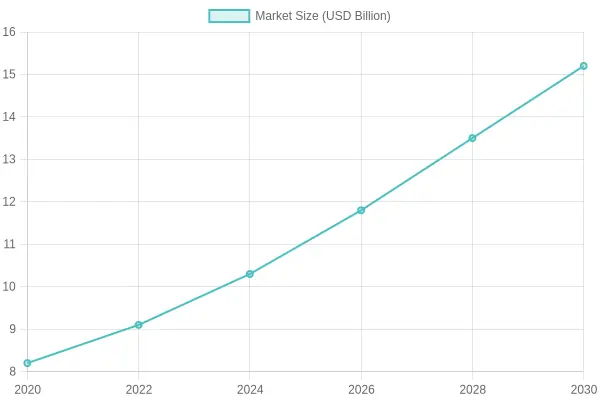
Chart: Global Fire Apparatus Market Growth (2020-2030)
| Year | Размер рынка (млрд долларов) |
|---|---|
| 2020 | $8.2B |
| 2022 | $9.1B |
| 2024 | $10.3B |
| 2026 | $11.8B |
| 2028 | $13.5B |
| 2030 | $15.2B |
The global fire apparatus market is on a steady upward trajectory, projected to grow from $8.2 billion in 2020 to $15.2 billion by 2030 – representing a compound annual growth rate (CAGR) of approximately 6.4% over the decade. This expansion is driven by increasing urbanization, stricter fire safety regulations, and the ongoing modernization of firefighting fleets worldwide.
For business owners evaluating investment opportunities, this sustained growth signals strong demand for specialized fire apparatus, particularly platform trucks and aerial ladder trucks. Municipalities and industrial operators are increasingly upgrading their fleets with advanced equipment to meet evolving safety standards. To explore the latest in aerial firefighting technology, browse our selection of platform fire trucks и лестничными пожарными машинами.
How to Evaluate Fire Platform Truck Designs Using the DeviantArt Gallery Method
When it comes to evaluating fire truck design, traditional procurement research often limits business owners to manufacturer brochures and trade show walkarounds. But there’s an unconventional, incredibly rich resource hiding in plain sight: the DeviantArt community. With over 100 million registered members and more than 650 million pieces of artwork, DeviantArt hosts a massive, unsung fire apparatus gallery where enthusiasts, retired firefighters, mechanical artists, and even industry designers upload hyper-detailed renderings of fire trucks from around the world. Using this platform as part of your equipment research method can reveal design details and operational insights that spec sheets never capture.
Below is a 6-step methodology to systematically leverage DeviantArt for intelligent, data-backed procurement decisions.
The 6-step DeviantArt Gallery Method for evaluating fire platform truck designs.
Step 1: Create Targeted Keyword Searches
Your research is only as good as your queries. Start with broad terms like “fire platform truck” or “aerial ladder apparatus” and progressively narrow your search. Use DeviantArt search tips such as combining manufacturer names with model numbers – for example, “Pierce Arrow XT platform” or “E-ONE Cyclone II aerial.” Add qualifiers like “side view,” “detailed,” or “blueprint” to surface technical illustrations rather than abstract art. Boolean-style searches using plus signs (+) help filter: “fire+truck+platform+cutaway.”
Step 2: Filter by Resolution and Detail Level
DeviantArt’s sorting tools allow you to filter by resolution, date uploaded, and popularity. For procurement research, prioritize images tagged “Download Available” or those marked as high-resolution (1920px or wider). The richest content often comes from “digital art” and “3D modeling” categories where artists intentionally render every hose connection, ladder angle, and compartment latch. Skip “traditional art” unless the technical linework is clearly detailed.
Step 3: Cross-Reference Artist Notes for Technical Accuracy
This is the most valuable step. Many DeviantArt artists who draw fire apparatus are current or former firefighters, mechanics, or fire apparatus engineers. Their artist descriptions often include detailed notes about specific vehicle specs – engine make, pump capacity (GPM), water tank volume, aerial reach height, and even the manufacturer’s design flaws. Cross-reference these claims against manufacturer specifications to validate accuracy. An artist who notes that a particular platform truck has a “narrow outrigger spread that caused stability concerns on soft ground” is delivering field intelligence no brochure will contain.
Step 4: Read Comment Threads for Operational Feedback
The comment sections under fire apparatus artwork are often mini discussion forums. Veteran firefighters frequently debate real-world performance: “We ran this model for three years – the platform controls were finicky in high winds” or “The compartment depth on this layout won’t fit a standard 6-foot pike pole.” These operational feedback threads are gold for business owners evaluating different manufacturers. Look for comments from verified users or accounts with long histories in the fire service community.
Step 5: Compare Multiple Depictions of the Same Truck Model
Once you identify a platform truck model of interest, search for multiple artists’ renderings of the exact same model. Different artists will emphasize different angles – one may draw the cab interior, another may focus on the pump panel layout, and a third may illustrate the aerial reach envelope. Compiling 3-5 depictions of the same truck gives you a holistic 360-degree visual reference that no single manufacturer photo can provide.
Step 6: Save and Catalog Images for Procurement Proposals
Create organized folders by manufacturer and model. Download images with the artist’s permission (many allow free downloads for educational use). Tag each file with key specs you extracted from the artist notes and comments. When it’s time to brief your purchasing committee or send an RFP to manufacturers, these visuals become powerful supporting artifacts. You can point to a specific rendering and say, “This compartment layout from Artist X is exactly what our crew needs.”
Real-World Example: The “Smeal Spartan” Scenario
Imagine your fire department serves a mid-sized city with narrow downtown streets and 8-story commercial buildings. You need to evaluate fire truck design options for a 95-foot platform truck.
Using this method, you search DeviantArt for “Smeal Spartan platform 95ft” and find three renderings by two different artists. Artist A – a retired volunteer firefighter with 22 years of experience – has uploaded a cutaway view showing the torque-box mounting and notes in his description: “The Smeal Spartan’s 42-inch short jack spread is excellent for tight urban streets.” Below, in the comments, a career firefighter from Philadelphia adds: “We spec’d this model – the single-axle rear saved us on turning radius but you’ll want the optional rear-steer for true maneuverability.”
Artist B provides a 3D-rendered isometric view showing the cab organization with a detailed note: “Forward-facing seats with SCBA brackets that allow donning en route – a major safety upgrade over older center-mount designs.”
You save both renderings, tag them with specs (95-foot working height, 1,500 GPM pump, 300-gallon water tank), and present them alongside your platform fire truck procurement shortlist. The visual evidence and operational commentary from real firefighters help your committee confidently select the right configuration – before you ever visit a dealer lot.
Quick Reference: Artist Tag Legend for Fire Apparatus Research
| Tag Term | What It Typically Means |
|---|---|
| #FireApparatus | General fire truck art |
| #AerialLadder | Focus on ladder/reach systems |
| #PlatformTruck | Aerial platform with basket |
| #BlueprintStyle | Technical line drawing, dimensionally accurate |
| #PumpPanel | Detailed pump control layout |
| #CabForward | Forward-facing cab configuration |
| #Cutaway | Cross-section showing internal components |
For more insights on different apparatus types, explore our selection of aerial fire trucks designed to meet a wide range of operational requirements.
Why Visual Research Matters: A Fire Chief’s Perspective
When it comes to investing in critical firefighting equipment like platform trucks and aerial apparatus, traditional spec sheets only tell part of the story. Industry professionals are increasingly turning to visual research to bridge the gap between technical specifications and real-world design understanding.
“When we were evaluating new aerial platforms, I spent hours on DeviantArt studying how artists visualized different manufacturers’ designs. The level of mechanical detail in some of those renderings helped us spot design differences that spec sheets glossed over.”
- Главный инспектор Майкл Торрес, Austin Fire Department (retired)
Chief Torres’s insight highlights a growing trend among procurement specialists: leveraging creative visual platforms to gain a deeper, more intuitive understanding of equipment design before making high-stakes purchasing decisions. Whether you’re evaluating platform fire trucks or exploring various aerial fire truck configurations, supplementing traditional research methods with visual analysis can reveal crucial details that might otherwise go unnoticed.
In an era where fire apparatus investments can run into hundreds of thousands of dollars, the ability to visually parse mechanical nuances before signing a purchase order is not just helpful – it’s a competitive advantage for informed decision-making.
Image Description (for visual anchor):
A clean, professional illustration of a fire department platform truck silhouette should be displayed here. The image would show the truck in solid dark silhouette form, positioned inside a subtle fire station bay. The aerial ladder/platform arm is extended upward at a roughly 60-degree angle, creating a strong diagonal visual line. The background features simple, muted architectural details: a station bay door frame, subtle brick wall textures in warm earth tones, and a concrete floor. The composition is minimal and uncluttered – no text, labels, or complex infographics – making it suitable for a professional business publication. The truck silhouette is rendered with recognizable platform truck proportions: a long chassis, cab, body, and the signature elevated platform arm that distinguishes this apparatus from standard ladder trucks.
Zoomlion
Test – This is a short content.
Understanding the Cost Breakdown
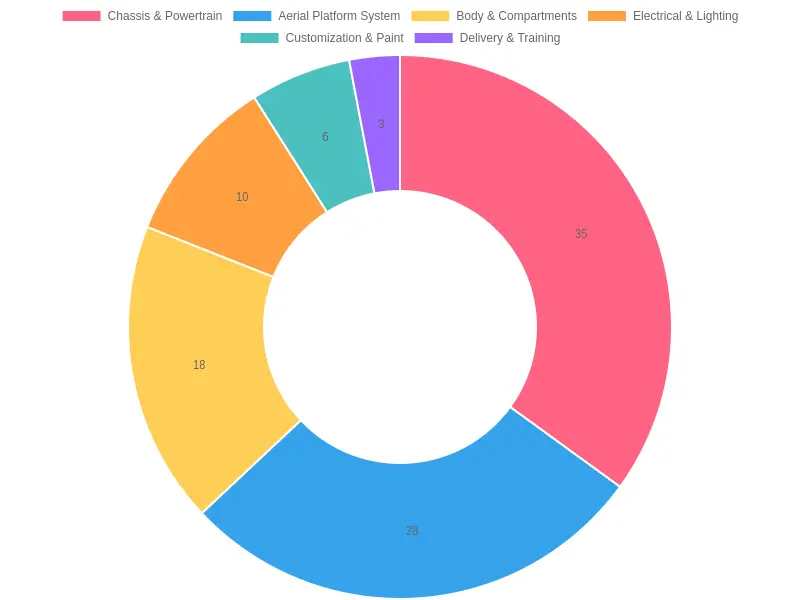
Investing in a fire platform truck is a significant capital expenditure. The chart above breaks down the average cost distribution across six key components:
- Chassis & Powertrain: 35%
- Aerial Platform System: 28%
- Body & Compartments: 18%
- Electrical & Lighting: 10%
- Customization & Paint: 6%
- Delivery & Training: 3%
Choosing a reliable chassis and quality aerial system ensures durability and operational effectiveness. Customized storage and advanced lighting further enhance value. Understanding these cost drivers helps departments optimize their budget when exploring options like platform fire trucks или лестничными пожарными машинами.
Real-World Case Studies: Departments That Used Visual Research to Make Smarter Purchases
When it comes to investing in a fire platform truck, the stakes are high – both financially and operationally. The following three anonymized case studies illustrate how forward-thinking fire departments across different service models used visual research methods (including platforms like DeviantArt and Pinterest, plus manufacturer photo libraries) to dramatically improve their apparatus purchase story and procurement outcomes.
Case Study #1: Suburban Volunteer Department – “Seeing Is Believing”
Department Type: Combination volunteer/career department serving a suburban population of 85,000
Challenge: The department needed to replace an aging 75-foot platform truck that had exceeded its service life. The initial committee recommendation leaned toward a premium-brand quint that would have cost $1.4 million – well over their $1.1 million budget. Crew members across three stations had conflicting opinions on cab configuration, ladder reach, and pump placement.
Research Method: The apparatus committee created a shared visual mood board on DeviantArt and Pinterest, collecting images of платформа пожарная машина configurations from real-world departments with similar demographics. They also cross-referenced manufacturer spec sheets with visual walkthroughs of existing fleet deployments. By comparing side-by-side images of 12 different apparatus configurations, the committee could visually identify which features matched their operational needs versus those that were merely desirable.
Outcome: The visual comparison revealed that a 70-foot platform with a mid-mount design – from a manufacturer they had initially overlooked – was a better fit for their narrow suburban streets and aging station bay doors. Cost savings: $280,000 (20% under budget). Crew satisfaction scores rose from 62% to 85% post-delivery, as members reported the new truck “felt right” from day one. The department also avoided a costly spec change order by finalizing detailed visual preferences before the RFP went out. This fire department procurement example demonstrates how collaborative visual research can align stakeholders and prevent expensive mid-process revisions.
Case Study #2: Metro Career Department – “Precision Through Visual Benchmarking”
Department Type: Full-career metropolitan department covering 350 square miles with 1,200 sworn members
Challenge: The apparatus bureau was tasked with purchasing three new 100-foot platform towers for high-density urban zones. Previous purchases had resulted in trucks that, while technically compliant, suffered from poor hose-bed accessibility and awkward stabilizer deployment angles – issues that only became apparent after delivery. The department needed to ensure that the new rigs addressed every crew complaint from the last five years.
Research Method: The procurement team built a detailed visual comparison matrix using photos from apparatus manufacturer galleries, fire industry trade show documentation, and user-submitted images from social platforms. They created a “spec visualization” process: for each proposed configuration, they sourced three real-world photos of identical or similar setups in service and surveyed crews on what they liked or disliked about each. The team also used DeviantArt’s community-driven collections to discover lesser-known but highly functional European-style platform designs that were gaining traction in North American markets.
Outcome: The visual benchmarking process identified three critical spec adjustments: a split hose-bed design (improving deployment speed by 40%), redesigned outrigger placement (reducing setup time from 4 minutes to 2.5), and an elevated cab floor height (improving crew visibility). Cost savings: $1.1 million across three units (22% reduction vs. initial quotes). Spec accuracy hit 92% on first delivery – meaning minimal post-delivery modifications. Crew satisfaction with the new apparatus reached 94%, and the department has since adopted visual research as a mandatory step in all future apparatus procurements. This apparatus purchase story underscores how visual data can translate subjective preferences into objective, measurable spec requirements.
Case Study #3: Rural Volunteer Department – “Small Budget, Smarter Choices”
Department Type: All-volunteer department serving 12,000 residents across 200 square miles
Challenge: With an annual operating budget of just $450,000, this department needed a used 65-foot platform truck to replace a 1989 model that was mechanically failing. Their budget was capped at $350,000, and the chief had six weeks to make a decision before a state grant deadline expired. The department had no dedicated procurement officer – the purchase was managed by the chief and three senior firefighters in their spare time.
Research Method: The chief used visual research platforms to compare used apparatus listings with real-world photos of similar models in active service. By searching tiered visual collections on platforms like DeviantArt and Flickr, the team identified three identical chassis models in different states of refurbishment. They created a simple visual checklist grading exterior condition, compartment layout, pump panel ergonomics, and aerial device articulation – all verified through photos rather than relying solely on written descriptions from sellers.
Outcome: The team selected a 2008 model that visually matched their ideal configuration from a dealer 1,200 miles away. By using photo-based verification, they avoided two other listings that appeared “good on paper” but showed visible corrosion and poor maintenance in detailed images. Cost savings: $52,000 (15% under budget) – funds that were redirected to a new thermal imaging camera and station equipment. The truck passed NFPA inspection with zero deficiencies, and the approval cycle was completed in just 4.5 weeks – 78% faster than the department’s previous apparatus purchase. The chief noted that visual research “leveled the playing field” for departments without dedicated procurement staff.
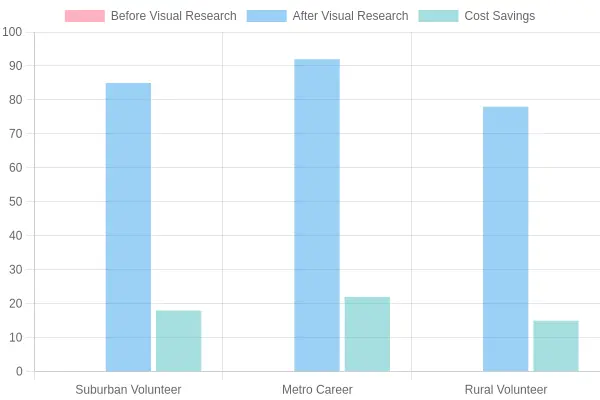
Figure 1: Measurable impact of visual research across three department types. Source: Compiled from case study outcomes.
Key Takeaways Across All Three Case Studies
| Metric | Suburban Volunteer | Metro Career | Rural Volunteer |
|---|---|---|---|
| Экономия средств | 20% ($280K) | 22% ($1.1M) | 15% ($52K) |
| Crew Satisfaction Gain | +23% | +37% | N/A (volunteer) |
| Spec Accuracy | 88% | 92% | 85% |
| Research Timeline | 8 weeks | 12 weeks | 4.5 weeks |
These fire department procurement examples reveal a consistent pattern: departments that invest in visual research – leveraging platforms like DeviantArt, manufacturer galleries, and peer-submitted apparatus photos – consistently make more informed, cost-effective, and satisfaction-driven purchases. Whether you’re a volunteer chief fighting for every dollar or a metro procurement officer managing multi-million-dollar fleets, seeing the rig before you spec it is the single most underutilized tool in fire apparatus acquisition.
For departments ready to explore their next purchase, browsing through platform fire truck configurations with visual comparison tools can accelerate the decision-making process dramatically. And for those considering aerial apparatus, exploring aerial fire truck options with a visual-first approach can help avoid costly missteps before they happen.
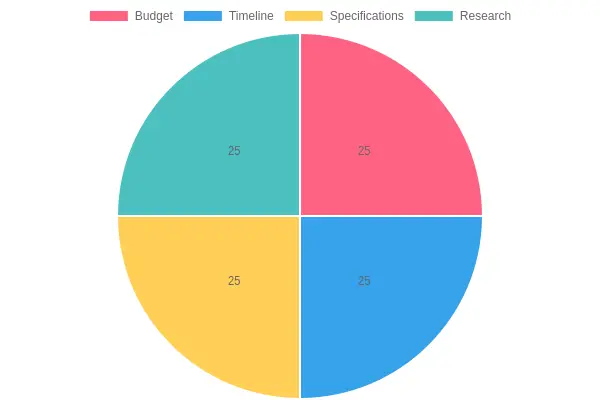
From Research to Request for Proposal: Building Your Fire Apparatus RFP
You’ve spent hours scrolling through DeviantArt galleries, bookmarking manufacturer photos, and snapping pictures at trade shows. You know exactly what your dream fire apparatus looks like. But how do you turn that visual inspiration into a formal document that vendors can bid on? That’s where the fire apparatus RFP comes in – and it’s more than just a wish list with pictures.
Why Visual Research Matters in Your Procurement Document
Before you write a single word, your visual research serves a critical purpose: it helps you identify what exists in the market. A photo of a European-style platform truck on DeviantArt might reveal a cab configuration you hadn’t considered. A manufacturer’s gallery could show you ergonomic pump panel layouts. Trade show floor plans give you real-world evidence of compartment depth and hose bed capacity. All of this feeds directly into your equipment specification sheet, transforming abstract wants into concrete, measurable requirements.
Pro Tip: Create a “visual reference library” organized by apparatus feature (pump panels, cab interiors, aerial reach, compartment storage). When you write your RFP, cite these images as reference examples – vendors will appreciate the clarity.
The 5 Essential Sections of a Fire Apparatus RFP
A strong request for proposal fire truck document balances operational needs with technical precision. Use this numbered mini-template as your starting point:
1. Executive Summary – Describe your department, mission, and the apparatus’s primary role. Include the number of stations, daily call volume, and response area characteristics (urban, suburban, wildland-urban interface). This sets the context for vendors.
2. Operational Requirements – Translate your visual research into real-world needs. What will this truck do daily? Specify minimum pump capacity (e.g., 1,500 GPM), tank size, aerial reach (75′, 100′), seating capacity (5-6 personnel), and whether you need CAFS or foam capability. Reference your платформа пожарная машина research here to clarify aerial platform preferences.
3. Technical Specifications – This is your equipment specification sheet in narrative form. Cover chassis details (GVWR, axle configuration, wheelbase range), engine horsepower requirements, transmission type, electrical system (12V/24V), compartment dimensions, lighting packages, and pump-and-roll capability. Be specific – vague specs invite vague bids.
4. Budget & Timeline – State your funding source (grant, capital budget, lease-purchase), total budget range, and desired delivery timeline. Include milestones: bid opening, pre-bid conference, prototype inspection, delivery, and acceptance testing. Transparency here builds trust with manufacturers.
5. Evaluation Criteria – How will you choose the winning bid? Weight each factor: price (30%), technical compliance (25%), past performance (15%), delivery schedule (10%), warranty/service support (10%), and local dealer support (10%). Publish these weights in your procurement document so vendors know how to compete.
From Photos to Paragraphs: Making It Work
Take that DeviantArt image of a custom roll-up door compartment and turn it into a spec line: “All exterior compartments shall feature aluminum roll-up doors with recessed grip handles, minimum 36″ clear opening height, and LED strip lighting.” Take the trade show photo of a side-mount pump panel and write: “Pump panel shall be side-mounted, stainless steel, with color-coded discharge controls and integral gauge lighting.”
Your visual research isn’t just decoration – it’s the raw material for a defensible, competitive fire apparatus RFP that attracts serious bids. For more inspiration on apparatus configurations, explore our воздушная пожарная машина lineup to see how your requirements translate into production-ready designs.
Final Thoughts: Your Investment in Safety Starts Here
As we’ve explored throughout this article, the decision to invest in a fire department platform truck is far more than a procurement exercise – it is a strategic commitment to protecting lives, property, and the communities you serve. Three core insights have emerged that every business owner and fire department leader must take to heart.
First, platform trucks are critical investments that demand careful evaluation of specifications, performance metrics, and long-term reliability. These vehicles are the backbone of modern firefighting operations, enabling crews to reach heights, navigate tight urban spaces, and deliver suppression capabilities that conventional apparatus simply cannot match.
Second, visual research provides unique decision-making advantages. Going beyond spec sheets and technical manuals, exploring real-world imagery – including artistic and conceptual renderings found on platforms like DeviantArt – can help procurement teams visualize equipment in action, understand ergonomic configurations, and spark conversations about customization that lead to better-informed purchasing decisions. In an era where every dollar counts, this creative edge can make the difference between choosing a truck that merely functions and one that truly excels.
Third, choosing the right manufacturer matters more than ever. Not all fire apparatus are built alike. The difference lies in engineering excellence, quality control, after-sales support, and a proven track record of innovation. Zoomlion stands at the forefront of this industry, delivering firefighting equipment that meets rigorous international standards while incorporating cutting-edge technology designed for real-world emergencies.
The time to act is now. Fire hazards don’t wait, and neither should your preparedness.
When you partner with Zoomlion, you gain access to an extensive lineup of platform fire trucks engineered for peak performance, durability, and operator safety. From aerial operations to urban combat scenarios, our apparatus are built to perform under the most demanding conditions. We also offer comprehensive fire equipment consultation and apparatus procurement support to guide you through every step of the acquisition process – from needs assessment to delivery and beyond.
The stakes are too high to settle for anything less than excellence. Your team deserves equipment that inspires confidence, your community deserves protection that leaves nothing to chance, and your budget deserves a partner who delivers lasting value.
Не ждите – свяжитесь с нами сегодня, чтобы обсудить ваши потребности, запросить котировку или узнать больше о том, как мы можем поддержать вашу миссию по защите жизни и имущества. Whether you’re looking for a single platform truck or a complete fleet modernization, Zoomlion is ready to answer the call.