


















The demand for effective firefighting solutions has never been more critical, particularly as urban development continues to rise. Among these solutions, aerial fire trucks are invaluable for tackling high-rise structure fires and ensuring community safety. This article delves into the landscape of factory price used aerial fire trucks, highlighting their economic viability, technological advancements, and the societal implications of their usage. Each chapter explores these aspects, providing business owners with essential insights to navigate the purchasing process strategically.
Boons, Burdens, and the Price of Reach: The Economics of Factory-Price Used Aerial Fire Trucks for Sale

The economics of procurement for aerial firefighting apparatus sits at a challenging crossroads where capability, risk, and budget collide. In cities that keep growing upward and in regions that push for rapid urban development, the demand for high-reach rescue and firefighting capability remains persistent. Yet the capital outlay required for a brand-new aerial platform can be substantial, even when financing options are considered. Against this backdrop, a market for factory-price used aerial fire trucks emerges as a pragmatic answer for many buyers. The term factory price is not merely a marketing label; it signals a direct or near-direct pricing channel that often results in lower sticker prices and shorter paths to ownership. Buyers who operate under tight budget constraints, or who must upgrade quickly to meet evolving risk profiles, find that a carefully selected used unit can deliver the essential reach and pumping capacity without the premium typically associated with new equipment. The decision to pursue a used unit at factory price is rarely about chasing the newest gadgetry alone. It is about balancing reach, reliability, and total cost of ownership in a way that aligns with a department’s strategic objectives and its community’s safety needs. In this sense, the used market serves as a bridge—an affordable entry point for lifesaving capability that can be refreshed or upgraded over time as budgets permit and as service networks stabilize. The essence of this chapter is not a celebration of low prices alone but a synthesis of price signals, operating realities, and the practical pathways buyers navigate to turn a depreciated asset into a dependable instrument of public safety.
From Ground to Skyline: Reimagining Firefighting with Factory-Price Used Aerial Trucks
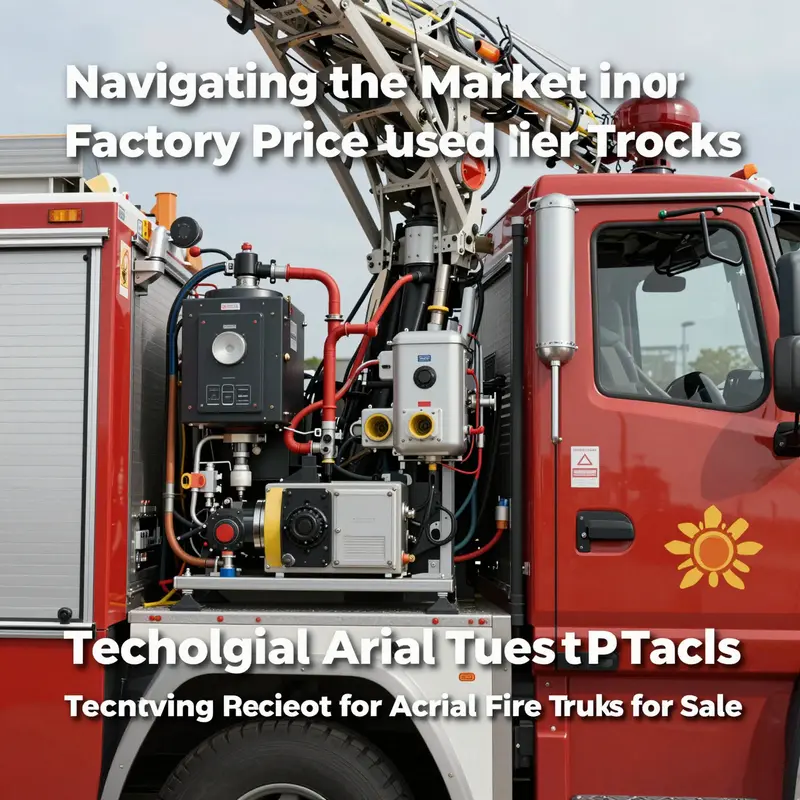
The market for factory-price used aerial fire trucks sits at an intersection of discipline and possibility. Firefighting fleets must respond with speed, reach, and reliability, yet budgets constrain the purchase of brand-new equipment. That tension creates a space where carefully selected, pre-owned aerial platforms can deliver performance that meets contemporary standards without the premium price tag of a factory-fresh unit. In this space, the true value of a used aerial fire truck is less about its age and more about its condition, its suitability for the city or industrial environment it will serve, and the sophistication of the technology that remains functional and upgradeable. It is a narrative of modernization through economical means, where the latest design concepts and safety features migrate into second-hand frames, driven by the same demand that pushes new models toward ever greater reach, versatility, and resilience.
To understand why these machines can be so compelling, it helps to look at how the trade operates beyond the surface price. The core appeal is straightforward: a lower initial outlay, a swifter path to deployment, and the opportunity to balance a fleet’s entire lifecycle through selective investment. Yet the practicality requires more than a cursory glance at sticker prices. Fire departments and emergency services teams must evaluate condition histories, maintenance records, and the real-world wear patterns that accumulate over thousands of hours in the field. The seemingly simple equation—buy a used unit and deploy it—becomes a careful calculus once one recognizes how modern aerial platforms differ from their ancestors. The most compelling used units today are not mere relics of earlier eras but vehicles that have benefited from continuous engineering refinements, the adoption of robust digital control concepts, and the integration of safety systems designed to translate high performance into consistently safer operations.
The market environment itself reinforces this logic. Global procurement platforms and regional distributors connect buyers with a spectrum of used aerial platforms, spanning older configurations that still deliver essential capabilities to near-new pre-owned models with less than a decade of service. The price spectrum is wide, and that is not merely a reflection of brand prestige or geographic location. It mirrors the underlying condition, the extent of modernization, and the degree to which the platform can be entrusted with complex rescue tasks in challenging urban landscapes. In practical terms, a used unit may range from modest sums to seven-figure investments, depending on reach, lifting capacity, stabilization systems, and the extent to which digital controls and smart components have been incorporated or upgraded. The dramatic spread is not a flaw but a signal of a market that recognizes how to blend value with capability.
What matters when a department evaluates a potential purchase is the alignment between a unit’s technical profile and its operational needs. A modern aerial platform used in a dense urban environment is not simply a tall ladder with a bucket at the end. It is a hydraulically driven extension of the platform officer’s decision-making, equipped with a blend of mechanical robustness and sensor-driven safety features that aid in precise positioning, stabilize the chassis on uneven terrain, and monitor the system’s performance in real time. The chassis, booms, and control systems are tested for structural integrity, while the hydraulic circuits, pumps, and manifolds are assessed for wear and efficiency. It is not unusual to find that high-mileage units have benefited from remanufactured or upgraded hydraulic components, or that they were rebuilt to preserve the core articulations that matter most during a high-rise rescue scenario. In other words, the value of a used platform comes to life through the combination of enduring mechanical design and the selective application of modern enhancements.
From a sourcing perspective, buyers frequently encounter two practical pathways. One involves engaging directly with manufacturers that also handle refurbished or certified-pre-owned programs. The other path runs through broad B2B marketplaces where verified suppliers list used aerial platforms with documented usage histories and, in many cases, post-sale support. Each channel has its own cadence and risk profile. Direct manufacturer programs often bring a higher level of assurance regarding refurbishment quality, but they can come with longer lead times and, at times, higher price points. Marketplaces offer more price flexibility and faster access but demand rigorous due diligence. The common denominator in both channels is transparency: detailed service records, clear operating hours, a history of inspections, and evidence of ongoing maintenance. Buyers who insist on this transparency tend to avoid the most common pitfalls—unknown maintenance gaps, undisclosed repairs, or hidden stress points in critical components.
A central pillar in the decision process is the total cost of ownership. The initial purchase price is only part of the story. Ongoing expenses include routine maintenance, component replacements, hydraulic oil and filtration, engine operation, fuel costs, and the potential need for technician travel to service sites. When a department evaluates a used platform, it should simulate several scenarios: the expected life of the platform in active duty, the cost of refurbishments or upgrades, the projected downtime during repairs, and the availability of spare parts in the regional supply chain. The calculation is rarely linear. A lower upfront price may be offset by higher maintenance demands if core systems have endured significant wear. Conversely, a unit with a robust modernization package—new digital controls, upgraded display panels, and enhanced safety interlocks—can deliver steadier performance and lower risk of costly downtime, translating to a favorable lifecycle cost even if the sticker price on day one is higher.
Technology in used aerial platforms has evolved in meaningful ways, even as the vehicles move from the factory floor to the second-hand market. Modernized safety protocols, improved control interfaces, and smarter hydraulic systems contribute to greater precision and safer operation under demanding conditions. A typical upgrade path focuses on three axes: control accuracy, operator situational awareness, and maintenance visibility. On the control side, digital panels and software-driven diagnostics give operators a clearer picture of what is happening in real time. They can monitor load, arc tension, and hydraulic pressures, all while guiding hydraulic movements through smoother, more predictable sequences. Operator awareness, meanwhile, benefits from more intuitive interfaces, better visibility through cameras and alarms, and advanced stabilization features that help keep the platform steady even on uneven pavement or near the edge of a rooftop. Maintenance visibility is provided by onboard diagnostic tools, remote access for service technicians, and data logs that assist in predicting component wear before a failure occurs. Even if a unit is several years old, these enhancements can make it feel markedly more reliable than its age alone would suggest.
The reach and lifting capabilities of used aerial platforms are often the most talked-about features, particularly for departments confronting high-rise and industrial spaces. While brands and exact configurations vary, the fundamental objective remains consistent: to extend a safe, functional reach to areas that would otherwise be inaccessible to ground crews. The mid-to-late 20th-century designs offered respectable reach, but today’s second-hand offerings frequently come with substantial reach preserved or enhanced through modern hydraulic systems and optimized geometry. The ability to access upper floors during a fire or rescue operation, to place personnel and equipment over obstacles, and to deploy water or foam streams from controlled positions is what makes an aerial platform a force multiplier in urban settings. When buyers assess such capabilities, they weigh not only the vertical height but also horizontal reach, maneuverability, and the speed with which the platform can be deployed from stowed to working condition. The integration of smart sensors helps ensure that as the boom sweeps, the operator can maintain precise angles and safe load distribution, even in complex rescue scenarios where dynamic forces challenge stability.
Logistics inevitably enters the conversation. Transporting a cast-iron, multi-ton machine from a seller’s yard to a procurement site requires careful planning. Road regulations in some regions impose limits on vehicle height and weight, necessitating route adjustments or temporary permitting. If the unit will operate in a city with strict emissions standards, buyers may need to verify engine type, fuel consumption profiles, and potential retrofit options to meet regulatory requirements. The logistics layer also extends to training. Operators must be trained not only in the basic operation of the platform but also in the nuances of the particular unit’s control system and safety interlocks. A robust procurement approach includes a familiarization program for new operators, maintenance staff, and the incident commander who will rely on the platform during a critical response. Well-structured training reduces the risk of mishaps and extends the usable life of the asset by ensuring consistent, correct use.
The practical implications for municipal and regional agencies are tangible. The ability to upgrade a fleet with affordable, capable aerial platforms translates into faster response times to high-rise fires, better reach for rescue operations in industrial settings, and improved coverage for neighborhoods that continue to grow upward in their architectural ambitions. Yet, the decision to adopt a factory-price used unit also demands a disciplined evaluation process. Agencies should prioritize transparent inspection protocols, third-party assessments for structural integrity, and confirmation that the platform’s historical usage aligns with intended service roles. They should also consider spare parts availability and the supplier’s willingness to provide ongoing service support. In many markets, reputable suppliers offer detailed condition reports, refurbishment histories, and post-sale warranties for certain components, which can dramatically reduce the risk of latent issues and provide a buffer against the financial burden of unexpected repairs.
Even as the market accommodates a wider array of configurations and price points, buyers must be wary of the risks that accompany any used-machinery purchase. The absence of a fresh factory warranty can be mitigated by extended service agreements or by selecting units that have undergone recent refurbishments and system replacements. Buyers should request a full technical inspection, including a load test, hydraulic leak checks, and a thorough review of the electrical and hydraulic safety interlocks. An important, often overlooked factor is the availability of spare parts and qualified service technicians in the buyer’s region. A platform that offers reliable after-sales support and access to trained technicians can be a decisive differentiator when the unit is pressed into service during an emergency. In this sense, what begins as a cost-conscious choice can evolve into a strategic asset when paired with thoughtful procurement, careful due diligence, and a commitment to ongoing, professional maintenance.
The narrative for these factory-price used aerial platforms is not just about the machines; it is about how fleets are built to meet evolving public safety demands. The most compelling cases involve departments that align their procurement with a clear vision of operations: what spaces must be reached, what rescue scenarios are anticipated, what training regimes are feasible, and what budgets can sustain a high level of readiness. In such contexts, a carefully chosen used aerial platform can be a bridge between a department’s current capabilities and the aspirational performance envelope that modern safety design promises. The conversation then shifts from “Can we afford a new unit?” to “Which unit offers the best composite value—today and over its expected service life?” When the discussion centers on value, the emphasis turns toward reliability, maintainability, and the speed with which a fleet can be updated to incorporate safer controls and smarter diagnostics.
Ultimately, the appeal of factory-price used aerial fire trucks lies in their potential to democratize access to high-reaching firefighting capabilities. They enable smaller departments or those facing unusually tight capital cycles to operate with equipment that is, in many respects, modern and capable. The market’s abstraction—pricing bands, condition bands, configuration bands—becomes a practical tool when translated into a disciplined procurement approach grounded in operational realities. It is not a surrender to cost-cutting but a strategic decision to optimize the balance between performance, safety, and fiscal responsibility. In a landscape where urban growth continues to push the skyline higher and the risk landscape remains complex, the right used aerial platform can deliver robust service in a way that aligns with community needs and the realities of municipal budgets. The result is a fleet that is not only affordable but also capable of providing decisive, reliable support in the most demanding rescue situations.
For readers seeking broader context on how market dynamics shape choices like these, a global procurement resource offers further insight into the mechanics of used equipment pricing, supplier reliability, and the ways buyers evaluate condition and performance across a spectrum of platforms. External reference: https://www.alibaba.com
Budget Ladders and Global Currents: Geopolitics, Society, and the Market for Factory-Price Used Aerial Fire Trucks

In the market for used aerial fire trucks sold at factory-like prices, an unglamorous truth emerges: equipment that looks affordable at first glance travels through a complex web of global forces before it reaches a local firehouse. What appears as a straightforward swap of old for new is in fact a narrative about how politics, budgets, supply chains, and risk management collide in the daily operations of city and town governments. The concept of factory price in the context of used aerial platforms does not simply denote a numeric bargain. It signals a confluence of manufacturing histories, post production pathways, and the shifting calculus of public safety spending. When a department scans listings that advertise low entry points for high altitude response, the eyes do not see only price. They glimpse the lifecycle story of a vehicle that has moved through markets, regulatory regimes, and maintenance regimes that determine whether a machine stays on the kerbside of readiness or slips into a costly cascade of repairs and retrofits. The price lore, at its core, reflects a balancing act between immediate operational needs and long term fiscal prudence, a balance that becomes especially acute in a world where high rise incidents, supply shocks, and budget bottlenecks intersect with the practicalities of municipal governance.
Geopolitics quietly sets the stage for the availability and cost of used aerial trucks. Global supply chains that once hummed with predictable imports now face frictions from trade tensions, sanctions, and export controls. When a region experiences a disruption in the supply of large firefighting platforms, municipalities look to alternatives that can be bought quickly and deployed with minimal downtime. In practice, that means a rise in demand for used equipment that can be refurbished to meet local standards. This shift is not only about saving money. It is also about preserving emergency response capacity in the wake of uncertainty that can strain new vehicle supply. As procurement officers navigate these currents, they also weigh factors such as financing terms, resale values, and the opportunity costs of tying capital to a fleet that may require substantial modernization in a few years.
The pricing signal that often garners attention is the entry point for used aerial platforms. Reports and listings describe entry prices that occasionally align with what one might expect from factory pricing for a different class of equipment. This alignment speaks to the marketplace reality that manufacturers and distributors sometimes offer refurbished, demonstrator, or older model units at wholesale or wholesale-adjacent price points. Yet the spectrum of pricing is wide. A nearly new used platform may fetch a markedly higher price, while units with longer service histories, higher mileage on engines, or significant component wear can dip toward modest sums. Even with a seemingly attractive price, the total cost of ownership remains a critical lens. Departments must account for maintenance cycles, pump and ladder certifications, platform stability and outreach equipment, and the mounting infrastructure required for a safe and efficient high altitude operation. The affordability story thus unfolds in layers, not as a single price but as a bundle of obligations that extend well beyond the initial invoice.
From a geopolitical angle, regional financing mechanisms add depth to the narrative. In many countries, budgets are tied to broader economic conditions, loan terms, and the health of public sector balance sheets. When a municipality must stretch every dollar, decisions about used equipment become decisions about public priorities. Funds diverted from other essential services such as health, housing, or infrastructure can free dollars for new or reconditioned apparatus, yet they also expose the community to greater risk if maintenance budgets shrink or if part of the fleet ages rapidly. The rhetoric of savings can mask the reality that vintage platforms, while cheaper to acquire, may demand disproportionate attention in the years ahead. In such environments, the decision to purchase used aerial trucks becomes a statement about the social compact between taxpayers, firefighters, and local leadership. It asks who bears the cost when a high altitude rescue is required and a piece of equipment proves less reliable than hoped, and it invites scrutiny of governance norms that govern emergency readiness.
Societal dimensions help explain why used aerial trucks maintain a persistent appeal, especially in smaller communities or regions facing resource constraints. The pressure on municipal budgets has intensified as cities wrestle with aging core infrastructure, rising labor costs, and the broad demand for better public services. In this climate, a used platform that offers robust performance at a fraction of the price of a new unit can look like a practical compromise. It allows departments to retain a credible level of readiness, maintain response times, and keep spare units available for drills, maintenance, and seasonal peaks. The social calculus, however, must also reckon with safety perception, public trust, and the accountability mechanisms that accompany critical decisions. Citizens expect that any vehicle deployed to fight fires, rescue civilians, and operate at height adheres to stringent safety norms. When a fleet includes older or refurbished equipment, the onus falls on procurement teams to ensure that training programs, maintenance protocols, and inspection regimes are scaled to sustain reliability.
The maintenance and safety dimension is not merely technical. It is a matter of social contract. Fire departments that lean on used equipment commit to comprehensive risk management, which encompasses planned maintenance, outsourced diagnostic reviews, and a disciplined approach to replacement planning. The complexity of aerial devices demands specialized expertise and continuous skill development for crew members who must operate at height with precision. When governments balance budgetary pressures with safety obligations, they often pursue a blended strategy: maintain core trucks with a mix of new and gently used units, and supplement the fleet with refurbished equipment that has undergone careful refurbishments and certification checks. The result is a market that reflects both prudent prudence and practical necessity. It becomes a dynamic where a department can respond to immediate needs while laying groundwork for future modernization, even as geopolitical forces complicate predictable procurement paths.
Regional regulations and environmental standards further shape the used market dynamics. Emissions controls, noise restrictions, and fuel efficiency targets influence which platforms remain legally operable in a given jurisdiction. In regions with stringent environmental regimes, older diesel powered aerial trucks may face limitations or require retrofits to comply with local rules. Those retrofit costs must be weighed against the savings achieved by purchasing a lower upfront price. The regulatory layer also interacts with the age of the fleet. A city with an aging footprint may justify more aggressive capital expenditures to maintain compliance and performance, while a smaller town with a constrained budget might accept more conservative renewal cycles. In either case, the decision hinges on a careful forecast of maintenance costs, uptime reliability, and the risk of noncompliance that could trigger fines or service restrictions. Seen through this lens, the market for factory price used aerial platforms is not simply about cost; it is about fiscal discipline aligned with legal compliance and community safety.
Demographic and development patterns in developing regions add another strand to the tapestry. As cities grow, the demand for high altitude firefighting capabilities increases in parallel with urban expansion and the emergence of taller buildings. In many developing settings, the appetite for affordable used platforms reflects a pragmatic response to rapid urbanization coupled with budget constraints. Aerial platforms extend beyond firefighting to include rescue operations in high-density developments, disaster response, and event-specific contingencies. The social value of such equipment extends into the reliability of trained personnel and the strength of interagency coordination. Yet the market also reveals disparities. Communities with robust tax bases and transparent procurement procedures can access safer, more capable fleets, while others may rely on more limited or refurbished units that demand vigilant oversight. The uneven landscape reminds us that the same catalog entry can be a lifeline for one department and a source of anxiety for another, depending on local governance, maintenance culture, and the support structures around it.
Market influences operate at the intersection of logistics, policy, and global commerce. The resale market for used aerial fire trucks is shaped by the availability of counterparts across regions, the liquidity of financing, and the willingness of sellers to certify assets for export and import compliance. Dealers and refurbishers act as curators of risk, bundling refurbishment services with inspections, certifications, and warranties to offset concerns about safety and reliability. Buyers, in turn, evaluate the lifecycle stage of a platform, its prior usage history, and the residual value embedded in its components. For instance, while the price tag on a low end entry unit might be tempting, the buyer must consider the potential for high maintenance costs, the frequency of required repairs, and the feasibility of meeting regional emission or noise standards. The decision calculus becomes a multi dimensional exercise that weighs short term financial gains against long term operational risk, training commitments, and the capacity to adjust the fleet in response to evolving municipal priorities.
In this global theater, developing regions demonstrate robust demand for affordable, high performance used aerial capabilities. The allure of lower upfront costs fuels a marketplace where refurbished units can be tuned to meet specific operational requirements, including high rise response, rugged urban terrain, and disaster recovery workflows. However, this demand also invites competition among buyers who place a premium on reliability and after sale support. A well managed used fleet benefits from access to spare parts networks, a predictable maintenance cadence, and a service ecosystem that can sustain uptime. The more sophisticated buyers insist on clear documentation of usage history, maintenance records, and third party inspections. In communities with limited technical capacity, the choice to deploy such assets is balanced by the availability of external technicians, regional training programs, and the willingness of suppliers to provide long term support. In short, the global market for factory price used aerial fire trucks embodies a negotiation between affordability, reliability, and the capacity to sustain emergency readiness in a shifting geopolitical landscape.
An essential practical strand runs through all these considerations: the total cost of ownership. A superficially attractive price hides a network of future obligations. Engine rebuilds, transmission overhauls, ladder refurbishments, and pump certifications can accumulate over the life of a unit. Training and operational readiness add a separate line item to the budget, underscoring that the value of a used platform rests not solely on its purchase price but on the ecosystem that ensures it remains usable when called upon. Fire departments and their financial officers increasingly adopt a holistic view that accounts for maintenance staffing, diagnostic capabilities, and the ability to mobilize additional units during peak demand. In this frame, factory price used aerial devices become not merely a cheaper alternative to new equipment but a tool that, if managed with discipline, can preserve safety margins and preserve critical capabilities within constrained budgets.
Public perception and trust influence and are influenced by these procurement choices. When a department acquires a used aerial platform, the community looks to the department to demonstrate responsible stewardship of public funds and a clear plan for ensuring safety. Transparent reporting of maintenance schedules, inspection results, and uptime statistics can bolster confidence, while opaque decision making can generate concerns about asset risk. The social contract in emergency services relies on the belief that the fleet will perform when needed, and this belief is reinforced by robust training, open communication with the public, and proactive risk management. In markets where information is readily available and verified by independent audits or third party inspections, communities tend to respond with a higher degree of trust even when the equipment is secondhand. In places where information is scarce, the same affordability story can be overshadowed by fears of unreliability and potential safety incidents. Thus, the societal dimension of used aerial fleets is neither trivial nor purely economic; it is a dimension of trust, legitimacy, and responsible governance that travels with every purchase.
The external environment continues to push the market toward more intelligent decision making. Environmental compliance regimes push buyers to consider retrofits and emissions controls as part of the refurbishment package. Financial institutions increasingly demand evidence of lifecycle plans and maintenance histories before underwriting purchases of large, duty bound assets. Governments also explore collaborative procurement models that pool demand across districts, reducing unit costs while spreading maintenance responsibilities over a broader network of municipalities. In these arrangements, the market for factory price used aerial platforms becomes a platform for regional resilience: a way for communities to maintain essential emergency response capabilities without sacrificing fiscal responsibility. It also highlights the need for ongoing innovation in the refurbishment sector, where engineers and technicians develop safer, more reliable configurations that extend the operating life of aging equipment while meeting evolving standards. The result is a feedback loop in which geopolitics, public policy, and market dynamics reinforce a shared objective: keeping communities prepared to respond to high altitude emergencies even when budgets are tight and global circumstances are volatile.
The final layer of this complex equation is the aspirational element of modern public safety. Communities aspire to swift, effective responses that reduce loss of life and property during high rise incidents, while also signaling a commitment to responsible stewardship of public funds. Used aerial platforms, when properly selected and meticulously maintained, can fulfill a critical role in this vision. They enable rapid access to upper floors, facilitate rescue operations, and provide a platform for coordinated firefighting strategies. Yet ambition must be tempered by vigilance. The risk profile of older or refurbished units demands a rigorous training regime for crews, a disciplined approach to maintenance, and a governance framework that ensures transparency and accountability. In a world where supply chains, regulatory landscapes, and public expectations continually evolve, the journey of factory price used aerial fire trucks remains one of negotiation and adaptation. It is a story of how communities, markets, and politics converge to shape the tools that protect lives at the most precarious heights.
External reference: https://www.alibaba.com/product-detail/Rosenbauer-Used-4×2-Diesel-Pumper-Fire_1600823778817.html
Son düşünceler
The market for factory price used aerial fire trucks presents a compelling opportunity for fire departments aiming to enhance their operational capabilities without incurring the high costs associated with new vehicles. By understanding the economic factors, technological advancements, and the societal impact of these essential tools, business owners can make informed decisions that not only meet their fiscal budgets but also contribute to community safety and efficiency in firefighting efforts.